WhatsApp AI Agent for eCommerce: Key Advantages Every Store Should Know
WhatsApp AI Agents are key for eCommerces that want to increase their revenue and customer satisfaction without scaling a team. Find out the advantages and why businesses are growing with Agentic AI
WhatsApp is the most-used messaging app in the world, but most ecommerce brands only use it for customer support. An AI agent on WhatsApp can do more: it can recommend products, recover abandoned carts, and answer customer questions 24/7 — without adding headcount.
This guide covers what WhatsApp AI agents do, how they're different from basic chatbots, and what to look for when choosing one for your store.
What Is a WhatsApp AI Agent for Ecommerce
A WhatsApp AI agent for ecommerce is an autonomous assistant that handles customer conversations on WhatsApp without human involvement. It connects directly to your store's data (products, orders, customer profiles) and uses that information to answer questions, recommend products, and complete sales within the chat.
What makes it different from a basic chatbot? A standard chatbot follows scripts. When a customer asks something unexpected, the conversation breaks. A WhatsApp AI agent understands intent, pulls real-time data, and adapts to what the customer actually wants.
WhatsApp AI agent: an autonomous assistant that manages conversations, answers questions, and drives sales on WhatsApp
Ecommerce integration: connects to store data to deliver accurate, real-time responses
Conversational commerce: enables shoppers to browse, ask questions, and complete purchases without leaving the chat
Why WhatsApp Is the Highest Converting Channel for Online Stores
WhatsApp messages land in the same app where customers chat with friends. That's why they get read. Email sits in a crowded inbox. WhatsApp sits in a personal conversation thread.
The conversational format also removes friction. A customer can ask "does this come in blue?" and get an answer in seconds. No searching through product pages, no waiting for an email reply.
For brands selling internationally, WhatsApp is the dominant messaging app in most markets outside North America. Over 2 billion people use it worldwide.
Key Advantages of a WhatsApp AI Agent for Ecommerce
Always On Customer Support in Multiple Languages
A WhatsApp AI agent operates 24/7. Customers in Tokyo, Berlin, or São Paulo get instant answers whether they message at noon or midnight.
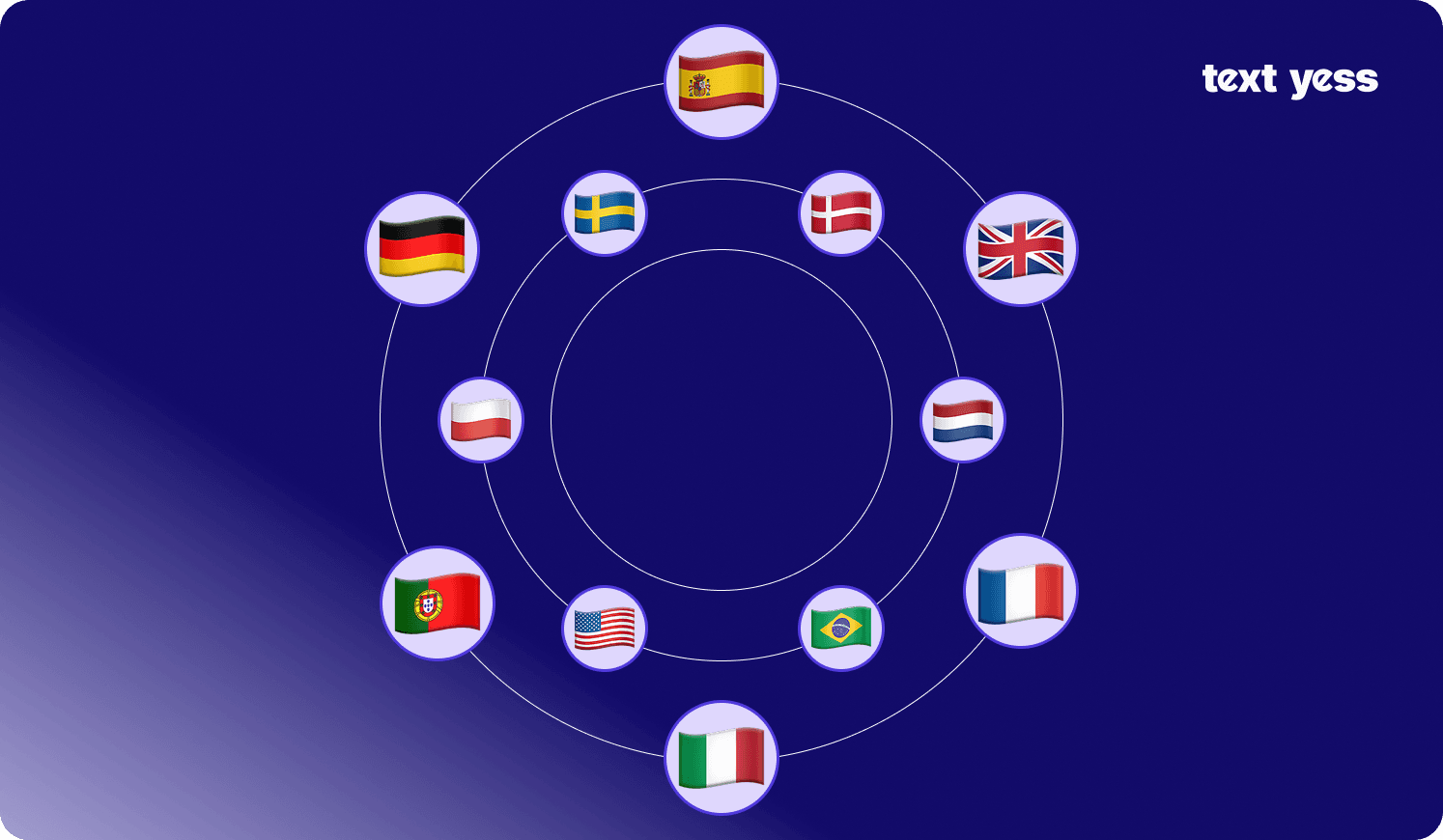
Multi-language capabilities mean conversations feel local. The AI handles queries in the customer's preferred language automatically, which removes a barrier that often causes international shoppers to leave without buying.
Higher Conversion Rates Through Proactive Selling
The AI agent doesn't wait for customers to ask questions. It initiates conversations based on browsing behavior or high-intent signals like repeated product views.
When a shopper lingers on a product page, the agent can offer sizing guidance or answer questions before hesitation turns into abandonment. This proactive outreach turns passive browsers into active buyers.
Recovered Revenue From Abandoned Carts and Checkouts
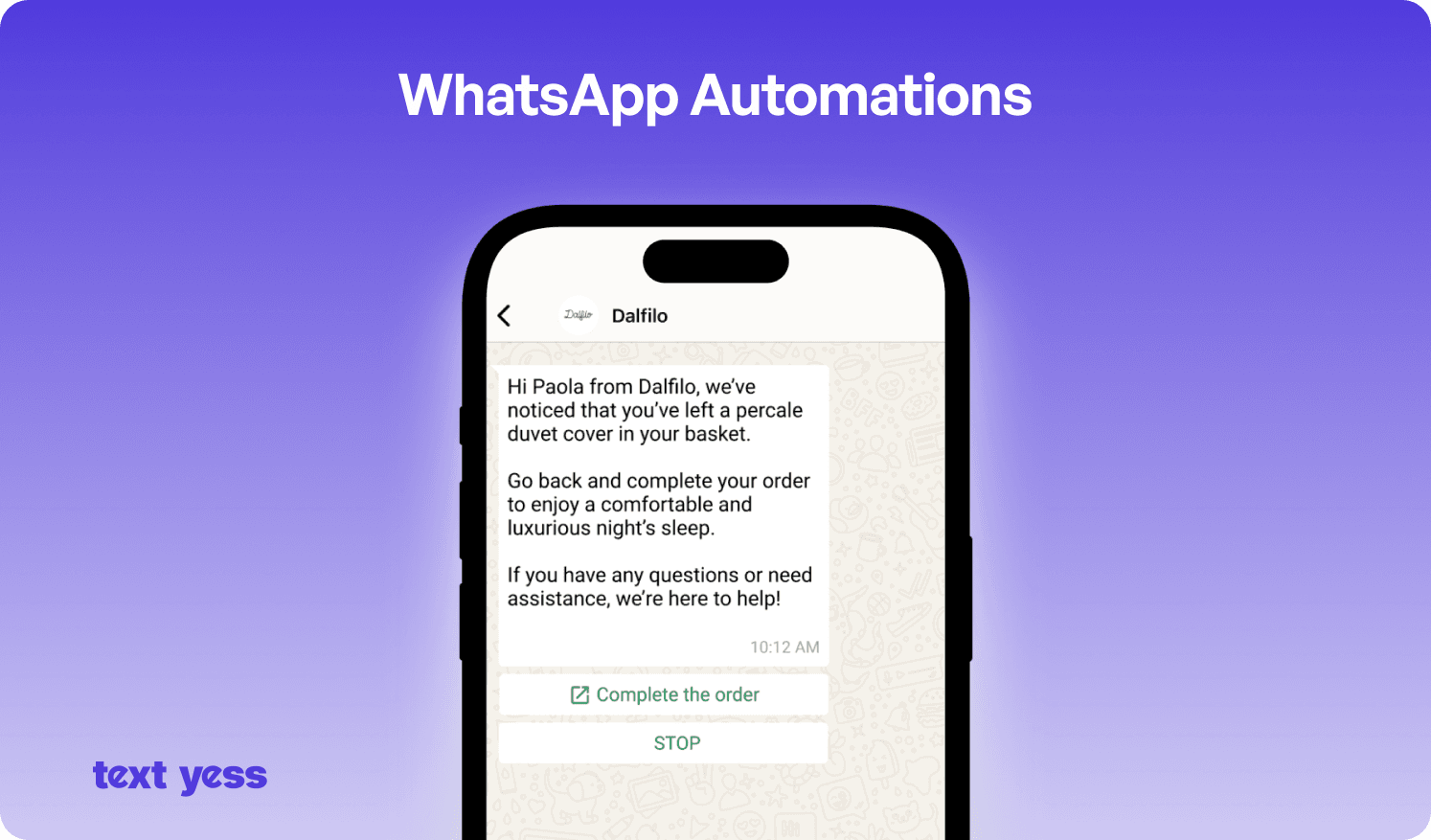
Cart abandonment is one of the biggest revenue leaks in ecommerce, averaging 70.22% according to Baymard Institute. A WhatsApp AI agent sends timely reminders with the exact items left behind and a direct link back to checkout.
WhatsApp recovery messages typically outperform email, with open rates reaching 95–98% compared to email's 20–25%. Follow-up sequences can include incentives for customers who don't respond to the first message.
Hyper Personalization Powered by Store and Order Data
The AI agent uses unified customer profiles (past purchases, browsing history, preferences) to tailor every recommendation and response. This personalization happens automatically.
When a returning customer asks for a gift recommendation, the agent already knows their previous orders. It can suggest complementary products based on what they've bought before.
Operational Efficiency and Lower Cost to Serve
Routine queries (shipping times, return policies, order status) make up the majority of customer service volume. The AI handles these autonomously — Gartner predicts 80% autonomous resolution of common service issues by 2029 — freeing human agents for complex conversations.
Brands using WhatsApp AI agents typically see support ticket volume drop while maintaining or improving customer satisfaction.
Unified Customer Data Across Every Channel
Conversations, orders, and behavior are stored in one profile. Whether a customer interacts via AI agents on-site, WhatsApp, or voice, the context carries over.
This continuity means customers don't repeat themselves. The agent knows what they browsed yesterday and what they purchased last month.
Measurable Revenue Attribution and Real Time Analytics
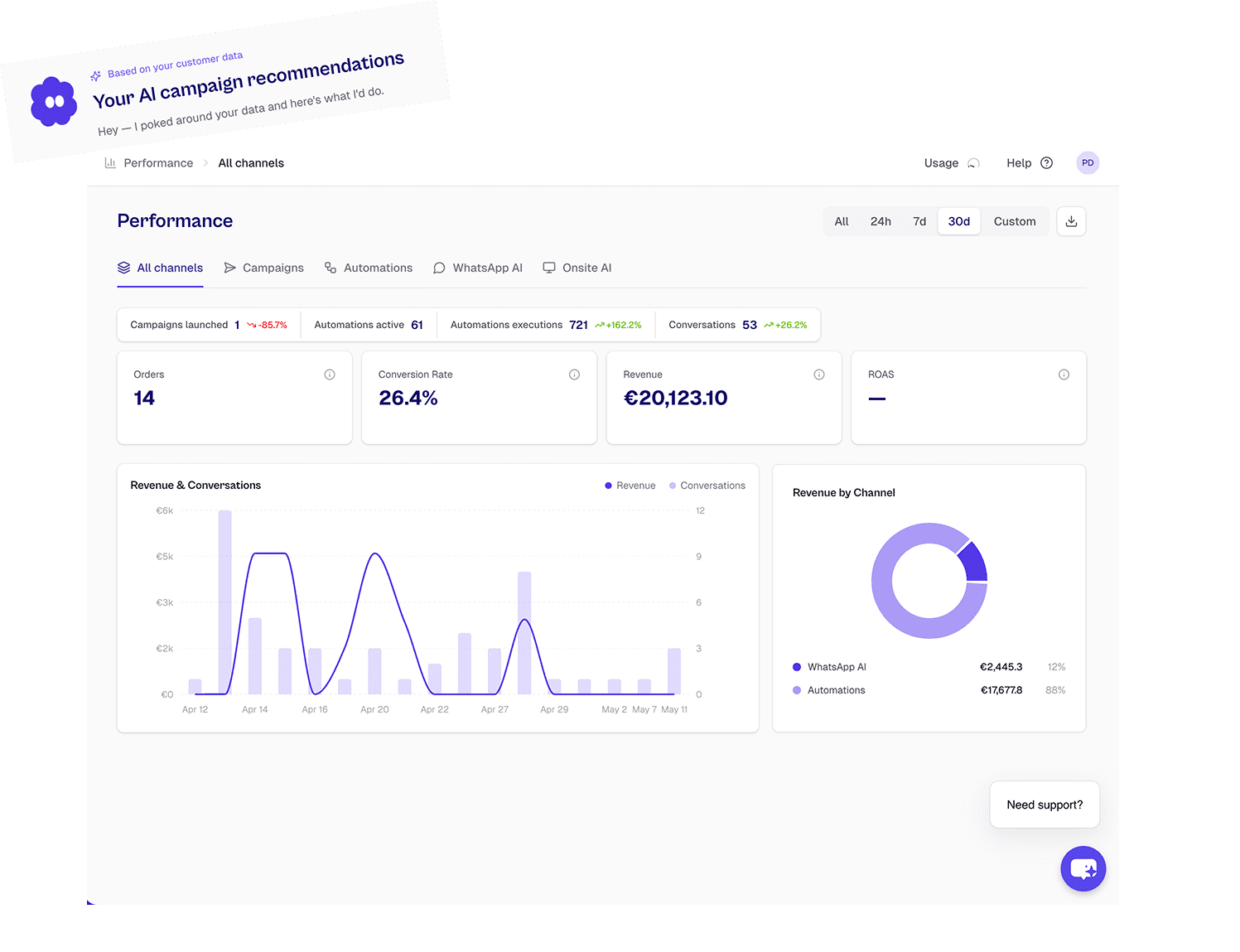
Ecommerce-specific analytics tie conversations directly to placed orders. You can track conversion rates, response times, campaign performance, and revenue per conversation.
This attribution makes optimization possible. You'll know which messages and campaigns generate the most revenue, not just engagement metrics.
How a WhatsApp AI Agent Differs From a Standard Chatbot
Feature
Standard Chatbot
WhatsApp AI Agent
Conversation handling
Scripted, rule-based flows
Understands intent, handles open-ended queries
Data access
Limited or no store integration
Real-time access to orders, products, customer profiles
Personalization
Generic responses
Hyper-personalized based on customer history
Escalation
Often fails silently
Graceful handoff to human agents
Revenue focus
Support only
Sales and support combined
The distinction matters because it affects results. A standard chatbot can answer "what are your shipping times?" A WhatsApp AI agent can answer "where's my order?" by pulling the actual tracking information.
High Impact Use Cases That Prove the Advantages
Abandoned Cart Recovery Automations
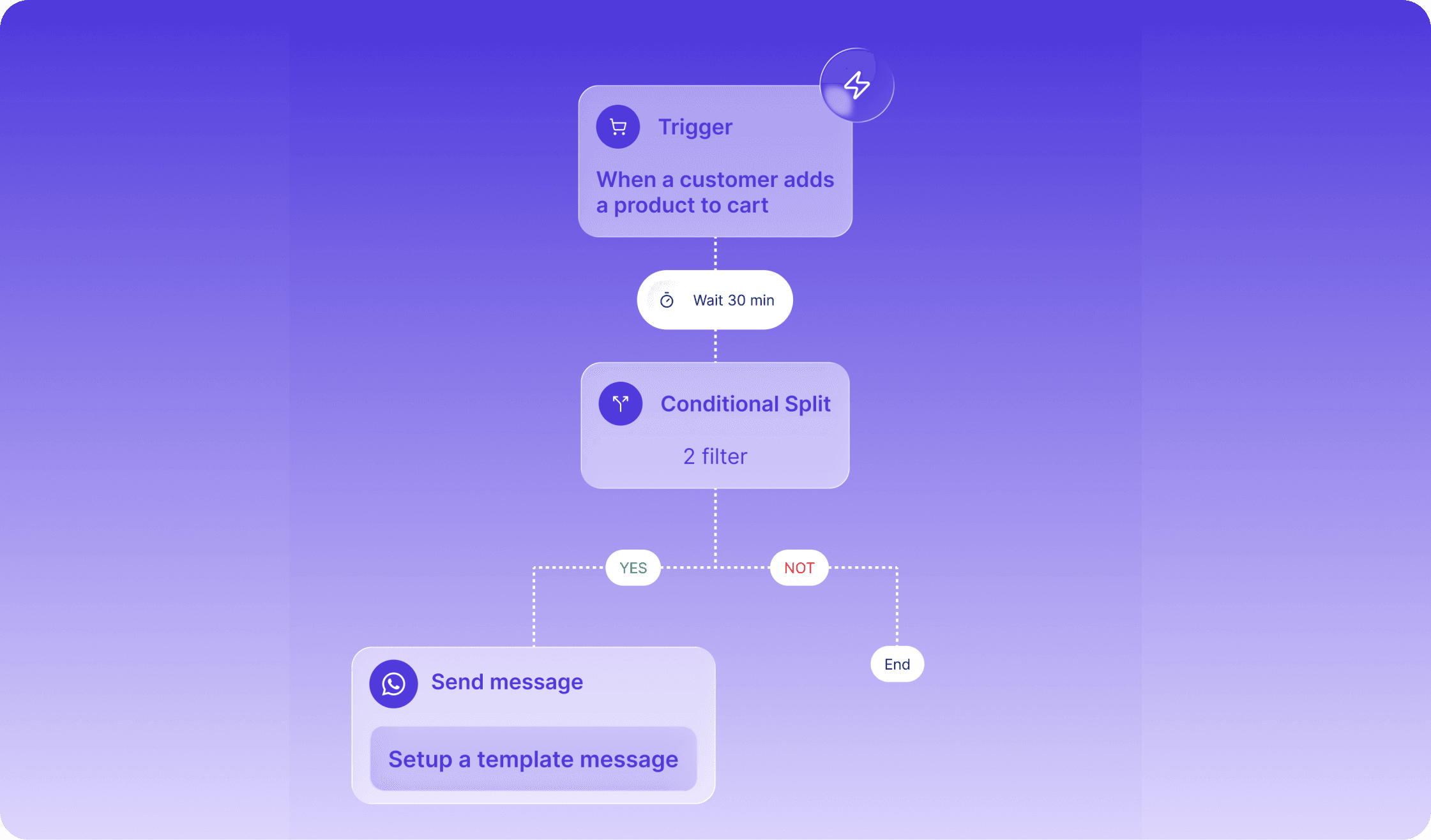
Trigger-based messages fire when a customer leaves items in their cart. The message includes the specific products, images, and a direct checkout link.
Order Status and Shipping Updates
The AI retrieves real-time order data and responds in seconds. Proactive delivery notifications keep customers informed without them asking.
Product Recommendations and Conversational Commerce
When a customer asks "I need a gift for my sister," the agent suggests relevant products based on browsing history and purchase patterns. Shopping happens without leaving the chat.
Seasonal Campaigns and Product Drops
Scheduled broadcasts for Black Friday, new arrivals, and flash sales reach opted-in customers at the right moment. Segmentation by purchase history or location improves relevance.
Welcome, Birthday, and Retention Flows
Automated welcome messages on opt-in set the tone for the relationship. Birthday discounts and re-engagement campaigns for lapsed customers drive repeat purchases.
FAQ and Post Purchase Support
Instant answers on shipping, returns, and sizing come from a centralized knowledge base. Support happens without ticket queues or wait times.
Features That Make These Advantages Possible
Unified Customer Profiles and Store Integrations
Native connections to Shopify, WooCommerce, and the broader ecommerce stack pull order history, browsing data, and preferences into one profile.
Proactive Campaigns and Trigger Based Automations
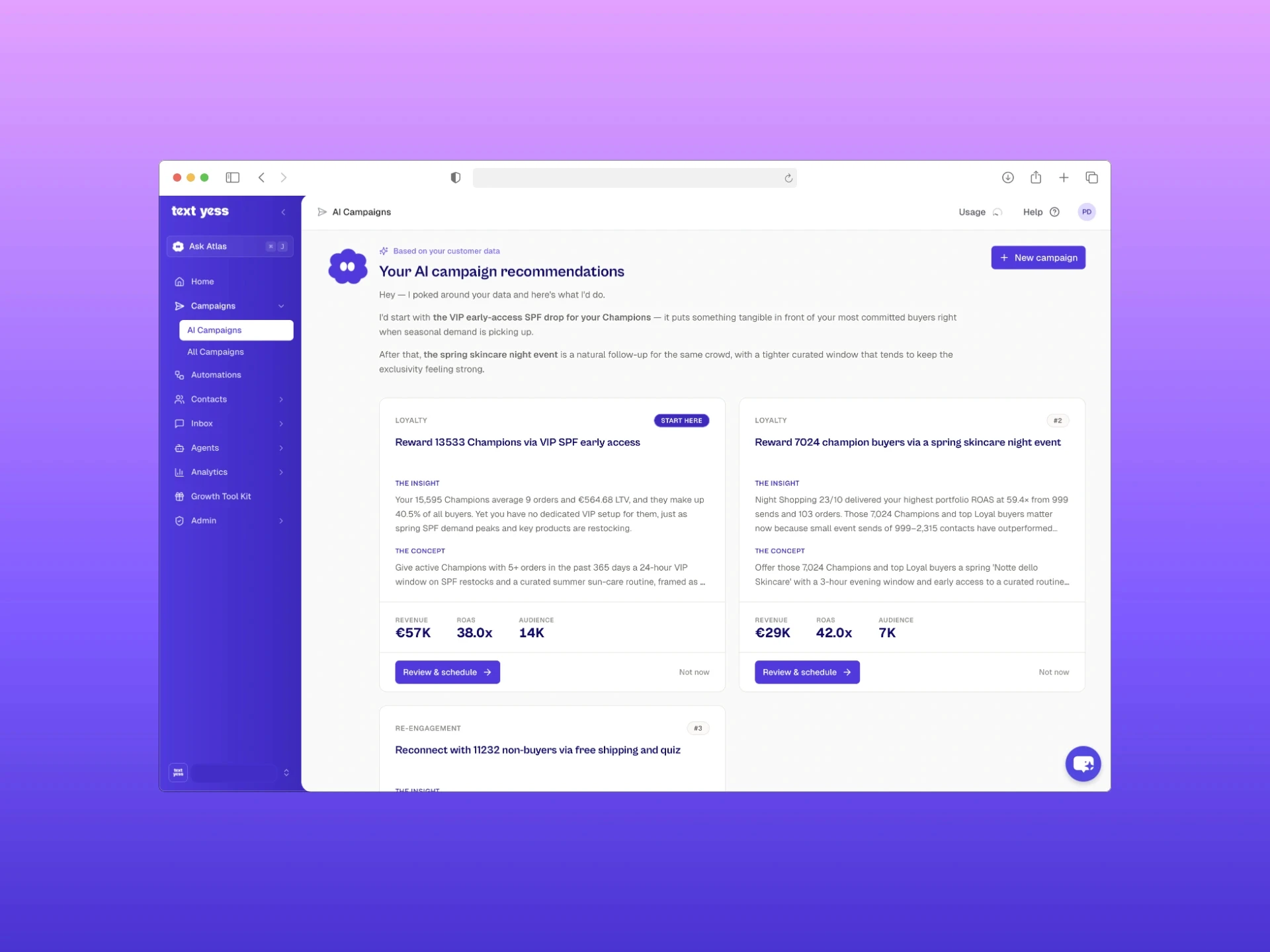
Three layers work together: merchant-initiated campaigns, trigger-based automations, and the inbound AI agent. Campaigns reach customers at planned moments. Automations fire based on behavior. The AI handles everything that comes back.
Multi Language Conversational AI
Conversations feel local regardless of customer language. The AI adapts automatically without manual translation or separate workflows for each market.
Centralized Knowledge Management
Product information, FAQs, and policies live in one place. This powers consistent, accurate AI responses across every conversation.
Unified Inbox Across Site, WhatsApp, and Voice
All conversations appear in one interface. Teams see full context regardless of which channel the customer used.
Measurable Results Ecommerce Brands See From WhatsApp AI Agents
Revenue uplift: increased conversions from recovered carts and proactive selling
Cost savings: reduced support ticket volume and lower cost per interaction
Faster response times: instant replies instead of hours or days
Team efficiency: human agents focus on complex, high-value conversations
Turning WhatsApp Conversations Into Your Next Revenue Engine
WhatsApp AI agents combine sales and support into a single channel that meets customers where they already spend time. The advantages (24/7 availability, hyper-personalization, cart recovery, lower costs) compound when built on unified customer data and native ecommerce integrations.
TextYess is built specifically for ecommerce brands that want to turn conversations into revenue. AI agents across site, WhatsApp, and voice go from setup to sales in minutes.