Abandoned Cart Recovery with AI Agents (2026)
Around 70% of online carts are abandoned before checkout. Learn how AI agents recover lost sales in real time across WhatsApp, on-site chat, and voice.
Around 70% of online carts are abandoned before checkout. Learn how AI agents recover lost sales in real time across WhatsApp, on-site chat, and voice.
Every abandoned cart represents a shopper who was interested enough to add items but hit a friction point before checkout. With roughly 70% of online carts left behind, that's a significant revenue opportunity sitting untouched.
AI agents are changing how eCommerce teams approach this problem: shifting from delayed, one-directional recovery emails to real-time, conversational outreach across WhatsApp, on-site chat, and voice. This guide covers why traditional methods underperform, how AI agents work differently, and the specific strategies you can implement to turn more abandoned carts into completed orders.
Abandoned cart recovery is the process of re-engaging shoppers who added items to their cart but left without completing the purchase. Around 70% of online shopping carts are abandoned before checkout, which makes recovery one of the most direct ways to increase revenue without spending more on acquisition.
The idea is simple: someone already showed interest in your products, so bringing them back to finish the transaction is often easier than finding a new customer.
People leave for all kinds of reasons, and not all of them mean the sale is lost. Some shoppers are just browsing. Others hit a specific friction point that stopped them from completing checkout.
Unexpected costs: Shipping fees, taxes, or extra charges that appear at checkout often cause shoppers to reconsider.
Complicated checkout: Too many steps, required account creation, or confusing forms create friction.
Security concerns: Missing trust signals or unfamiliar payment options make people hesitant to enter card details.
Comparison shopping: Many visitors browse multiple stores before deciding, so they haven't abandoned you—they're just not ready yet.
Technical issues: Slow pages, checkout errors, or poor mobile experience frustrate shoppers into leaving.
Unanswered questions: Uncertainty about sizing, shipping times, or return policies can stop a purchase in its tracks.
Each reason calls for a different recovery approach.
A shopper worried about shipping costs responds differently than someone who simply got distracted.
Most eCommerce teams already use some form of cart recovery, typically email sequences, SMS blasts, or retargeting ads. Yet recovery rates stay low. Let's look at why.
Email is the default recovery channel, but it arrives hours after abandonment and competes with dozens of other messages. By the time your email lands, the shopper may have already purchased elsewhere or forgotten what they were looking at.
Display ads follow shoppers around the web, but they require the customer to take action on their own. There's no dialogue, no real personalization, and the cost-per-click adds up quickly.
Traditional support systems wait for customers to reach out with problems. They don't intercept abandonment as it happens or address hesitation before someone leaves.
An AI agent in eCommerce is an autonomous system that detects abandonment signals, engages shoppers in conversation, and works to recover the sale without human intervention. This represents a shift from reactive to proactive recovery.
AI agents monitor browsing patterns and cart activity continuously. They can detect hesitation signals, like a shopper hovering over the close button or sitting idle on the checkout page, before the person actually leaves.
Rather than sending the same generic message to everyone, AI agents identify why a particular shopper appears to be abandoning. Is it a price concern? A shipping question? Uncertainty about product fit? The response adapts accordingly.
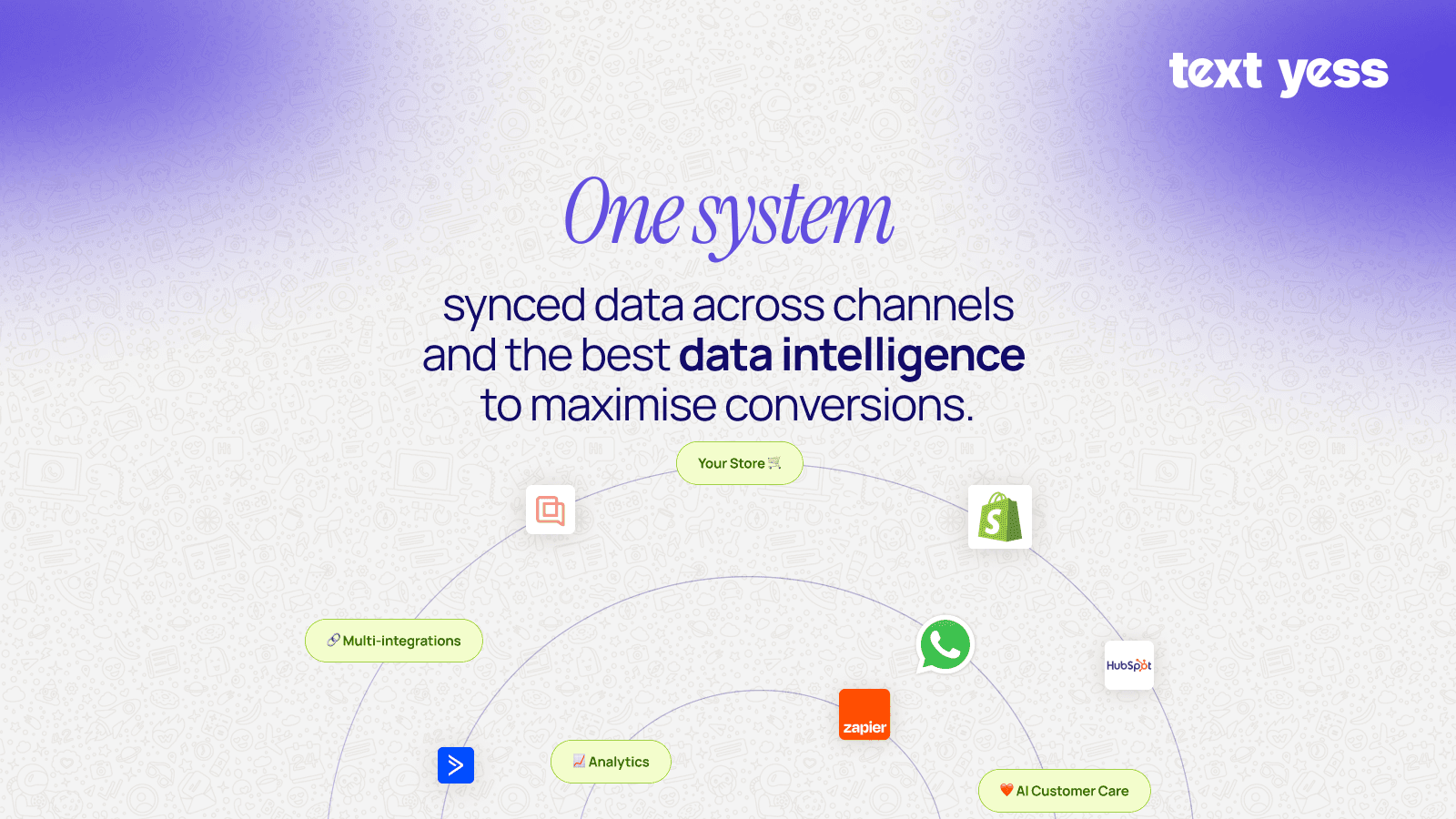
Using unified customer data like browsing history, past purchases, and product preferences, AI agents craft messages that feel relevant to each individual. This goes beyond mail-merge personalization with a first name; it's contextual conversation based on what that specific shopper was looking at. Platforms like TextYess pull this data directly from your connected store, so every message is grounded in what the shopper actually did—not just who they are in a CRM field.
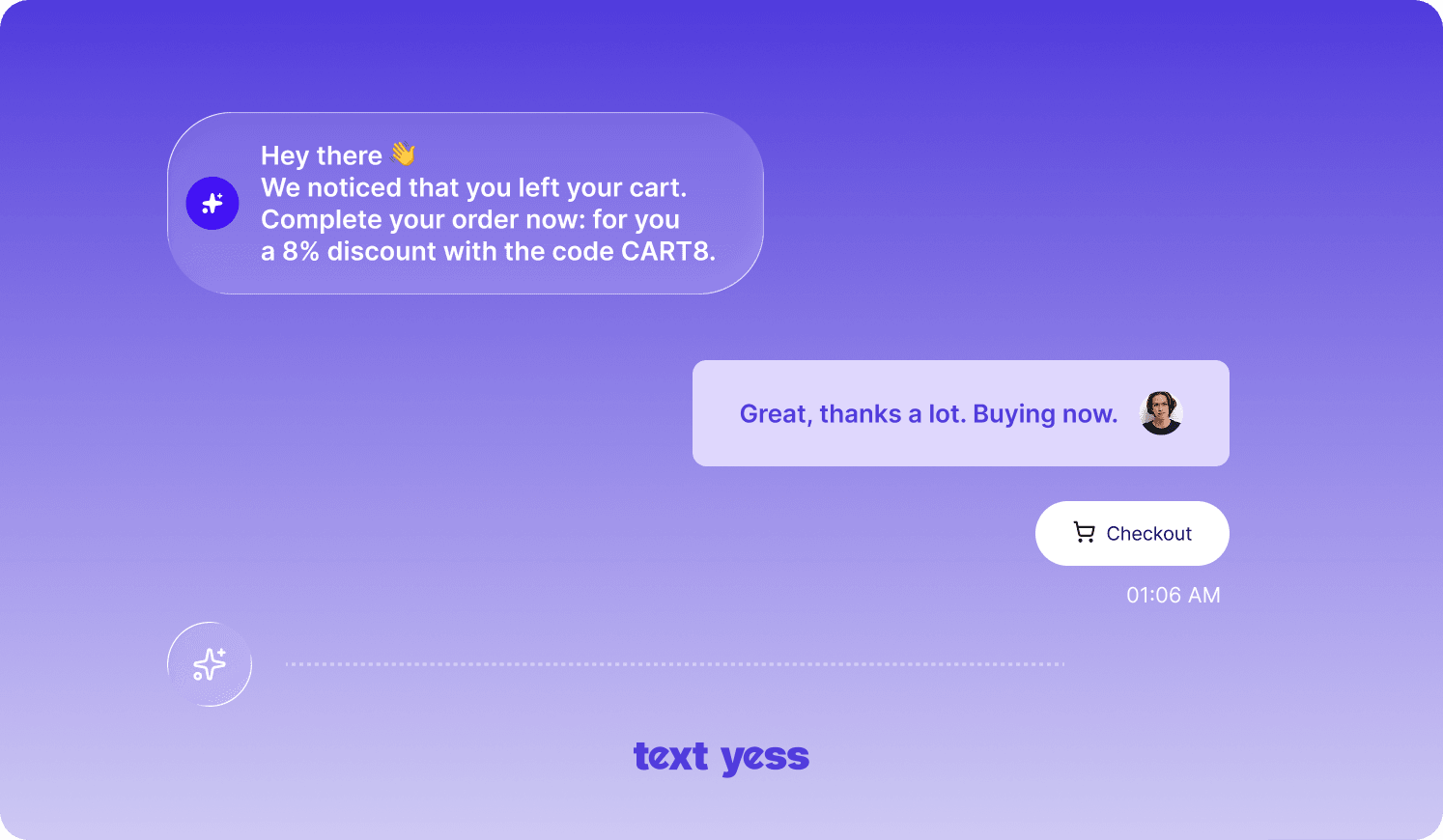
AI agents engage shoppers in real-time dialogue. They can answer questions, address objections, and guide customers through checkout completion right when the hesitation occurs.
Now let's explore the specific tactics that work. You can implement these individually or combine them into a coordinated recovery program.
WhatsApp messages achieve up to 98% open rates compared to email. AI agents can send timely WhatsApp messages after abandonment, then continue the conversation when the shopper responds. Questions about the product, shipping concerns, or requests for a discount can all be handled directly in the chat, with checkout completed without leaving the app.
Why wait until someone leaves to try recovering them? AI shopping agents can detect exit intent or idle behavior and proactively offer help before the shopper abandons. Triggers might include hovering on the close button, being inactive for 30 seconds, or switching browser tabs.
A simple "Have any questions about this item?" appearing at the right moment can make the difference between a lost sale and a conversion.
For high-value carts, voice AI is emerging as a recovery channel. An AI agent can call shoppers to resolve complex questions, like technical specifications, custom orders, or bulk pricing, through natural conversation. The personal touch of a phone call builds trust in ways text cannot.
When voice isn't appropriate, AI-powered Whatsapp automations serves as an effective fallback. The key difference from traditional campaigns is personalization: messages reference the specific items in the cart and can link directly to a pre-filled checkout page.
The most effective recovery programs coordinate efforts across WhatsApp, on-site chat, SMS, and voice in a unified workflow. AI agents track which channel a shopper engaged with and prevent message fatigue by avoiding redundant outreach.
Tip: Start with one channel, typically WhatsApp or on-site chat, and expand to others once you've established baseline performance metrics.
What makes AI-powered recovery worth the investment? Several advantages compound over time.
AI agents work around the clock. A shopper abandoning their cart at 2 AM receives the same immediate, helpful response as someone browsing during business hours. This matters especially for brands selling across time zones.
Agents leverage product catalogs, browsing history, and customer profiles to deliver messages that feel relevant rather than generic. The conversation adapts based on what the shopper was actually looking at.
Every interaction, whether on-site, WhatsApp, or voice, feeds into a single customer record. Conversations remain contextual even when a shopper switches channels.
Teams can handle dramatically higher volumes of recovery outreach without hiring additional support staff. The economics improve as volume increases.
Even when shoppers don't immediately convert, helpful and timely outreach improves brand perception. A shopper who receives a genuinely useful answer to their question remembers that experience.
Getting started with AI cart recovery is more straightforward than many teams expect, particularly with platforms designed specifically for eCommerce.
Setup begins by integrating the AI platform with your store's CMS, whether that's Shopify, WooCommerce, or similar. This syncs products, orders, and customer data automatically, giving the AI agent the context it needs to have relevant conversations.
Next, define your recovery goals and set the agent's conversational tone to match your brand voice. Upload product knowledge and support documentation. With platforms like TextYess, this configuration requires no coding—you're essentially teaching the agent about your business through a guided setup process.
Finally, activate automated recovery flows across your chosen channels. Campaigns can be live within minutes of completing setup, and you'll start seeing recovery conversations immediately.
Brands implementing AI-powered cart recovery typically see improvements across several dimensions: higher recovered revenue, reduced support workload, and improved customer satisfaction. The specific numbers vary based on cart value, industry, and implementation quality.
What's consistent is the directional impact. Proactive, conversational recovery outperforms passive, one-directional approaches. The gap widens as AI agents learn from more interactions and customer data becomes richer.
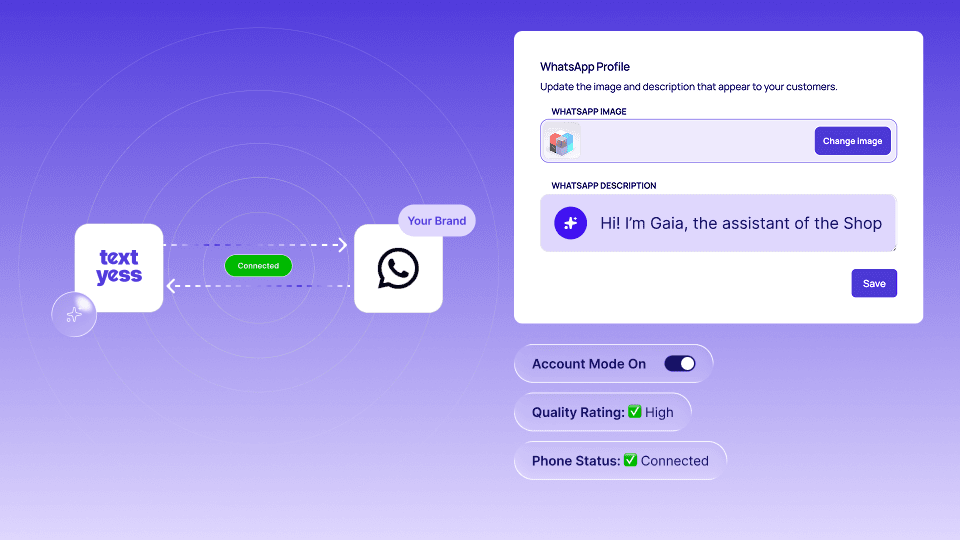
TextYess is an AI-first platform built specifically for eCommerce. Rather than bolting conversational features onto a generic automation tool, it's designed from the ground up to handle the full recovery workflow: detecting abandonment signals, engaging shoppers across WhatsApp, on-site chat, and voice, and keeping every interaction tied to a unified customer profile. The result is a recovery program that feels coherent to the shopper, regardless of which channel they engage through.
Where TextYess stands out is in the setup-to-results timeline.
Connecting your Shopify or WooCommerce store takes minutes, and the agent comes pre-trained on eCommerce conversation patterns. You configure your brand voice, upload your product and support knowledge, and the agent is ready to handle real recovery conversations—answering sizing questions, addressing shipping concerns, and guiding hesitant shoppers through checkout—without requiring a developer or a lengthy onboarding process.
You can start with a single channel, measure the impact against your existing baseline, and expand from there. The platform's reporting ties revenue directly to individual AI conversations, so the ROI case builds itself as the data accumulates.
The shift toward conversational commerce is accelerating, with the conversational AI market projected to reach $17.97 billion in 2026. Shoppers increasingly expect to interact with brands through messaging channels, and they expect those interactions to be helpful, personalized, and immediate.
AI agents, especially those purpose-built for eCommerce, are becoming essential for brands competing on customer experience. Platforms like TextYess enable this approach by unifying on-site chat, WhatsApp, and voice in a single AI-first engine, turning every abandoned cart into a conversation opportunity.
How do AI agents detect when a shopper is about to abandon their cart?
Can AI cart recovery agents handle complex customer questions during checkout?
How long does it take to set up AI cart recovery for an eCommerce store?
Do AI cart recovery agents work with Shopify, WooCommerce, and Magento?
How do AI agents personalize recovery offers without over-discounting?
Can AI agents recover abandoned carts in multiple languages?