TextYess vs charlesAI: Which Conversational Commerce Platform Is Best for eCommerce in 2026?
Are you looking for the best conversational ecommerce platform? You'll need to evaluate a couple: here's a ready to read comparison of TextYess and Charles.
Are you looking for the best conversational ecommerce platform? You'll need to evaluate a couple: here's a ready to read comparison of TextYess and Charles.
Both TextYess and charlesAI help eCommerce brands turn messaging channels into revenue. The difference lies in how they approach the problem: charlesAI excels at messaging-channel orchestration across social platforms, while TextYess is built as an AI-first sales engine that unifies on-site chat, WhatsApp, and voice around eCommerce data.
This comparison breaks down where each platform wins, covering channel coverage, AI sales capabilities, support automation, personalization, analytics, and fit for different team types.
TextYess is an AI-first conversational commerce platform designed specifically for eCommerce brands. It deploys AI Agents across three channels: on-site chat, WhatsApp, and voice. The platform connects directly to your store, pulling in products, orders, and customer data to power conversations that feel personal rather than scripted.
The focus here is revenue, not just support deflection. TextYess AI Agents proactively engage shoppers, surface product recommendations, recover abandoned carts, and guide hesitant visitors toward checkout. Everything runs through a unified inbox, so your team manages all interactions from one place.
Setup requires no code. Most brands go from integration to live AI agent in minutes.
charlesAI is a conversational AI and messaging platform built to help brands engage customers across chat channels. It supports WhatsApp, Instagram, Facebook Messenger, web live chat, and RCS messaging.
The platform includes a built-in CRM for managing conversational interactions. You'll also find features like lead qualification, intent scoring, and appointment booking. For eCommerce use cases, charlesAI offers catalog-based product recommendations, abandoned cart follow-up, and back-in-stock alerts.
charlesAI's strength lies in messaging-channel orchestration, particularly for brands that want to manage customer conversations across multiple social platforms from one interface.
Both platforms help eCommerce brands use conversational channels. However, they're built with different priorities in mind. Let's walk through where each one excels.
TextYess focuses on the channels most directly tied to eCommerce conversion: on-site chat (where browsing happens), WhatsApp (where high-intent conversations happen), and voice (where complex support happens). All three feed into a single unified inbox with shared customer context.
charlesAI covers a broader range of messaging channels, including Instagram, Facebook Messenger, and RCS. If your strategy depends heavily on social messaging, that breadth matters.
Channel | TextYess | charlesAI |
|---|---|---|
On-site chat | ✓ | ✓ |
✓ | ✓ | |
Voice | ✓ (Beta) | — |
TextYess treats its AI Agent as a sales engine, not just a support tool. On-site, the agent proactively launches conversations based on browsing behavior, answers product questions in real time, and guides shoppers through checkout when they hesitate.
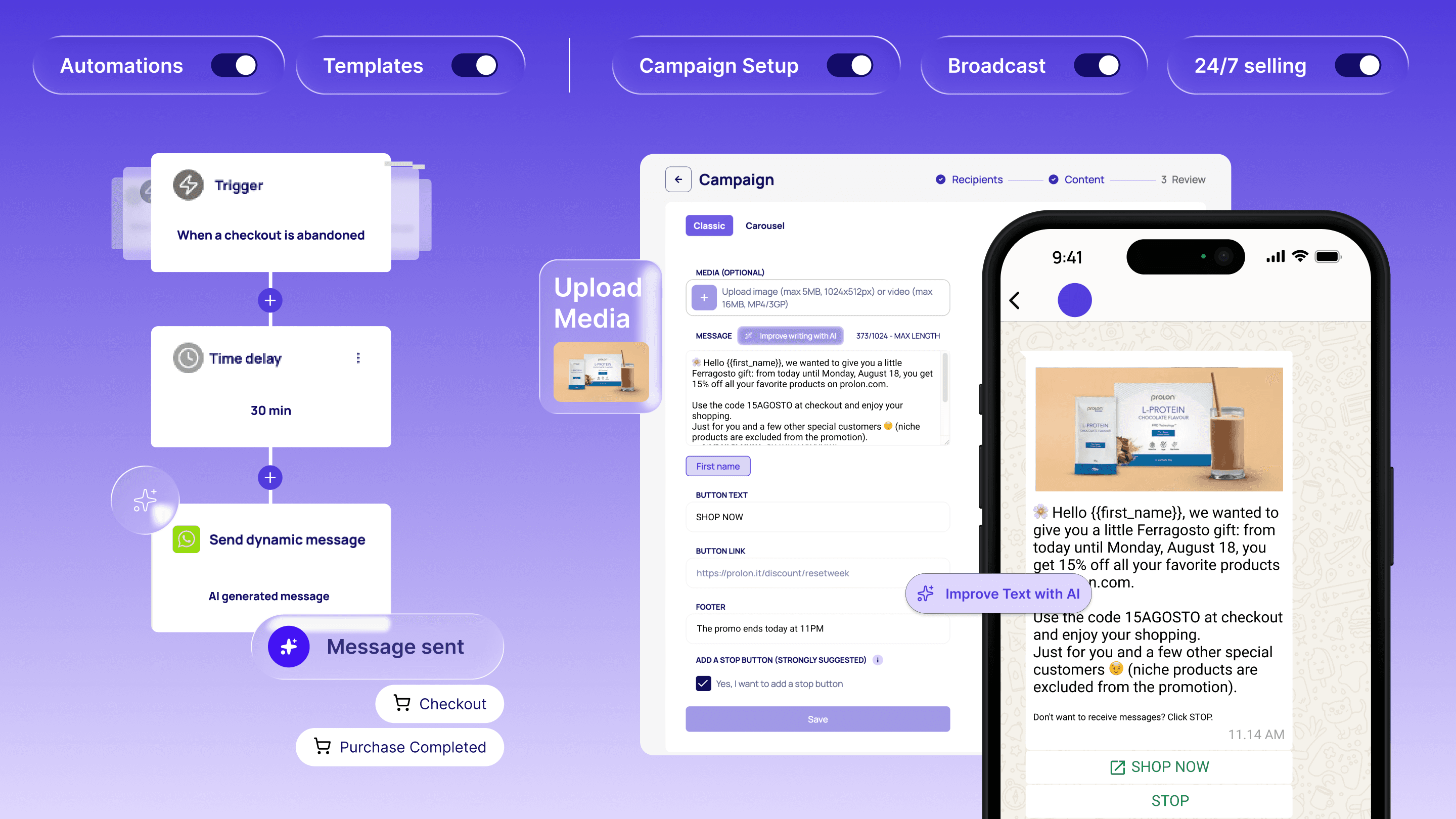
On WhatsApp, TextYess runs trigger-based automations for cart recovery, buyer intent signals, and website behavior. These aren't generic follow-ups. They're personalized messages based on what the customer was actually doing on your site.
charlesAI offers catalog-based recommendations and abandoned cart follow-up. Both are useful features, though the platform's positioning leans more toward engagement and campaign orchestration than autonomous selling.
Both platforms automate FAQ handling. The difference is depth.
TextYess pulls real-time order data to answer "where's my order?" questions in seconds. It retrieves tracking links, delivery estimates, and order status without human intervention. The AI handles customer care across on-site chat, WhatsApp, and voice, escalating only when the situation genuinely requires a human.
charlesAI provides FAQ automation with human handoff. For brands with straightforward support needs, that works well. For those handling high volumes of order-related inquiries, TextYess's eCommerce-specific automation goes further.
TextYess builds rich customer profiles from every message, order, and interaction. The platform calls this "perfectly remembered": the AI knows what a customer browsed, what they bought, and what they asked about last time. That context powers recommendations that feel relevant rather than random.
charlesAI includes a built-in CRM with lead qualification and intent scoring. This is valuable for managing conversational leads, though it's oriented more toward lead routing than eCommerce-specific personalization.
TextYess offers a full suite of WhatsApp campaigns:
Drive-to-store: targeted messages linking directly to collection or category pages
Seasonal promotions: scheduled broadcasts around key commercial moments like Black Friday or summer sales
Product drops: notifications when new items go live, sent to customers who bought from similar categories
Interactive campaigns: two-way engagement flows like quizzes and preference polls
Retention sequences: re-engagement messages for lapsed customers at 60, 90, or 180-day windows
The automation layer includes welcome messages, birthday offers, cart recovery, buyer-intent triggers, and website-behavior triggers. These run continuously once configured.
charlesAI supports campaign messaging, abandoned cart follow-up, and back-in-stock alerts. The feature set is capable, though TextYess packages more commerce-specific scenarios out of the box.
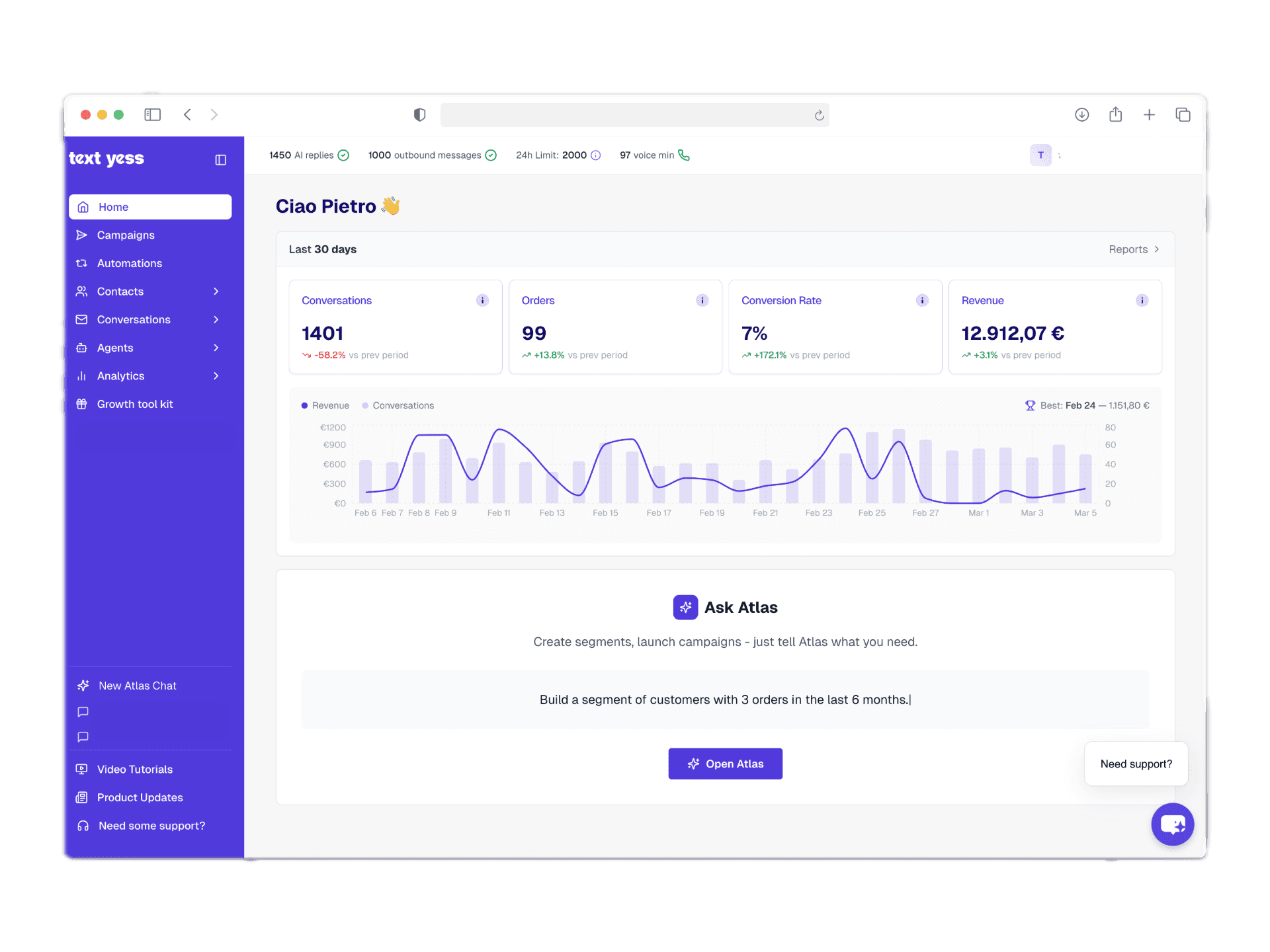
This is where TextYess pulls ahead clearly. The platform tracks conversions, response times, campaign performance, customer intent, and ROAS. Teams can see exactly which conversations led to orders and how much revenue each channel generates.
charlesAI's available feature set doesn't emphasize eCommerce-specific analytics in the same depth. For teams that want to prove ROI and optimize based on sales outcomes, TextYess provides cleaner visibility.
TextYess connects to Shopify, WooCommerce, and other eCommerce platforms to sync products, orders, and customer data automatically. Configuration happens through a no-code interface: define the AI's goals, tone, and knowledge base, then go live.
The platform also integrates with marketing tools, payments, and logistics systems. This matters because real-time data access is what makes AI conversations useful. An agent that can't check inventory or order status is essentially a fancy FAQ page.
charlesAI supports multiple messaging channels, though the available information doesn't emphasize the same depth of eCommerce stack integration or speed-to-live positioning.
TextYess explicitly supports multi-language conversations that feel local. For brands selling across EU markets or serving diverse customer bases, this is essential. The AI adapts to the customer's language preference across all channels.
charlesAI's feature set doesn't explicitly mention multilingual support. That doesn't mean it's absent, but TextYess is more clearly positioned for international commerce.
Neither platform publishes detailed pricing in publicly available materials. When evaluating cost, consider these factors:
Channel coverage: What's included versus add-on?
Automation depth: Can the AI handle sales conversations, or just support?
Revenue attribution: Can you prove ROI?
Implementation time: How quickly can you go live?
Headcount impact: How much support volume can AI handle autonomously?
TextYess tends to deliver higher value for brands wanting one platform across on-site, WhatsApp, and voice. charlesAI may be more cost-effective for narrower messaging use cases.
TextYess fits modern eCommerce brands that want conversations to drive measurable revenue. The platform works especially well for teams that:
Want AI across multiple touchpoints: on-site browsing, WhatsApp engagement, and voice support in one system
Care about conversion, not just engagement: proactive selling, cart recovery, and checkout guidance
Operate internationally: multi-language support across channels
Want fast deployment: no-code setup, live in minutes
Require clear attribution: revenue and conversion tracking tied to conversations
Brands with strong Italian or European customer bases will find TextYess particularly well-suited, given the platform's focus on markets where WhatsApp is commercially important.
charlesAI makes sense for businesses with different priorities:
Social messaging breadth: Instagram, Facebook Messenger, and RCS support
Lead qualification workflows: built-in CRM with intent scoring and routing
Appointment-based models: booking, rescheduling, and reminder features
Click-to-message ad strategies: support for social ad-to-chat flows
For product-focused eCommerce brands, TextYess's shopping assistance and revenue analytics are usually more relevant. For service businesses or brands with heavy social messaging needs, charlesAI offers capabilities TextYess doesn't prioritize.
charlesAI is a credible conversational messaging platform. For brands that want broad social channel coverage or lead-routing workflows, it delivers.
However, for eCommerce teams that want conversations to function as a sales engine, TextYess is the stronger fit. Here's why:
AI-first architecture: built for autonomous selling and support, not just campaign delivery
eCommerce-native data: real-time product, order, and customer sync powers relevant conversations
Cross-channel orchestration: on-site, WhatsApp, and voice in one unified system
Revenue visibility: clear attribution from conversation to placed order
Operational simplicity: no-code setup, fast onboarding, unified inbox
The practical outcomes matter most: faster response times, higher automation coverage, better conversion support, and cleaner operations.
Book a demo to see TextYess in action
The best platform depends on your goals. If you're optimizing for messaging-channel CRM and social engagement, charlesAI has strengths worth considering.
If you want to turn on-site chat, WhatsApp, and voice into a measurable revenue channel, TextYess is built for exactly that. The platform's focus on eCommerce outcomes, unified customer data, and autonomous AI Agents makes it the more practical choice for brands that measure success in conversions and revenue.
Most teams can go from setup to sales in minutes. The AI handles the volume; your team handles the exceptions.
Does TextYess integrate with Shopify and WooCommerce?
Can charlesAI handle voice conversations?
How long does TextYess take to set up?
Which platform is better for international eCommerce?