How to Segment Your Audience for Email and WhatsApp Campaigns
Learn the essential audience segmentation strategies for email and WhatsApp campaigns that boost open rates, improve deliverability, and drive more revenue from every send.
Learn the essential audience segmentation strategies for email and WhatsApp campaigns that boost open rates, improve deliverability, and drive more revenue from every send.
Sending the same campaign to your entire list is the fastest way to watch open rates drop and unsubscribes climb. Segmentation fixes this by matching each message to the person receiving it, based on what they've bought, how they engage, and where they are in the buying journey.
This guide covers seven segmentation strategies that work across both email and WhatsApp, with step-by-step instructions for building segments that convert and best practices for keeping them effective over time.
Segmenting your audience means dividing contacts based on shared demographics, behaviours (purchases, website activity), and engagement levels (opens, clicks). CRM tools make it possible to automate dynamic segmentation, tailoring messages for specific lifecycle stages like welcome series for new users or loyalty rewards for VIPs. For WhatsApp, high-engagement segments tend to perform best.
The alternative is sending the same message to everyone. That approach leads to lower open rates, more unsubscribes, and campaigns that feel irrelevant. Segmentation fixes this by matching each message to the person receiving it.
Email and WhatsApp work differently, and segmentation helps you use each channel for what it does best. Email handles volume and frequency well. WhatsApp excels at high-intent, conversational moments, withopen rates as high as 98%. The segmentation logic is similar across both, but the application changes based on channel strengths.
Sending fewer, more relevant messages consistently outperforms mass blasts. When recipients see content that matches their interests and buying stage, they're more likely to click and convert. Targeted campaigns reduce wasted sends and focus budget where it generates returns.
Deliverability refers to whether messages land in the inbox or get flagged as spam. Email providers and WhatsApp both reward senders who maintain high engagement rates. Sending to engaged segments protects your sender reputation over time.
Seventy-one percent of consumers expect brands to remember their preferences and purchase history. A returning customer who receives a recommendation based on their last order experiences something personal rather than automated. Segmentation makes this possible at scale.
Strategy | Best For | Example Use Case |
|---|---|---|
Purchase History | Repeat buyers, cross-sell | Recommend complementary products |
Customer Lifecycle | New vs. loyal customers | Welcome series vs. VIP offers |
Behavioural Triggers | High-intent shoppers | Cart abandonment recovery |
Engagement Patterns | Active vs. dormant contacts | Re-engagement campaigns |
Customer Lifetime Value | Budget allocation | Prioritise high-value segments |
Location and Language | International brands | Localised promotions |
AI-Predicted Intent | Proactive selling | Product recommendations |
What someone has bought tells you a lot about what they might buy next. Segment by product category, purchase frequency, and recency.
A customer who bought running shoes three months ago is a strong candidate for a message about new arrivals in the same category. Use purchase history for cross-sell campaigns, replenishment reminders, and relevant product launches.
Not all customers are at the same point in their relationship with your brand. The key stages are: new subscriber, first-time buyer, repeat customer, and lapsed customer.
Each stage calls for different messaging. New subscribers get welcome flows. Repeat buyers receive loyalty offers. Lapsed customers (60, 90, or 180 days since last purchase) get win-back campaigns with a reason to return.
Website actions signal intent. Product views, add-to-cart events, and abandoned checkouts all indicate a customer is actively considering a purchase.
Timing matters here. A cart recovery message sent within an hour of abandonment boosts conversions by 20% compared to delayed follow-ups. Behavioural triggers work best when the follow-up is immediate.
Track how contacts interact with your messages: opens, clicks, replies, and website visits. From there, create segments for highly engaged users, moderately engaged, and dormant contacts.
Highly engaged users can receive more frequent messages. Dormant contacts often benefit from reduced frequency or a dedicated re-engagement campaign before being suppressed entirely.
Segment by total spend or average order value (AOV). High-value customers warrant premium offers, early access, and VIP treatment. Budget-conscious shoppers respond better to discount-focused campaigns.
This approach helps allocate marketing spend where it generates the highest return.
For brands operating in multiple markets, segmenting by country, region, or language is essential. Localised content with the correct currency, promotions, and shipping information performs better than generic messaging.
A customer in Italy expects Italian-language messages with EUR pricing and relevant delivery timelines.
Advanced segmentation can be powered by AI that predicts which products a customer is likely to buy next. Platforms with unified customer data automate this process, surfacing intent signals to create proactive campaigns.
This moves segmentation from reactive (based on past behaviour) to predictive (based on likely future behaviour).
WhatsApp has specific requirements that differ from email: mandatory opt-ins, different message types, and 24-hour conversation windows. All of this affects how segmentation works on the channel.
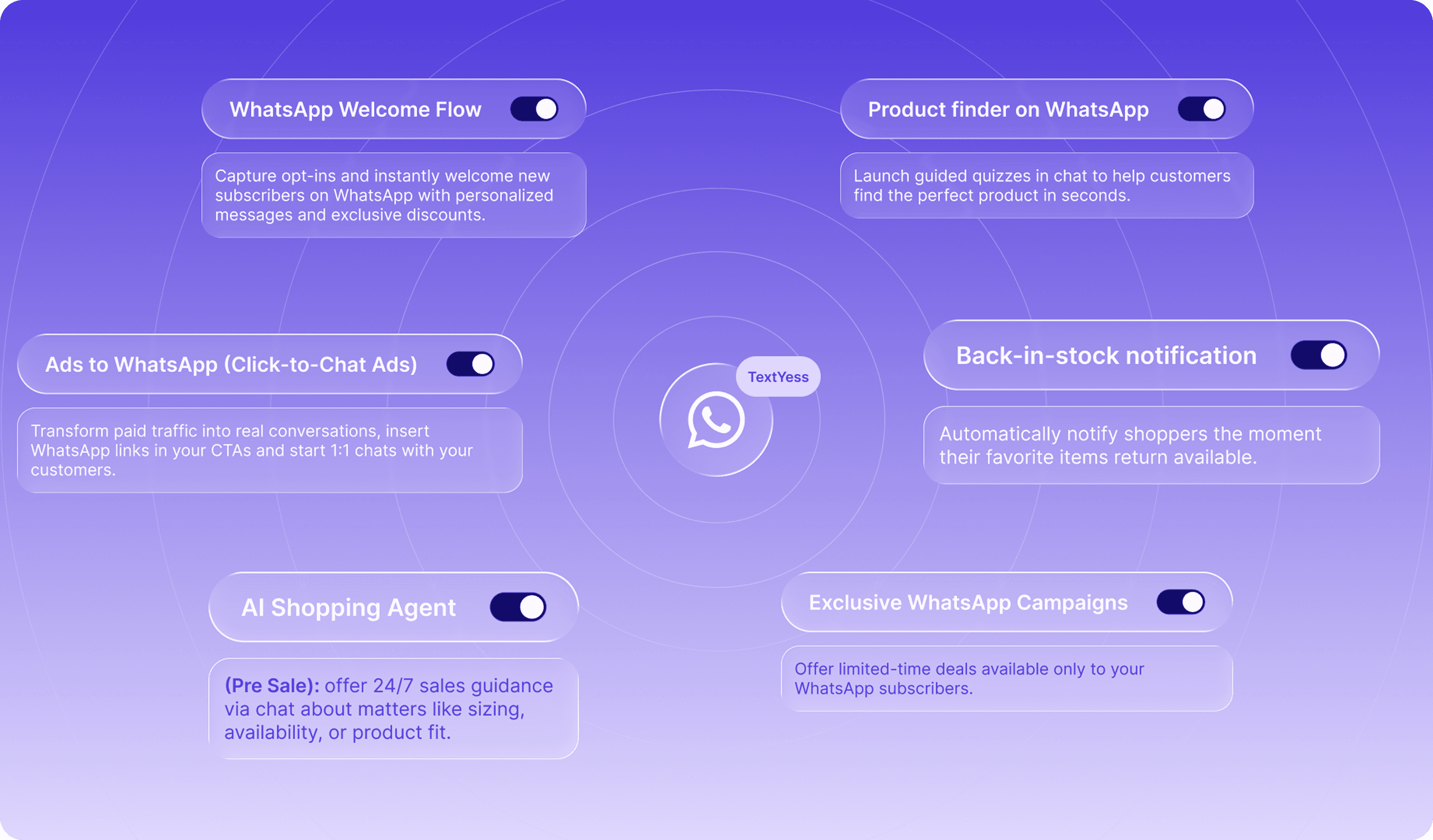
With Store Intelligence, TextYess helps team automatically segmenting their audiences pulling data from each customer history and preferences.
WhatsApp requires explicit, user-initiated opt-in. You can segment by opt-in source (website popup, checkout checkbox, in-store QR code) to tailor initial messaging.
Someone who opted in after abandoning checkout has different expectations than someone who signed up for general updates. The opt-in context shapes what kind of message feels appropriate.
Different WhatsApp campaigns call for different audiences:
Promotional campaigns: Target customers who have purchased before or shown interest in a specific category
Product drops: Send to buyers from the same category or brand
Seasonal campaigns: Segment by purchase history and location
Interactive campaigns: Send to your most engaged contacts who respond to two-way messages like quizzes or surveys
WhatsApp automations (welcome messages, birthday greetings, cart recovery, browse abandonment) each require specific trigger conditions. Define the criteria clearly so messages fire at the right moment for the right audience.
First-party data is information collected directly from your customers. Focus on four key sources:
Transactional data: Orders, returns, average order value
Behavioural data: Pages viewed, products added to cart, time on site
Engagement data: Email opens, WhatsApp replies, link clicks
Declared data: Preferences shared via quizzes, surveys, preference centres, or conversational commerce interactions
Connect your segments to the customer journey: awareness, consideration, purchase, and retention. Each stage requires different messaging within your automated sales funnels to guide the customer forward.
A first-time visitor browsing your site is in a different place than a repeat customer ready to reorder. The segment determines the message.
Segments work best when they update automatically as customer behaviour changes. Integrating your marketing platform with Shopify, WooCommerce, or another CMS keeps data fresh without manual work.
Platforms like TextYess sync with your store to pull in products, orders, and customer data in real time. This enables dynamic segmentation that reflects current behaviour rather than outdated snapshots.
Executing segmentation at this level requires a platform that keeps customer data unified and current across every channel. TextYess builds rich customer profiles from every order, message, and on-site interaction, so segments update automatically as behaviour changes. There is no manual data work.
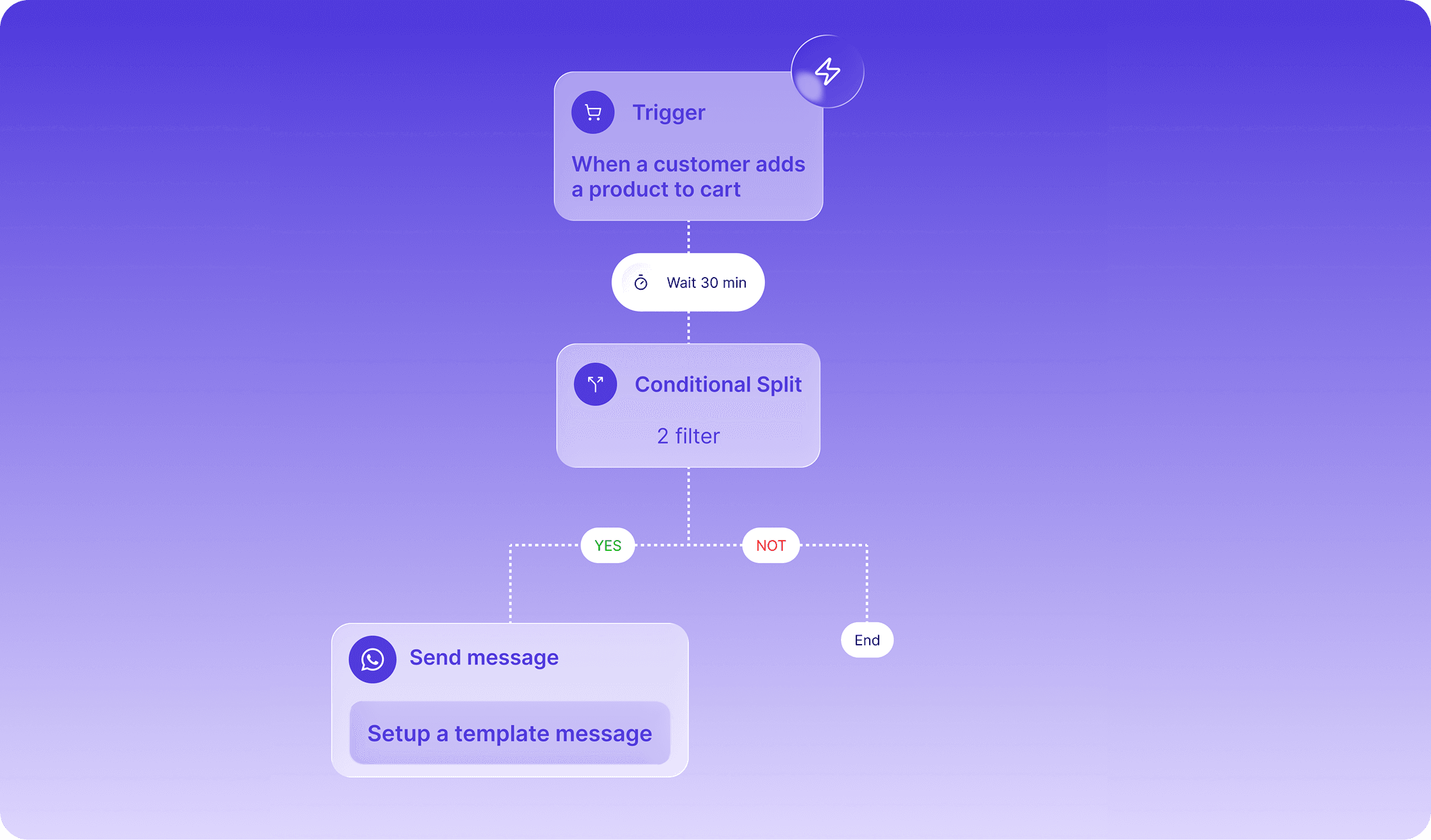
For WhatsApp specifically, the platform supports trigger-based automations (cart recovery, buyer intent, browse abandonment) that fire against the right segment at the right moment, with personalised content pulled directly from the customer profile. Multi-language support means location and language segments receive messages that feel local, not translated. Real-time analytics then tie each campaign back to conversions and revenue, making it straightforward to identify which segments are actually driving results and where to refine. Brands looking to put these segmentation strategies into practice can explore TextYess to see how unified customer data and AI agents work together.
Segments are not set-and-forget. Monitor performance metrics: open rates, click rates, conversions, and revenue per segment. Use this data to adjust criteria and refine your approach over time.
Suppression lists prevent over-messaging. Exclude recent purchasers from cart abandonment flows, unsubscribed contacts from all campaigns, and customers who have already received a message that day.
Combine two or more segmentation criteria (lifecycle stage + purchase history + engagement) to create highly targeted audiences. Single-variable segments are often too broad to drive meaningful results.
Customer behaviour changes constantly. Set segments to update dynamically or schedule regular reviews of static segments. Stale segments lead to irrelevant messaging.
Creating too many micro-segments adds complexity and can result in audiences too small to be statistically significant. Start with a few broad, high-impact segments and refine based on performance data.
AI-powered platforms automate segment creation, predict customer intent, and deliver personalisation at scale. This is made possible by a unified customer profile that combines data from email, WhatsApp, your website, and order history.
Automated segment suggestions: AI identifies high-value segments by analysing patterns in your data
Predictive targeting: AI predicts which customers are likely to purchase, churn, or respond to a campaign
Real-time updates: Segments adjust automatically as new data arrives
Cross-channel consistency: The same unified profile powers conversations across email, WhatsApp, and your website
TextYess builds rich customer profiles from every message, order, and interaction. Every customer is "perfectly remembered" across channels, which makes hyper-personalisation possible without manual data work.
Segmentation is the foundation for treating customer conversations as a primary revenue channel, not just a support function. The right platform makes segmentation faster, more effective, and directly ties your efforts to measurable results.
Brands ready to turn segmented email and WhatsApp campaigns into revenue can Discover TextYess to see how AI agents and unified customer data drive results.
How do segmentation requirements differ between email and WhatsApp?
How many segments should I create for email and WhatsApp campaigns?
What is the 80/20 rule in email marketing segmentation?
Can the same segments be used for both email and WhatsApp campaigns?
How can eCommerce brands measure which segments drive the most revenue?