Build Revenue with WhatsApp Upsell and Cross-Sell Automation
Turn WhatsApp into a revenue channel with upsell and cross-sell automation. Discover tactics, triggers, and AI tools that increase average order value.
Turn WhatsApp into a revenue channel with upsell and cross-sell automation. Discover tactics, triggers, and AI tools that increase average order value.
For most eCommerce brands, WhatsApp is where customers go to ask "where's my order?" or complain about shipping delays. But the brands pulling ahead have discovered a different use case: WhatsApp is where they're closing additional sales.
But let's imagine something different: a customer completes checkout, then receives a personalized recommendation for a complementary product, and buys it without ever leaving the conversation.
That's the kind of friction-free upselling that drives measurable revenue growth. This article walks through the automation tactics, technical setup, and AI tools that transform WhatsApp from a support inbox into a revenue channel you can actually track.
WhatsApp upsell and cross-sell automation sends targeted product recommendations automatically through the WhatsApp Business API. With open rates around 98%, these automated messages reach customers when they're most likely to buy more.
But first, let's clarify what upselling and cross-selling actually mean.
Upselling encourages customers to purchase a higher-tier version of something they're already considering. If someone is looking at a basic subscription plan, upselling guides them toward the pro version with more features.
Cross-selling recommends complementary products that pair well with what the customer is buying. When someone purchases a phone, suggesting a case and charger is cross-selling.
Both tactics increase average order value by getting more from each transaction rather than chasing new customers. The economics are straightforward: selling more to an existing buyer—where purchase probability is 60–70%—typically costs less than acquiring a new one.
Strategy | Goal | Example |
|---|---|---|
Upselling | Upgrade to premium version | Basic plan → Pro plan |
Cross-selling | Add complementary items | Phone → Phone case + charger |
WhatsApp has characteristics that make it particularly effective for revenue-driving conversations. Here's what sets it apart from email or SMS.
WhatsApp messages get seen. While email open rates hover around 20-30%, WhatsApp consistently delivers open rates above 90%. Time-sensitive offers, like a post-purchase recommendation, actually reach customers while they're still engaged.
Unlike SMS, WhatsApp supports images, videos, carousels, and native product catalogs. When suggesting an upgrade or complementary item, showing the product visually makes a real difference in whether someone clicks through.
The WhatsApp Business API enables personalized product recommendations without manual effort. This matters because 71% of consumers expect personalized interactions, and each customer can receive suggestions based on their specific purchase history and not generic blasts sent to everyone.
Particularly in EU markets, WhatsApp is where customers spend their time, with the platform now reaching over 3 billion monthly active users globally. There's no app to download, no email to check later. The conversation happens where they're already active.
Two-way dialogue: Customers can ask questions and get answers before purchasing
Native catalogs: Multiple products display directly within the chat
Opt-in trust: Customers choose to receive messages, which leads to higher engagement
Let's look at specific tactics that consistently drive results. Each one targets a different moment in the customer journey.
The window immediately after a purchase is prime territory for cross-selling. The customer just demonstrated buying intent, and their attention is still on your brand. An automated message suggesting complementary items—sent within hours of order confirmation—catches them at peak receptivity.
When a customer abandons their cart, the recovery message doesn't have to simply remind them of what they left behind. Including an upsell option, a bundle deal or premium version at a slight discount, can convert hesitant browsers into higher-value buyers.
Support inquiries often signal unmet needs. When a customer asks about product compatibility or sizing, that's an opportunity to recommend relevant products. AI-powered automation can recognize these moments and respond with helpful suggestions rather than just answering the literal question.
Not every interested shopper adds items to their cart. When someone views products multiple times without purchasing, a WhatsApp message suggesting related items or alternatives can re-engage them before they forget about your store.
Limited-time offers on upgrades create urgency. A message like "Your order ships tomorrow—add this accessory at 20% off before it goes out" leverages the existing transaction to drive additional revenue.
Returning customers already trust your brand—they're often the easiest to upsell. Offering exclusive bundles or upgrade pricing based on purchase history rewards loyalty while increasing order value.
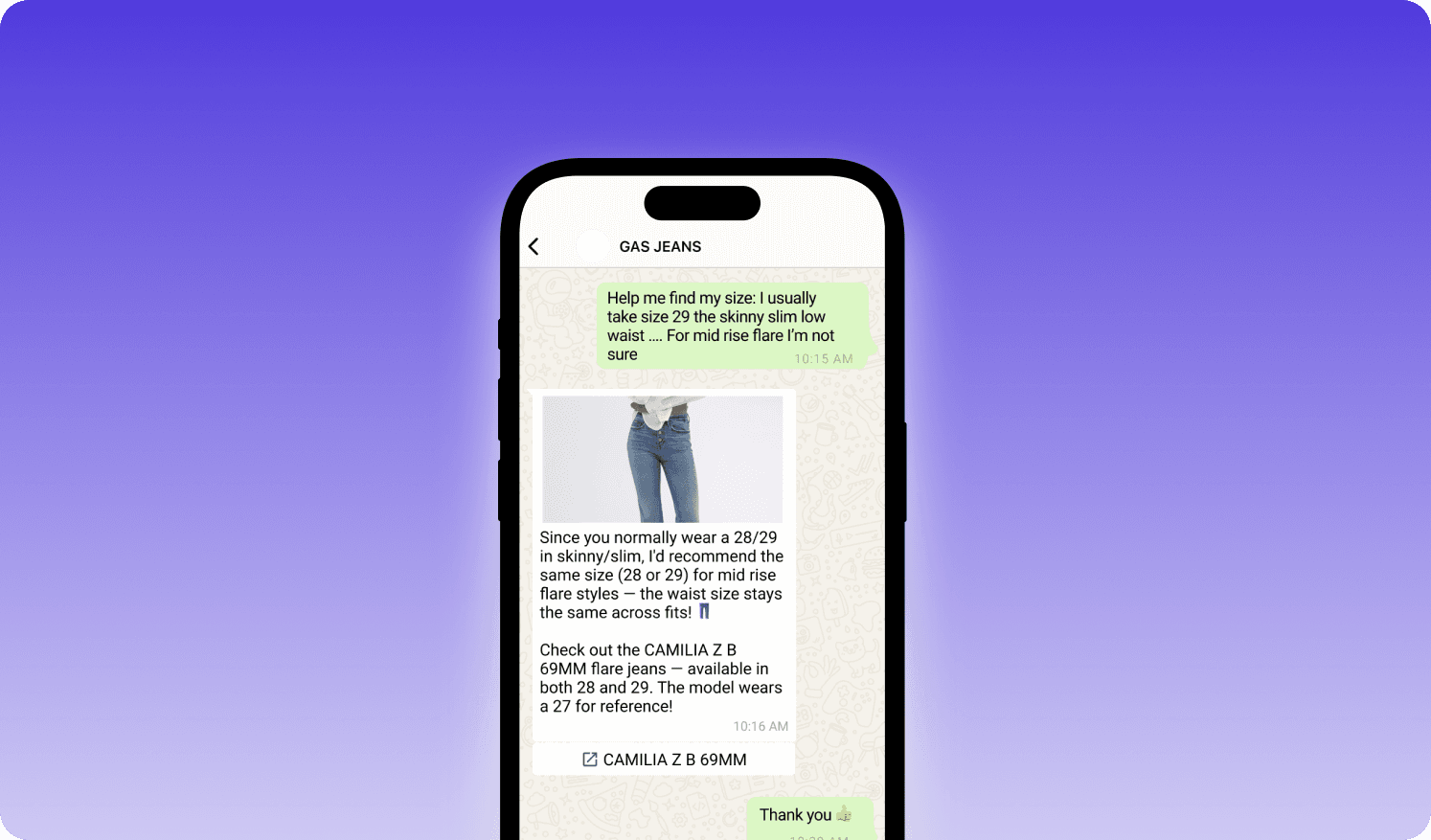
Basic automation follows rules. AI-powered automation learns and adapts—and that difference matters for revenue outcomes.
AI analyzes purchase history, browsing behavior, and customer data to suggest the most relevant upsell or cross-sell products automatically. Rather than showing the same "customers also bought" suggestions to everyone, AI tailors recommendations to each individual's profile.
Modern AI agents can handle the full conversation—answering questions, overcoming objections, and completing purchases—without human intervention. When a customer asks "will this case fit my phone model?" the AI can confirm compatibility and process the add-on purchase in the same thread.
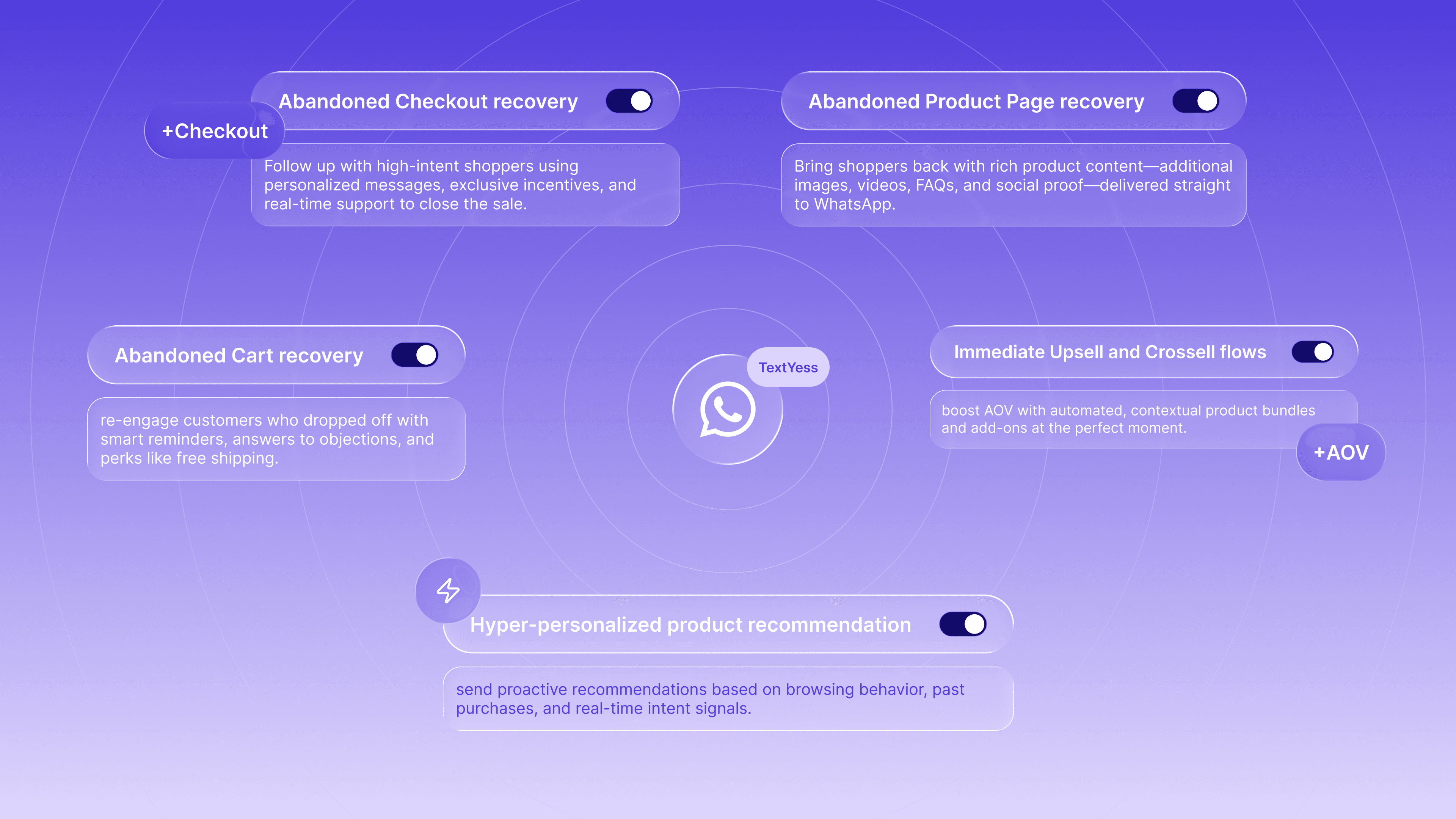
Personalization at scale used to require dedicated staff. Now, AI enables each customer to receive uniquely tailored recommendations based on their individual profile. Platforms like TextYess build unified customer profiles from every interaction, so the AI "remembers" each shopper across conversations.
Unified profiles: AI learns from every interaction across channels
Dynamic recommendations: Suggestions update in real-time based on inventory and behavior
Multi-language support: AI handles conversations in the customer's preferred language
Measuring results reveals whether automation delivers returns. Here are the metrics that matter.
Metric | What It Measures | Why It Matters |
|---|---|---|
Conversion rate | Messages that result in purchases | Overall campaign effectiveness |
Revenue per conversation | Average revenue generated per chat | ROI of WhatsApp channel |
AOV uplift | Increase in order value from recommendations | Upsell/cross-sell success |
Response rate | Customers who engage with messages | Message relevance and timing |
Understanding which orders originated from WhatsApp upsell and cross-sell messages requires proper attribution. UTM parameters work for tracking clicks, while platform-native attribution connects conversations directly to placed orders without manual tagging.
Performance data guides refinement. If post-purchase recommendations convert well but cart recovery underperforms, you know where to focus. Track metrics as a set rather than in isolation—the patterns reveal where to improve next.
WhatsApp upsell and cross-sell automation shifts messaging from a support channel to a revenue engine. The brands seeing the strongest results combine the right triggers, personalized recommendations, and AI-powered conversations.
Platforms like TextYess enable eCommerce brands to connect their store, configure AI shopping agents, and start converting WhatsApp conversations into measurable revenue. For EU-focused brands selling across multiple markets, the ability to run automations in multiple languages while maintaining a localized feel makes WhatsApp an increasingly valuable channel.
Running this kind of automation effectively depends on the data layer underneath it.
TextYess connects directly to your eCommerce store to sync product catalog, order history, and customer behavior automatically, so every WhatsApp recommendation is grounded in real purchase data, not guesswork.
From there, its AI Shopping Agent handles the full conversation: confirming product compatibility, surfacing relevant upgrades, and processing add-ons without human intervention. Real-time analytics track conversion rate, revenue per conversation, and AOV uplift directly, so you can see exactly which triggers are driving orders and where to optimize next.
If you want to see how this works in practice, book a demo with the TextYess team.
Does WhatsApp allow automation for business messages?
What customer data is needed for effective WhatsApp upselling?
How soon after a purchase should merchants send a cross-sell message?
How can merchants avoid getting blocked for WhatsApp marketing messages?
Can WhatsApp upsell campaigns run in multiple languages automatically?