10 WhatsApp Campaign Ideas for Fashion Brands in 2026
10 WhatsApp campaign ideas for fashion brands, covering new arrivals, VIP promotions, and cart recovery. Each targets a key buying moment with 98% open rates, discover them all!
10 WhatsApp campaign ideas for fashion brands, covering new arrivals, VIP promotions, and cart recovery. Each targets a key buying moment with 98% open rates, discover them all!
Fashion brands running WhatsApp campaigns see open rates around 98% roughly four times what email delivers. For an industry where purchase decisions depend on visuals, fit questions, and timing, that visibility translates directly into revenue.
This guide covers ten campaign types that work for fashion and apparel brands, from new arrival announcements to loyalty program messaging, along with how to personalize, automate, and measure performance.
WhatsApp campaigns work particularly well for fashion because the platform combines high visibility with the visual storytelling that clothing brands depend on. Open rates on WhatsApp typically reach 98%, compared to 20-25% for email. For fashion brands, where purchase decisions often hinge on seeing how a piece looks and getting quick answers about fit, WhatsApp's rich media and conversational format create a direct path from interest to purchase.
Fashion shoppers tend to have questions before buying. They want to know about sizing, see styling options, and feel confident the item will work for them. WhatsApp lets them ask those questions and get answers in the same place—without switching tabs or waiting for an email reply.
Another factor: nearly 79% of fashion e-commerce traffic comes from mobile devices, and WhatsApp sits right where shoppers already spend their time.
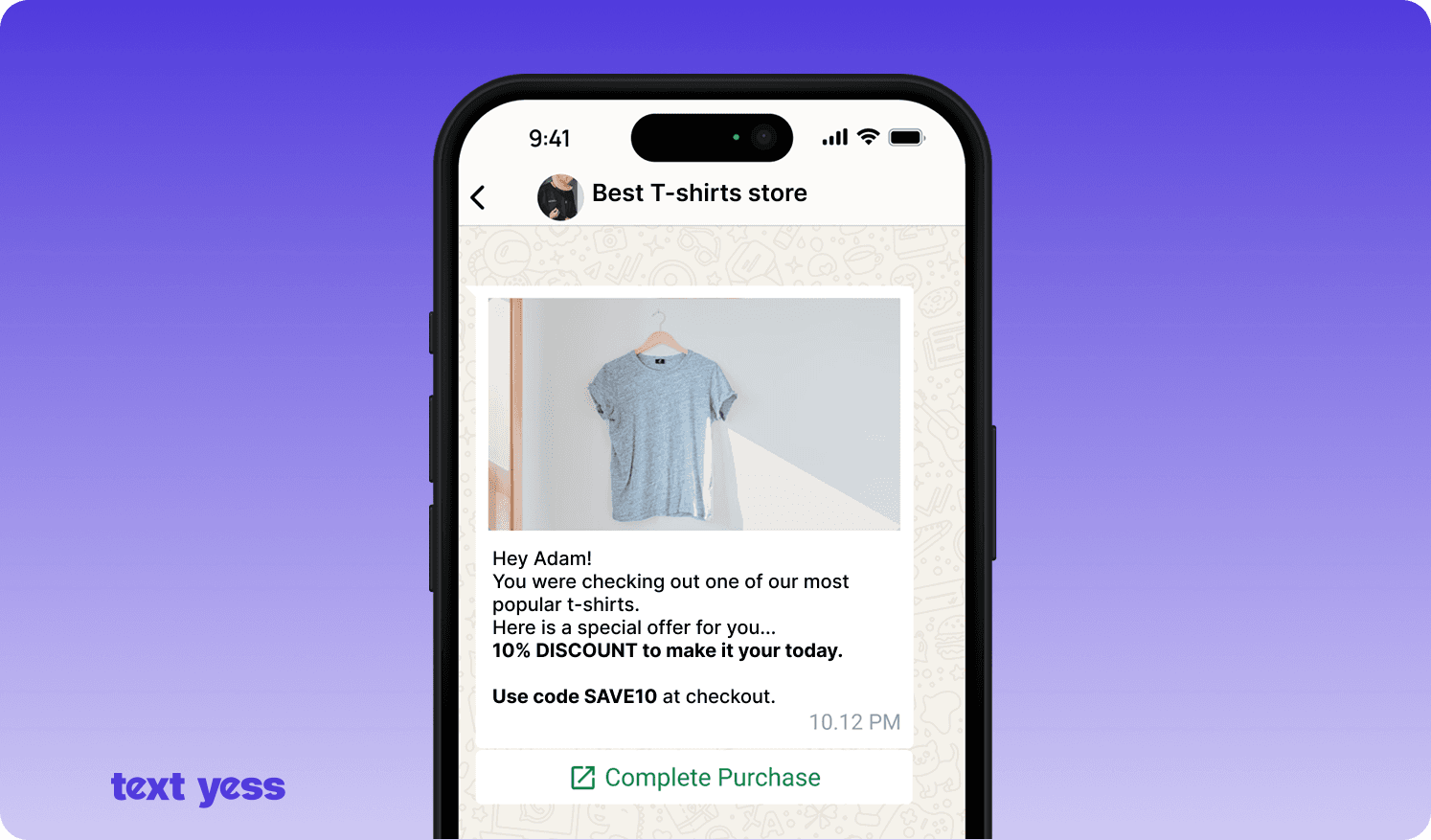
Here are ten campaign types that consistently drive revenue for fashion and apparel brands. Each one addresses a specific moment in the customer journey.
When you drop a new collection or restock a popular item, your WhatsApp subscribers can be the first to know. A carousel of product images with direct links to shop keeps the path to purchase short.
Timing matters here. Giving your WhatsApp list early access—even just a few hours before the public launch—rewards subscribers and creates urgency that generic email blasts rarely achieve.
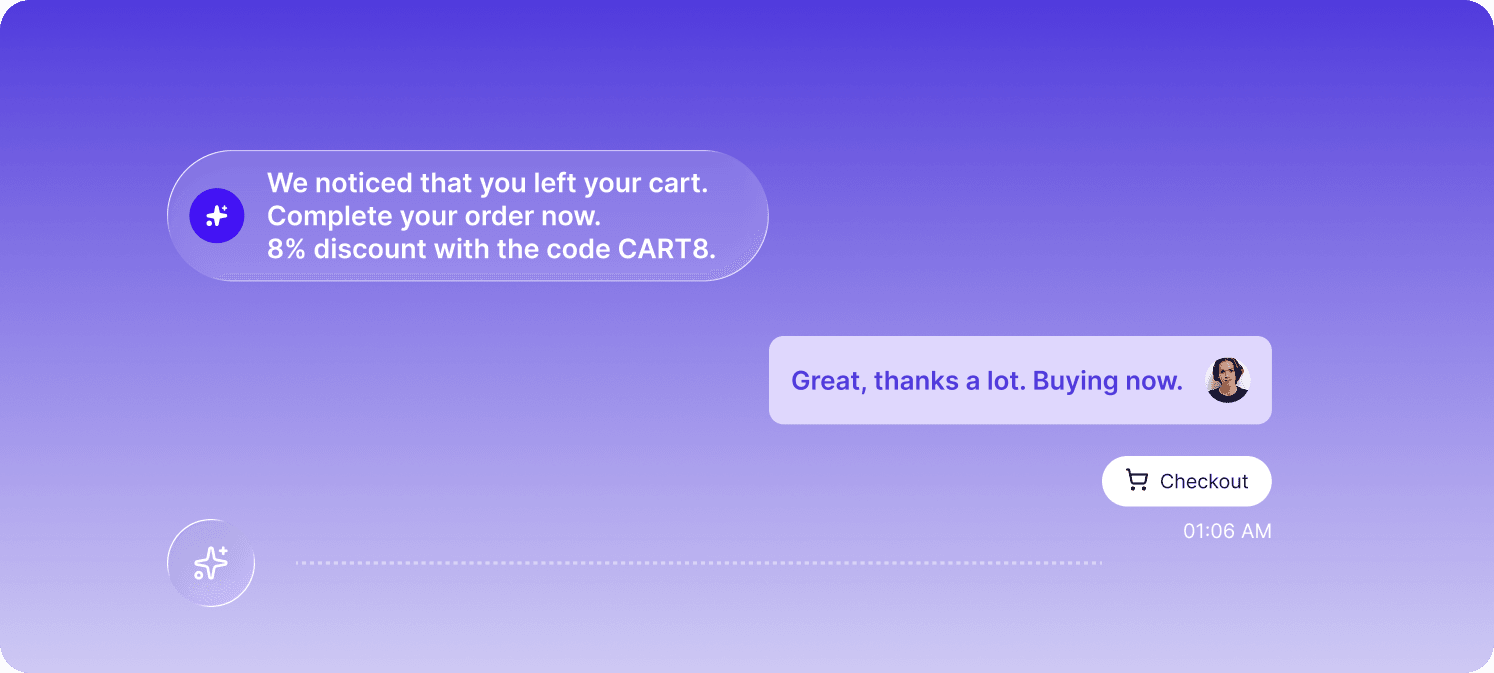
Cart abandonment in fashion hovers around 70%, often because shoppers get distracted or have unanswered questions about sizing or returns. A WhatsApp message sent within 30-60 minutes of abandonment can recover a meaningful portion of those sales.
The most effective recovery messages include the specific items left behind, address common hesitations like shipping costs, and make it easy to complete checkout directly in the chat.
Creating a VIP segment for repeat buyers or high spenders unlocks campaign opportunities that feel genuinely exclusive. Early access to sales, members-only discounts, or secret promotions perform well with this audience.
The framing matters as much as the offer itself. "This sale is only for our WhatsApp VIPs" lands differently than a generic discount code sent to everyone.
Using purchase history and browsing behavior, you can suggest items that match each customer's style. AI-powered recommendations deliver the "personal stylist" experience fashion shoppers expect—but at scale.
When a customer asks about summer dresses, an AI agent can recommend specific styles based on past purchases and what similar customers chose. Platforms like TextYess handle this automatically by syncing with your product catalog.
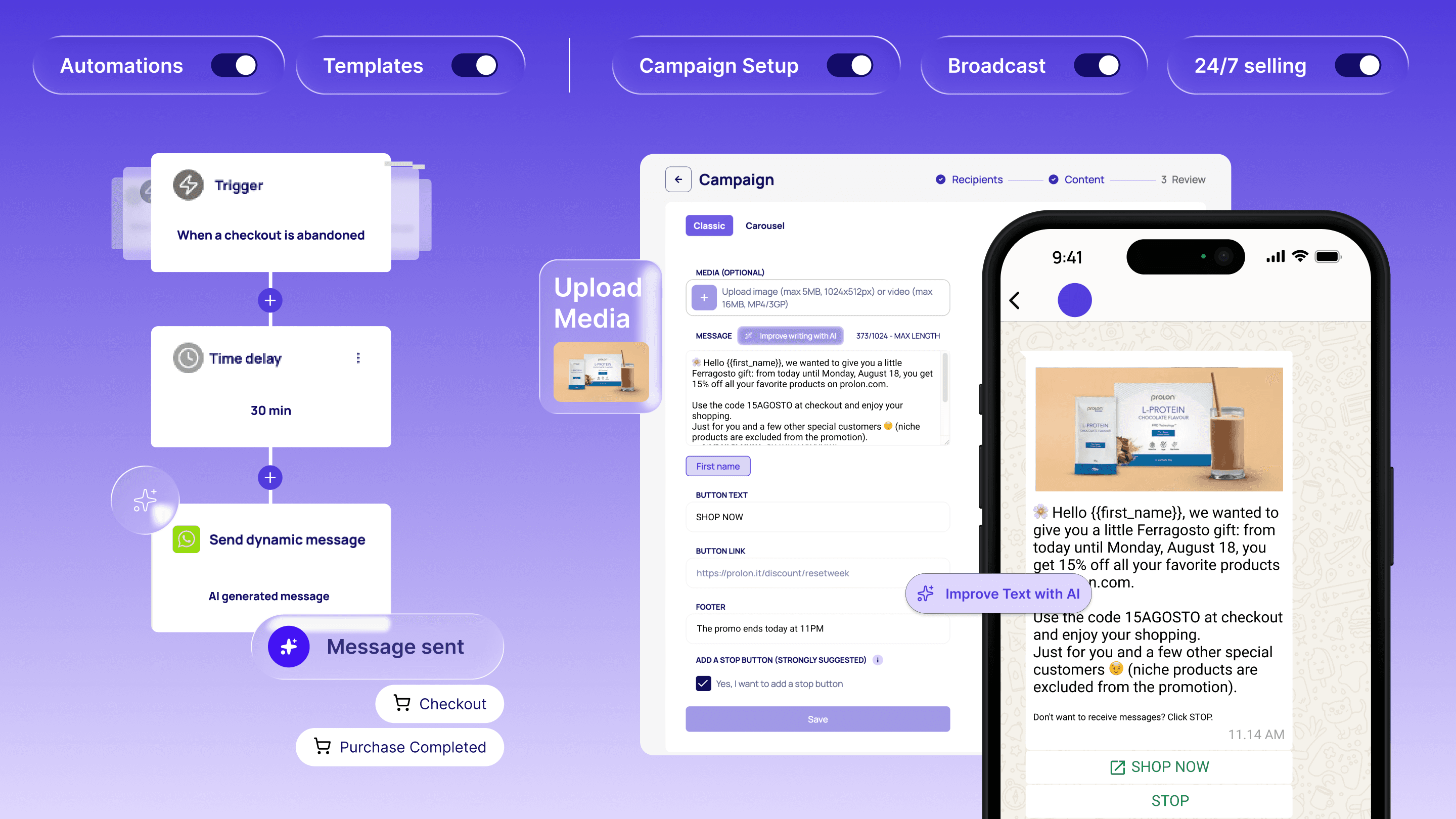
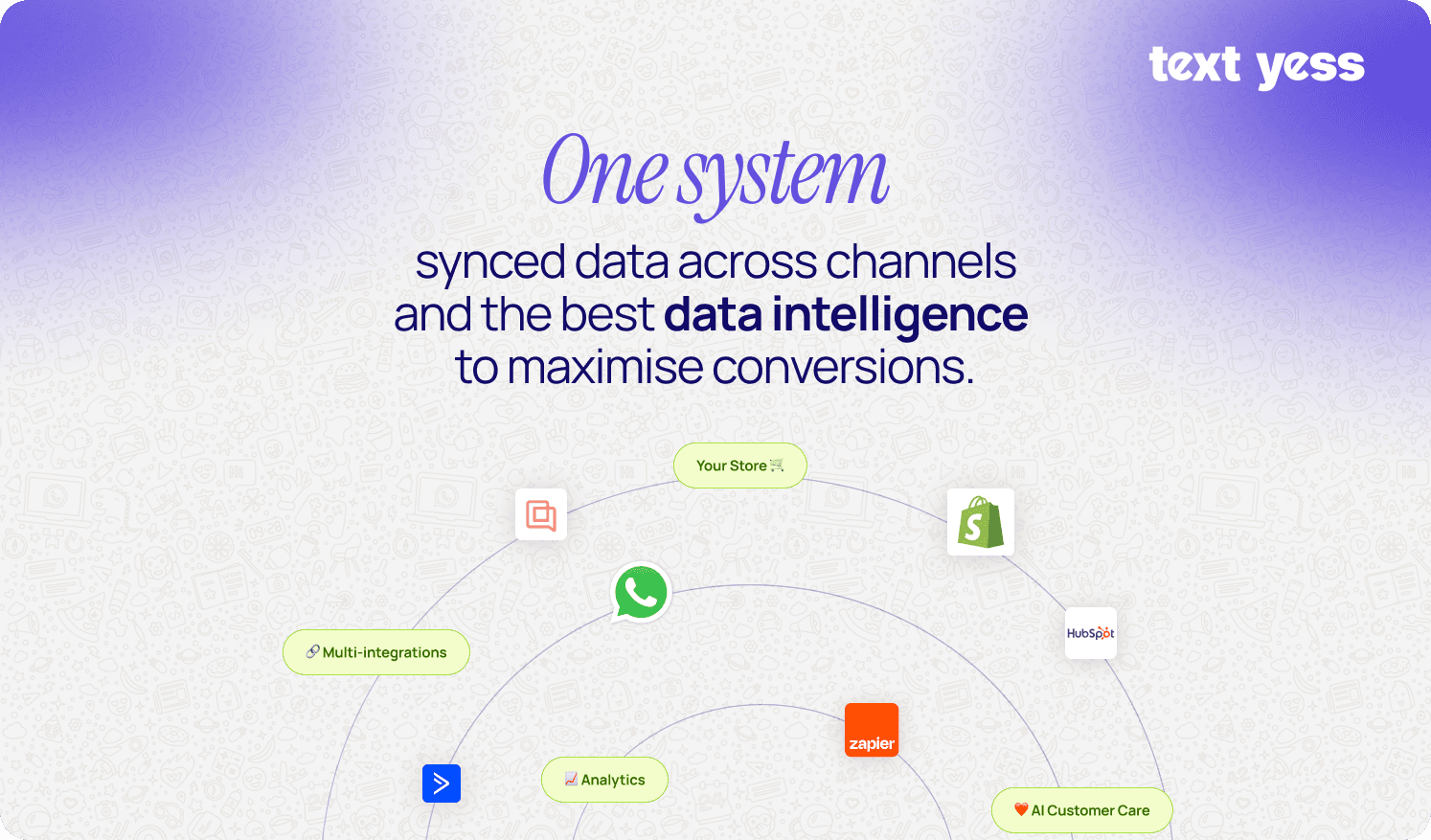
Running all ten of these campaigns effectively depends on one underlying capability: your WhatsApp platform needs to see your full eCommerce data in real time. TextYess connects directly to your product catalog, order management, and customer history, so campaigns like back-in-stock alerts and abandoned cart recovery fire automatically—without manual setup for each trigger.
The AI agent handles sizing questions and product recommendations 24/7, using each customer's purchase history to personalise responses at scale, while complex queries route seamlessly to your team through a unified inbox. For fashion brands managing high message volumes across multiple segments, that combination of autonomous handling and clean escalation is what keeps response times fast without growing headcount.
Flash sales, holiday promotions, and end-of-season clearance all perform well on WhatsApp. The channel's immediacy suits urgency messaging—countdown language and scarcity ("only 12 left in your size") drive faster decisions.
Seasonal campaigns align naturally with how customers already think about their wardrobes. A "summer essentials" flash sale in June meets shoppers where their intent already exists.
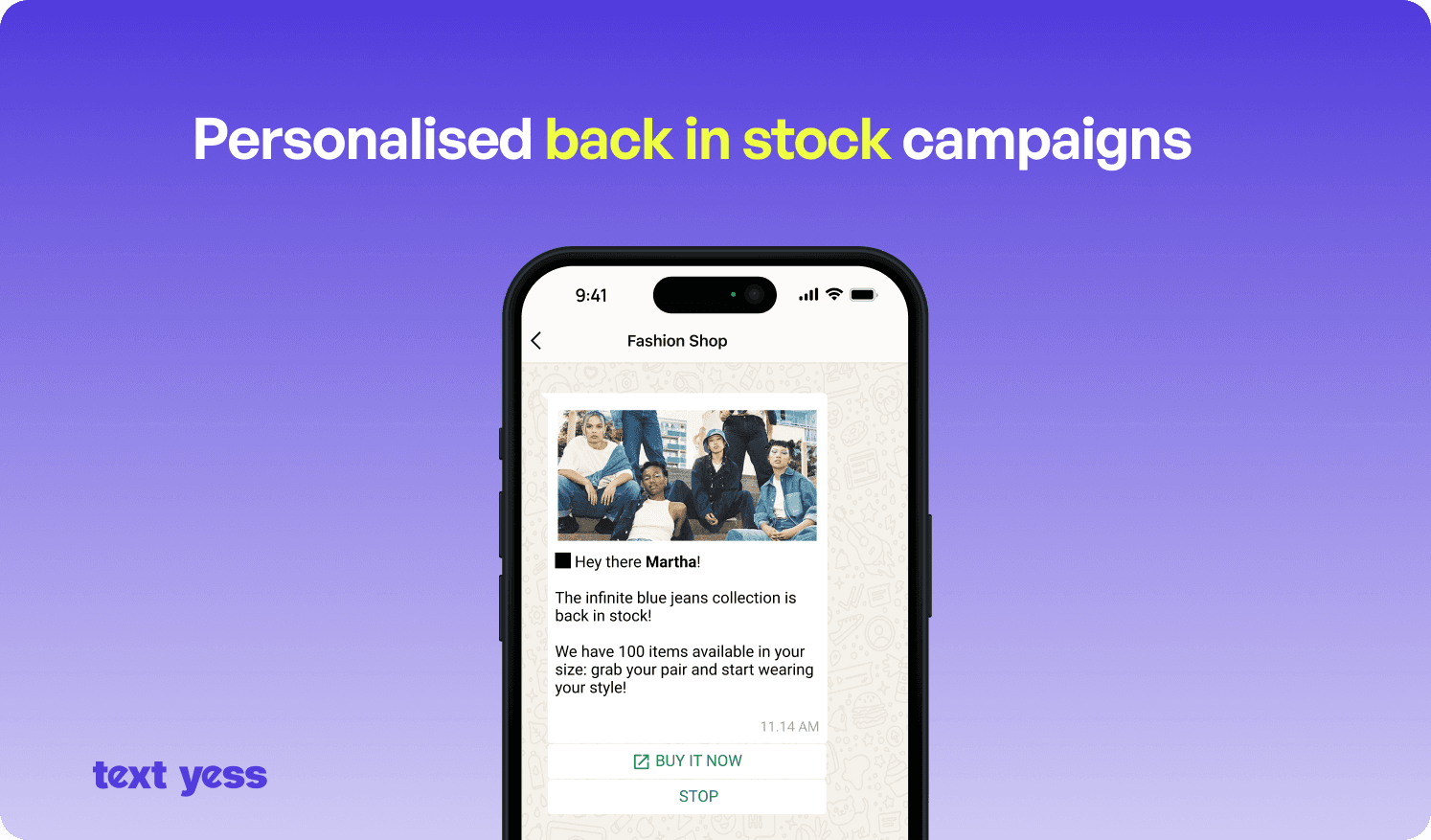
When a customer's desired item returns to inventory, a targeted WhatsApp message captures high-intent demand. These shoppers already expressed interest—they just couldn't buy at the time.
The opt-in process is straightforward: add a "notify me when back in stock" option on product pages that collects WhatsApp consent. When inventory updates, the message goes out automatically.
Not every message needs to sell directly. Outfit ideas, trend guides, and how-to-wear suggestions build brand affinity and keep subscribers engaged between purchases.
Carousel images work well here—show three ways to style a single piece, or curate a complete look for an upcoming occasion. This content positions your brand as a style authority, not just a retailer.
Transactional messages reduce "where is my order?" inquiries while building trust for future purchases. Proactive updates— order confirmed, shipped, out for delivery, delivered— keep customers informed without them having to ask.
These messages also create natural touchpoints for cross-selling. A delivery confirmation can include styling suggestions for the item they just received.
Timing review requests for a few days after delivery—when the customer has actually worn the item—yields better response rates. A direct link and a small discount on their next purchase as an incentive can increase participation.
The reviews you collect become social proof that drives future conversions: 93% of new customers seek reviews before buying. For fashion, where fit and quality concerns are common, authentic customer feedback carries significant weight.
Points balance updates, tier upgrades, and reward reminders keep your loyalty program visible. WhatsApp's personal feel makes these messages land better than email equivalents.
Referral programs also work well on WhatsApp. Customers can share unique referral links directly in their chats, and both parties receive reward notifications through the same channel.
Generic broadcasts underperform. McKinsey research shows personalization drives a 10 to 15 percent revenue lift, and the fashion brands seeing the strongest WhatsApp results invest in making each message feel relevant to the individual recipient.
Effective personalization draws on multiple data points:
Purchase history: What they've bought before indicates style preferences
Browsing behavior: Products viewed but not purchased signal interest
Size information: Stored preferences reduce friction on future purchases
Stated preferences: Direct input from quizzes or conversations
When your WhatsApp platform connects to your eCommerce store, this data flows automatically into every conversation. AI agents can use it to tailor recommendations in real time without manual segmentation work.
Different customer segments respond to different messages. First-time buyers benefit from welcome sequences and size guides. Repeat customers respond well to loyalty rewards and early access. Lapsed customers may re-engage with win-back offers. High spenders often expect VIP treatment and exclusive previews.
Building these segments once enables ongoing campaign targeting that feels personal rather than mass-market.
WhatsApp supports images, videos, PDFs, and product catalogs—all essential for fashion marketing. Lifestyle imagery typically outperforms flat product shots, and short video clips showing movement and fit can address concerns that static images cannot.
Interactive elements like quick reply buttons ("Shop now" / "See more colors") reduce friction and guide customers toward conversion.
Automation enables scale, but poorly implemented automation feels robotic. The goal is efficiency that still feels human.
Triggered campaigns fire automatically based on specific behaviors:
Abandoned checkout: Sent within an hour of cart abandonment
Post-purchase: Order confirmations, delivery updates, review requests
Browse abandonment: Follow-up when a customer views items but doesn't add to cart
Milestone events: Birthday messages, anniversary of first purchase
These triggers capture customers at high-intent moments without requiring manual intervention.
AI agents handle routine inquiries—sizing questions, stock checks, order status—while complex situations route to human team members. The handoff process matters: customers shouldn't have to repeat themselves when escalating.
A unified inbox that brings all conversations into one place makes this seamless. TextYess, for example, manages conversations across site chat, WhatsApp, and voice from a single interface.
Understanding what's working requires tracking the right metrics.
Metric | What It Measures | Why It Matters |
|---|---|---|
Open rate | Messages read vs. sent | Indicates list quality and timing |
Click-through rate | Link clicks vs. opens | Shows content relevance |
Conversion rate | Purchases from campaign | Direct revenue attribution |
Response rate | Customer replies | Engagement and conversation quality |
Opt-out rate | Unsubscribes | Audience satisfaction with frequency |
Revenue attribution is particularly important. You want to see exactly how much revenue originated from WhatsApp campaigns, not just engagement metrics. A/B testing message formats, timing, and offers helps optimize performance over time.
WhatsApp requires explicit opt-in—you can't simply import your email list. Building a quality subscriber base takes intentional effort across multiple touchpoints.
Effective placement opportunities include checkout page checkboxes for order updates, exit-intent pop-ups with an incentive, "notify me when back in stock" options on product pages, and preference selection during account creation. Each touchpoint captures subscribers at different stages of the customer journey.
Cross-channel promotion accelerates list growth. Adding your WhatsApp link to your Instagram bio, including CTAs in email footers, and using QR codes in packaging all drive post-purchase opt-ins. Offering WhatsApp-exclusive benefits gives customers a reason to join beyond convenience.
The power of WhatsApp marketing depends on integration depth. A disconnected tool can't access real-time inventory, order status, or customer history—limiting what your campaigns can actually do.
Effective integration connects your CMS or storefront to sync products, inventory, and orders automatically. It also connects marketing tools to coordinate WhatsApp with email, SMS, and ads. Payments and logistics integrations trigger messages based on payment and shipping events. Customer data platforms unify profiles across all touchpoints.
Platforms like TextYess connect the full eCommerce stack, enabling real-time, data-driven campaigns without manual data entry. Setup typically takes minutes rather than weeks.
WhatsApp works best when treated as a revenue channel, not just a communication tool. Combining the campaign ideas above with personalization, automation, and proper measurement creates a system for driving sales through conversation.
The brands seeing the strongest results invest in the infrastructure—integration, AI agents, unified data—that makes every conversation an opportunity to convert.
Discover TextYess to see how AI-powered WhatsApp campaigns can work for your fashion brand.
What are the GDPR requirements for WhatsApp marketing in the EU?
How often should fashion brands send WhatsApp marketing campaigns?
What is the ideal message length for WhatsApp marketing campaigns?
Can WhatsApp marketing campaigns work for luxury fashion brands?