How to Create Effective WhatsApp Drip Campaigns for Ecommerce
Learn how to build drip campaigns that actually convert on WhatsApp, the channel that has the highest conversion rate in the market.
Learn how to build drip campaigns that actually convert on WhatsApp, the channel that has the highest conversion rate in the market.
Email open rates have been declining for years. Meanwhile, WhatsApp messages hit 95%+ open rates and sit in the same app where customers chat with friends and family.
For ecommerce brands, this visibility gap represents a significant revenue opportunity. WhatsApp drip campaigns—automated message sequences triggered by customer actions like cart abandonment or post-purchase milestones—turn that attention into conversions. This guide covers how to set up compliant drip sequences, which use cases drive the highest ROI, and how to measure results across your customer journey.
WhatsApp drip campaigns for ecommerce involve sending automated, targeted messages over time to nurture leads and boost conversions. Unlike one-time broadcasts that blast a single message to your entire list, drip campaigns deliver a sequence of messages based on customer actions or scheduled delays. Open rates typically reach 95%+, compared to email's 15-25%.
The key difference is that drip campaigns respond to behavior. When a customer abandons their cart, the first message might be a gentle reminder. If they don't respond, a second message could offer a small discount. A third might add urgency. This sequenced approach feels less like marketing and more like a helpful nudge from someone who remembers what you were looking at.
There are three main types of drip triggers:
Trigger-based: Messages fire when a customer takes a specific action, like abandoning checkout or signing up for updates
Time-based: Messages send at predetermined intervals after an event, such as three days post-purchase
Behavior-driven: Sequences adapt based on how customers respond, with clicks triggering one path and no response triggering another
The business case comes down to visibility. Customers actually see WhatsApp messages because they land in a personal messaging app alongside conversations with friends and family. There's no spam folder, no promotions tab, no algorithmic filtering.
Email open rates hover around 20%. WhatsApp consistently delivers 95%+ open rates. That visibility gap translates directly into revenue because more people see your message, more people click, and more people buy.
Unlike email, WhatsApp enables two-way conversationsUnlike email, WhatsApp enables two-way conversations, with 175 million people messaging a business account daily. Customers can reply with questions, ask for sizing help, or request more product details. This back-and-forth transforms a marketing message into a sales conversation, often within the same session.sales conversation, often within the same session.
Drip sequences extend naturally beyond the sale. Order confirmations, shipping updates, delivery notifications, product care tips, and replenishment reminders all flow through the same channel. Customers don't need to check email for tracking because everything lives in one thread.
For brands selling across EU markets, WhatsApp is often the dominant messaging platform in GermanyFor brands selling across EU markets, WhatsApp is often the dominant messaging platform in Germany (81% adoption), Spain, Italy, and much of Latin America. Meeting customers on their preferred platform removes friction from the buying process.
Modern drip campaigns pull customer data to deliver relevant messages without manual effort. A customer who bought running shoes three months ago might receive a message about new arrivals in their preferred brand, while a first-time visitor gets a welcome sequence introducing bestsellers.
Both channels serve different purposes in the customer journey. WhatsApp works best for moments that require immediacy, while email remains valuable for longer educational sequences and content-heavy communications.
Factor | WhatsApp Drip Campaigns | Email Drip Campaigns |
|---|---|---|
Open rates | 95%+ typical | 15-25% typical |
Response time | Minutes to hours | Hours to days |
Message format | Short, conversational, rich media | Longer, formatted content |
Opt-in requirements | Explicit consent required | Standard subscription |
Cost structure | Per-message pricing (varies by region) | Typically subscription-based |
Best for | Time-sensitive, high-intent actions | Longer nurturing, content-heavy sequences |
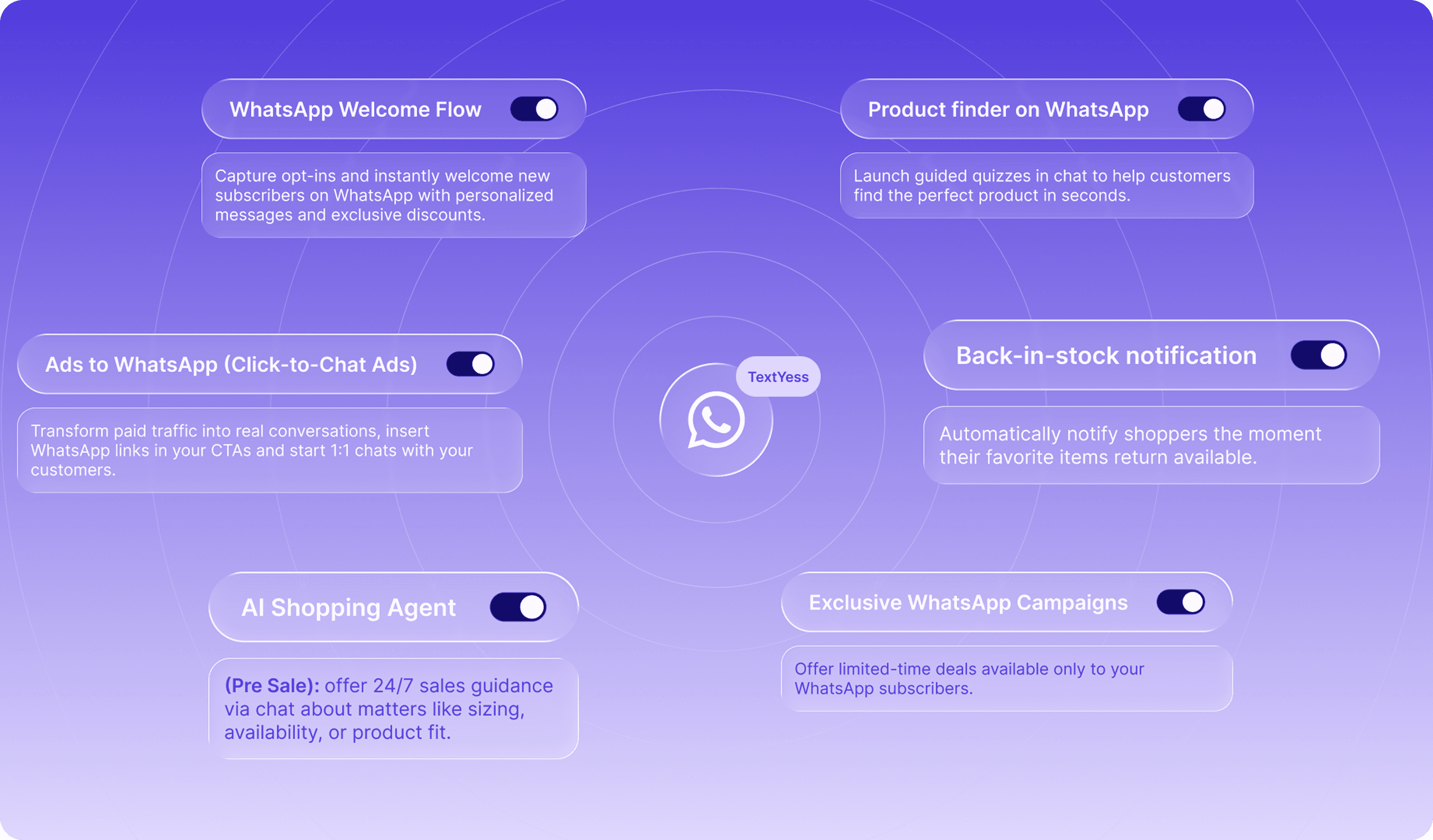
TextYess is built specifically for ecommerce brands that want to turn WhatsApp into a revenue channel.
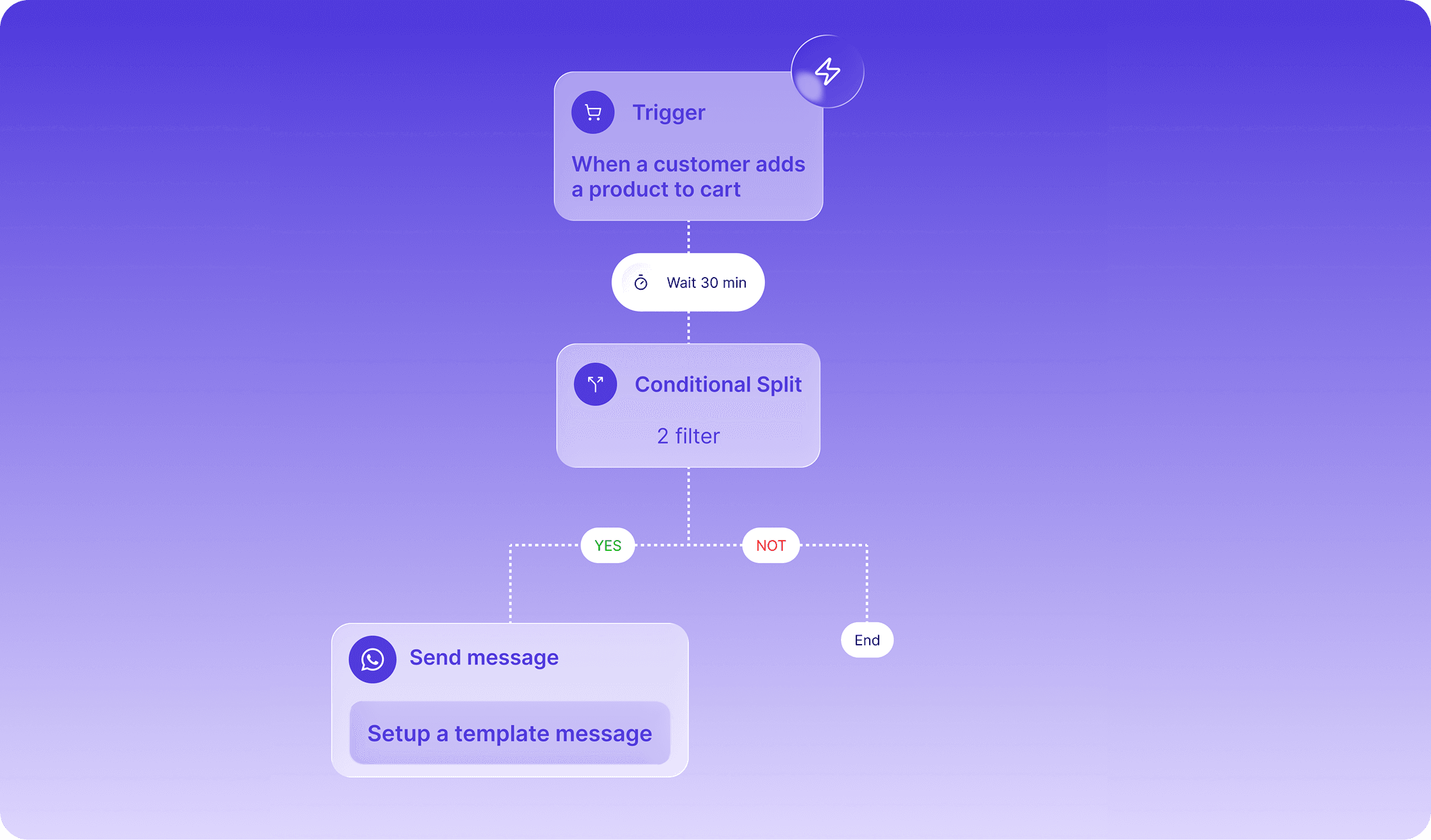
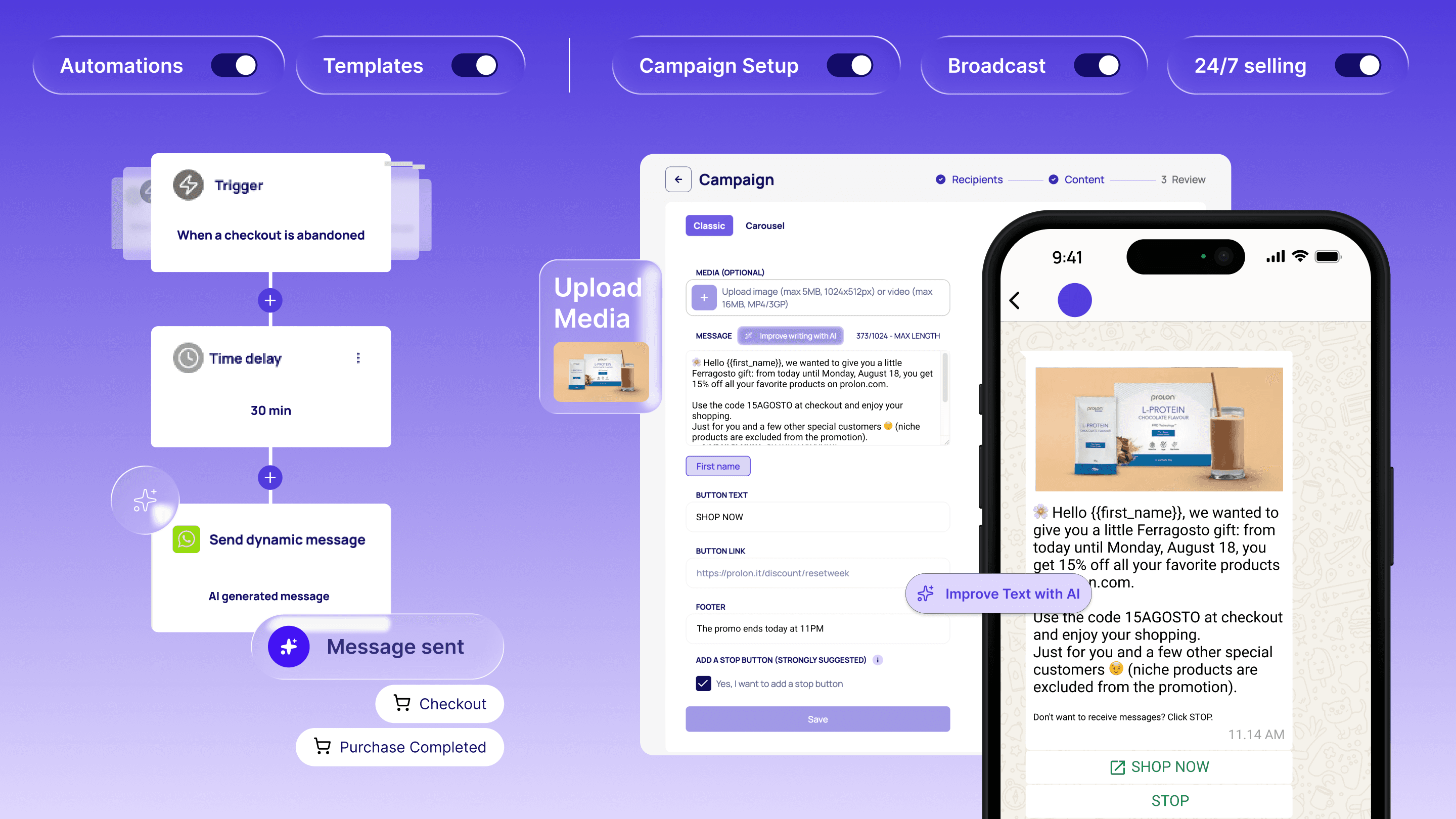
On the drip campaign side, TextYess handles the full sequence setup: trigger configuration, message scheduling, audience segmentation, and template management. You define the journey — abandoned cart, post-purchase, win-back — and the platform executes it automatically, connected directly to your store data. Product names, prices, images, and inventory status are pulled in dynamically, so messages feel personal without requiring manual work for each send.
Where TextYess goes further than a standard drip tool is in what happens after the message lands. When a customer replies — asking about sizing, delivery times, or whether a product is still available — an AI agent responds instantly, in the customer's language, with answers grounded in your actual catalog and order data. The drip doesn't just get a response rate; it starts a conversation that closes.
For brands selling across multiple EU markets, TextYess supports multi-language conversations natively. The same campaign can reach a customer in German, Italian, and Spanish without separate workflows or regional teams.
Key capabilities for ecommerce drip campaigns:
Trigger-based sequences connected to your store (cart abandonment, post-purchase, browse abandonment, back-in-stock)
AI agent that handles replies 24/7, in multiple languages, with live product and order data
Template management and Meta approval workflow built into the platform
Analytics across delivery rate, click-through, and revenue attributed to each sequence
If you're building out your first WhatsApp drip campaign or looking to make an existing one more responsive, TextYess is worth exploring.
Drip campaigns perform best when tied to specific customer actions or lifecycle stages. Let's look at the sequences that consistently drive revenue for online stores.
ThisWith an With an average cart abandonment rate of 70.19%, this is typically the highest-ROI drip for ecommerce. A common approach follows the 0-10-15 strategy: send the first message immediately after abandonment with a product image and reminder, follow up after 10 hours with a small discount, then send a final message after 15 hours with a larger incentive and urgency language.
First-time buyers benefit from a sequence that introduces your brand story, shares product care tips, and encourages a second purchase. Spacing messages over 7-14 days keeps your brand present without overwhelming new customers.
After order delivery, a well-timed message recommending complementary products can drive additional revenueAfter order delivery, a well-timed message recommending complementary products can drive additional revenue. Someone who bought a camera might appreciate a message about compatible lenses or carrying cases, especially if the recommendation feels personalized rather than generic.
Customers who haven't purchased in 60-90 days often respond to re-engagement sequences. Highlight new arrivals, offer a "we miss you" discount, or simply ask if they have questions about products they previously viewed.
Transactional drip sequences reduce "where is my order" support tickets while building confidence for repeat purchases. Order confirmation, shipping updates, and delivery alerts also open the door for post-delivery review requests.
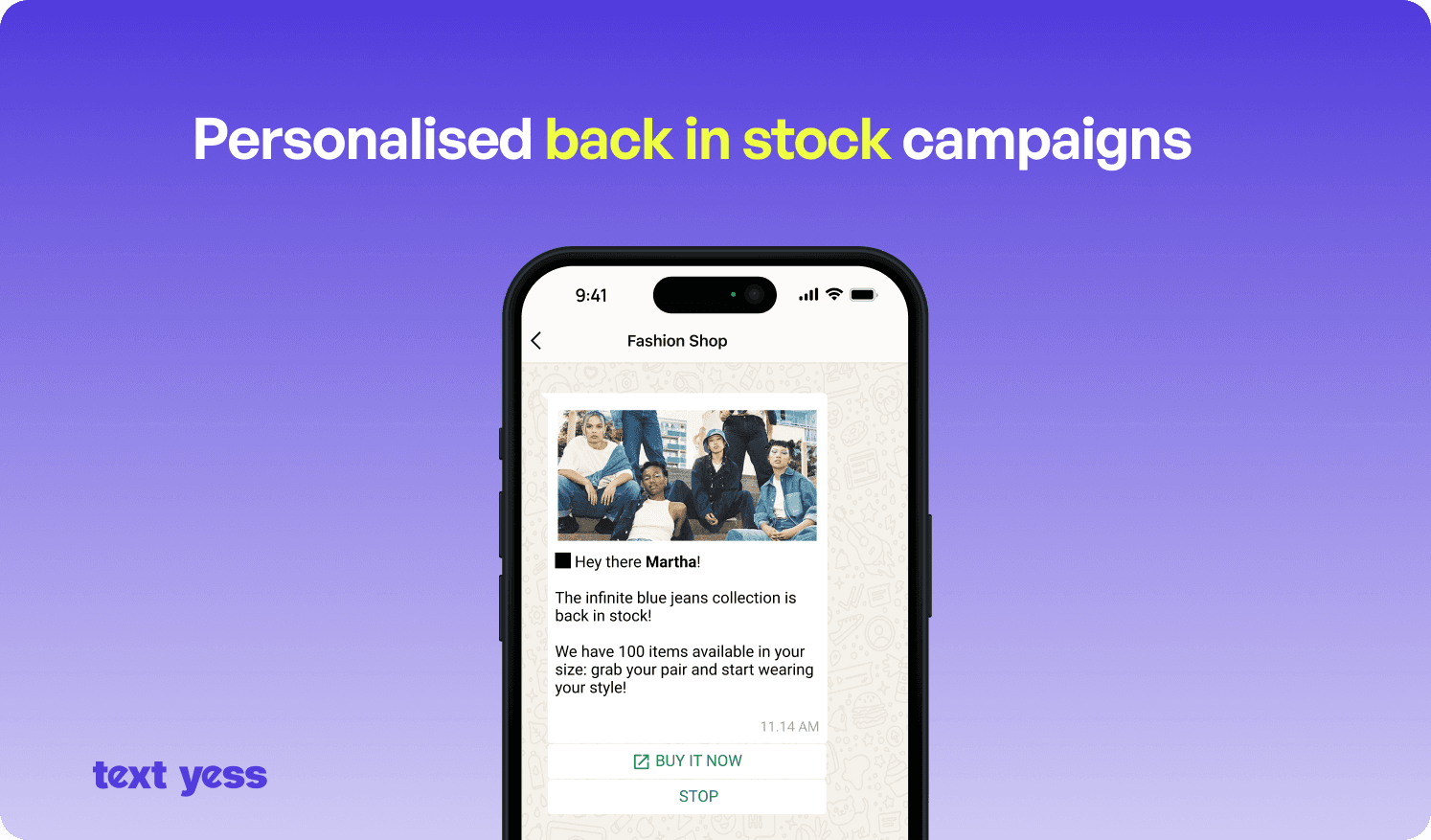
Browse abandonment, wishlist reminders, and back-in-stock alerts all work well as drip triggers. When a customer views a product multiple times without purchasing, a message addressing common objections can remove the hesitation.
Before setting up any campaign, understanding WhatsApp's compliance requirements is essential. Violations can result in account restrictions or permanent bans.
WhatsApp requires documented, specific consent before sending marketing messages. Valid opt-in methods include website checkboxes (not pre-checked), QR codes that clearly state what the customer is subscribing to, and click-to-WhatsApp ads where the customer initiates contact.
When a customer messages you, a 24-hour window opens during which you can send free-form messages. Outside this window, you can only send pre-approved message templates. Marketing templates cost more than utility templates.
All outbound messages outside the 24-hour window require pre-approved templates from Meta. There are four categories: Marketing (promotional content, offers), Utility (order updates, shipping notifications), Authentication (one-time passwords), and Service (customer-initiated support responses). Template approval typically takes 24-48 hours.
WhatsApp charges per delivered message, with rates varying by country and message category. Marketing messages in Western Europe typically cost more than utility messages. For high-volume campaigns, message quality and targeting become critical for ROI.
WhatsApp limits how many marketing messages a single user can receive across all businesses. If a customer has already received their limit from other brands, your message may not be delivered.
With compliance understood, here's the practical implementation path.
You have two options: direct API access (requires technical resources and Meta approval) or through a Business Solution ProviderYou have two options: direct API access (requires technical resources and Meta approval) or through a Business Solution Provider (BSP) that provides a ready-to-use platform. Most ecommerce brands choose the BSP route for faster setup, often going live in days rather than weeks.
Meta requires business verification before granting API access. You'll verify your business domain, submit documentation, and wait for approval. This one-time process typically takes 2-5 business days.
Write templates that clearly state their purpose, avoid spam triggers like excessive capitalization, and include an easy opt-out option. Submit templates at least a week before planned campaign launches to allow for revisions.
Only import contacts who have explicitly opted in. Organize them by behavior, purchase history, and engagement level. A customer who abandoned checkout yesterday needs different messaging than someone who hasn't visited in three months.
Plan the logic of each sequence: what triggers it, how messages are spaced, and how the sequence branches based on customer actions. Start with one high-impact sequence like abandoned cart before expanding.abandoned cart before expanding.
Connect your ecommerce platform data to your WhatsApp tool so messages fire automatically. This integration enables real-time triggers when a cart is abandoned, when an order ships, or when a product comes back in stock.real-time triggers when a cart is abandoned, when an order ships, or when a product comes back in stock.
Send test messages to yourself and team members. Verify that personalization variables populate correctly, links work, images display properly, and opt-out flows function as expected.
Once live, track delivery rates, click-through rates, and conversion rates. A/B test message copy, timing, and incentive levels. Small improvements compound over time.
A few optimization tactics consistently improve results across ecommerce drip campaigns.
Go beyond first-name personalization. Reference specific products the customer viewed, their last order, or their stated preferences. Messages that feel individually crafted outperform generic broadcasts.
A first-time visitor needs different messaging than a repeat buyer. Someone who abandoned a high-value cart might warrant a larger discount than someone who left a low-margin item.
Test different send times to find when your audience is most responsive. Space messages in a sequence to maintain momentum without causing fatigue. Typically 1-3 days between messages works well for most ecommerce sequences.
WhatsApp supports product images, videos, PDFs, and interactive buttons. A cart recovery message with an image of the abandoned product performs better than text alone.
WhatsApp is a personal channel. Messages that read like marketing copy feel out of place. Write as if you're a helpful friend who happens to know a lot about your products.
Every message benefits from one clear next step. Use interactive buttons when possible because they're easier to tap than links and typically see higher engagement.
Customer replies signal to WhatsApp that your messages are wanted, improving your sender reputation. Ask questions, invite feedback, and make it easy for customers to respond.
Tip: Enable "stop on reply" in your automation settings. When a customer responds, pause the drip sequence and route the conversation to a human agent or AI assistant for real-time engagement.AI assistant for real-time engagement.
Even well-designed campaigns can underperform due to avoidable errors.
Sending messages without proper opt-in violates WhatsApp policies and can result in account suspension. Beyond compliance, unsolicited messages damage customer trust and generate complaints.
Over-messaging leads to opt-outs, blocks, and poor deliverability. Customers will mark your business as spam, which affects your ability to reach everyone on your list.
Irrelevant messages waste your messaging budget and train customers to ignore your communications. If every message feels like a broadcast, customers stop paying attention.
Rejected templates delay campaign launches. Plan submissions ahead of time, follow Meta's content guidelines, and have backup templates ready in case your first submission needs revisions.
Launching campaigns without tracking performance means missing opportunities to improve results. Without data, you can't know which sequences are driving revenue and which are wasting budget.
Connecting drip campaign activity to revenue outcomes is what separates optimization from guesswork.
Track orders that resulted from drip campaign messages. Most platforms offer attribution windows, typically 24-72 hours after a message click. Understanding which sequences drive the most revenue helps you prioritize optimization efforts.
Delivery rate: Percentage of messages successfully delivered (aim for 95%+)
Click-through rate: Percentage of recipients who clicked a link or button
Conversion rate: Percentage of recipients who completed a purchase
Revenue per message: Total revenue divided by messages sent
Opt-out rate: Percentage of recipients who unsubscribed (keep under 1%)
Cart recovery rate: Percentage of abandoned cart messages that result in completed purchases
Review performance data weekly. Identify which messages in a sequence have the highest drop-off, test alternative copy, and refine targeting based on what's working.
Drip campaigns become significantly more powerful when AI agentsDrip campaigns become significantly more powerful when AI agents handle customer replies. Instead of a one-way sequence, the campaign becomes a conversation.
When a customer responds to a cart recovery message with a sizing question, an AI agent can answer immediately, 24/7, in multiple languages, and guide them back to checkout. This real-time engagement captures sales that would otherwise be lost to delayed responses.
Platforms like TextYess provide AI agents built specifically for ecommercePlatforms like TextYess provide AI agents built specifically for ecommerce that integrate with store data to deliver hyper-personalized, revenue-focused conversations. The AI can access product catalogs, order history, and customer preferences to make recommendations that feel hand-picked rather than algorithmic.
Can I run WhatsApp drip campaigns without the Business API?
What is the difference between a WhatsApp drip campaign and a broadcast?
How many messages should a WhatsApp drip sequence contain?
Do WhatsApp drip campaigns require a separate template for every message?
How do I handle customer replies during a WhatsApp drip sequence?
What happens when a customer opts out during a WhatsApp drip campaign?
How much does each WhatsApp drip campaign message cost to send?