Agentic Commerce: How AI Agents Drive Ecommerce Revenue
Agentic commerce uses AI agents to handle product discovery, cart recovery, and checkout on behalf of shoppers — driving ecommerce revenue and conversions.
Agentic commerce uses AI agents to handle product discovery, cart recovery, and checkout on behalf of shoppers — driving ecommerce revenue and conversions.
AI agents are reshaping how ecommerce works. Instead of customers browsing, filtering, and clicking through checkout themselves, autonomous AI now handles product discovery, comparison, and purchase completion on their behalf.
This shift from human-led shopping to agent-assisted commerce is already driving measurable revenue gains, with McKinsey projecting up to $1 trillion in US agentic commerce revenue by 2030. We'll look at what ecommerce AI agents actually do, how they differ from traditional automation, and the specific ways they increase conversions across channels like WhatsApp and on-site chat.
An ecommerce AI agent is autonomous software that researches products, compares options, and completes shopping tasks on behalf of customers. Unlike traditional chatbots that follow scripted decision trees, AI agents understand context, access real-time store data, and take independent actions without waiting for human direction.
The difference is practical.
A chatbot responds to the keyword "shipping" with a canned answer. An AI agent recognizes that a customer asking about shipping for a specific item in their cart might be hesitating before checkout, and responds with personalized reassurance or a relevant incentive. Platforms like TextYess are built around exactly this distinction — treating every conversation as a potential purchase moment rather than a support ticket.
What makes AI agents useful for ecommerce is their connection to live data. They pull from product catalogs, inventory levels, order history, and customer profiles to deliver responses that reflect what's actually happening in your store right now.
Autonomous decision-making: The agent evaluates customer intent and chooses the best response without human intervention
Multi-channel presence: A single agent operates across your website, WhatsApp, and voice channels
Data-connected intelligence: Real-time access to products, orders, and customer history enables contextually relevant conversations
Traditional ecommerce automation relies on rule-based triggers. If a customer abandons their cart, send an email after 24 hours. If someone visits a product page three times, show a popup. The workflows are predictable and rigid, and they can't adapt when customer behavior doesn't fit the script.
Agentic commerce takes a different approach. Instead of following predetermined paths, AI agents understand context, learn from interactions, and adapt responses in real time. They treat conversations as a revenue channel rather than just a support function.
Aspect | Traditional Automation | Agentic Commerce |
|---|---|---|
Response logic | Rule-based scripts | Contextual AI that understands intent |
Personalization | Segment-based | Individual customer data |
Actions available | Pre-defined workflows | Autonomous decisions within boundaries |
Channel coverage | Often single-channel | Unified across touchpoints |
Primary goal | Support cost reduction | Direct revenue generation |
The practical difference shows up in how each handles ambiguity. When a customer asks something unexpected, traditional automation either fails or routes to a human. An AI agent interprets the request, draws on available data, and provides a useful response.
The revenue impact of AI agents for online stores comes from specific, measurable mechanisms. Let's look at each one to better understand them.
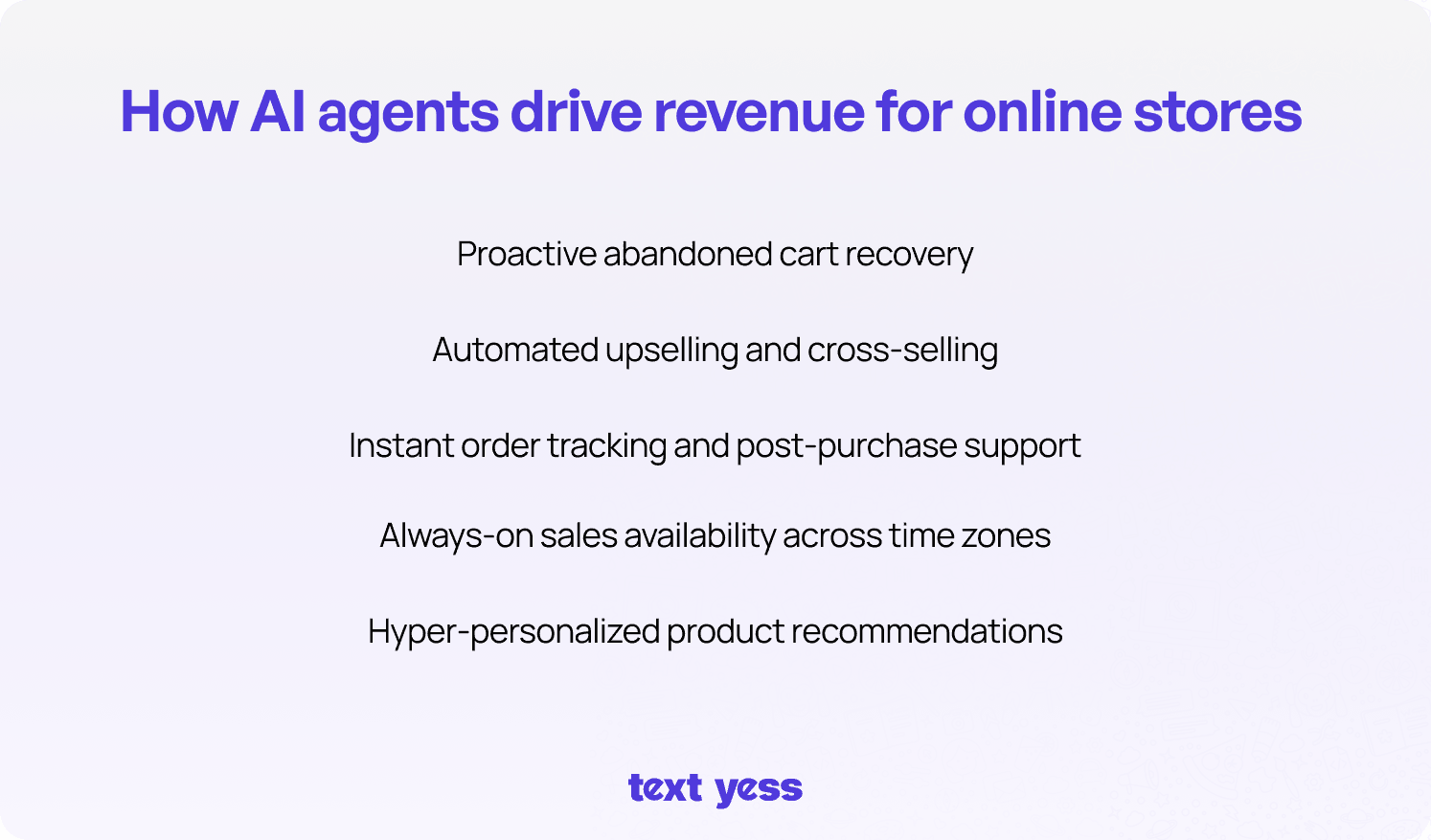
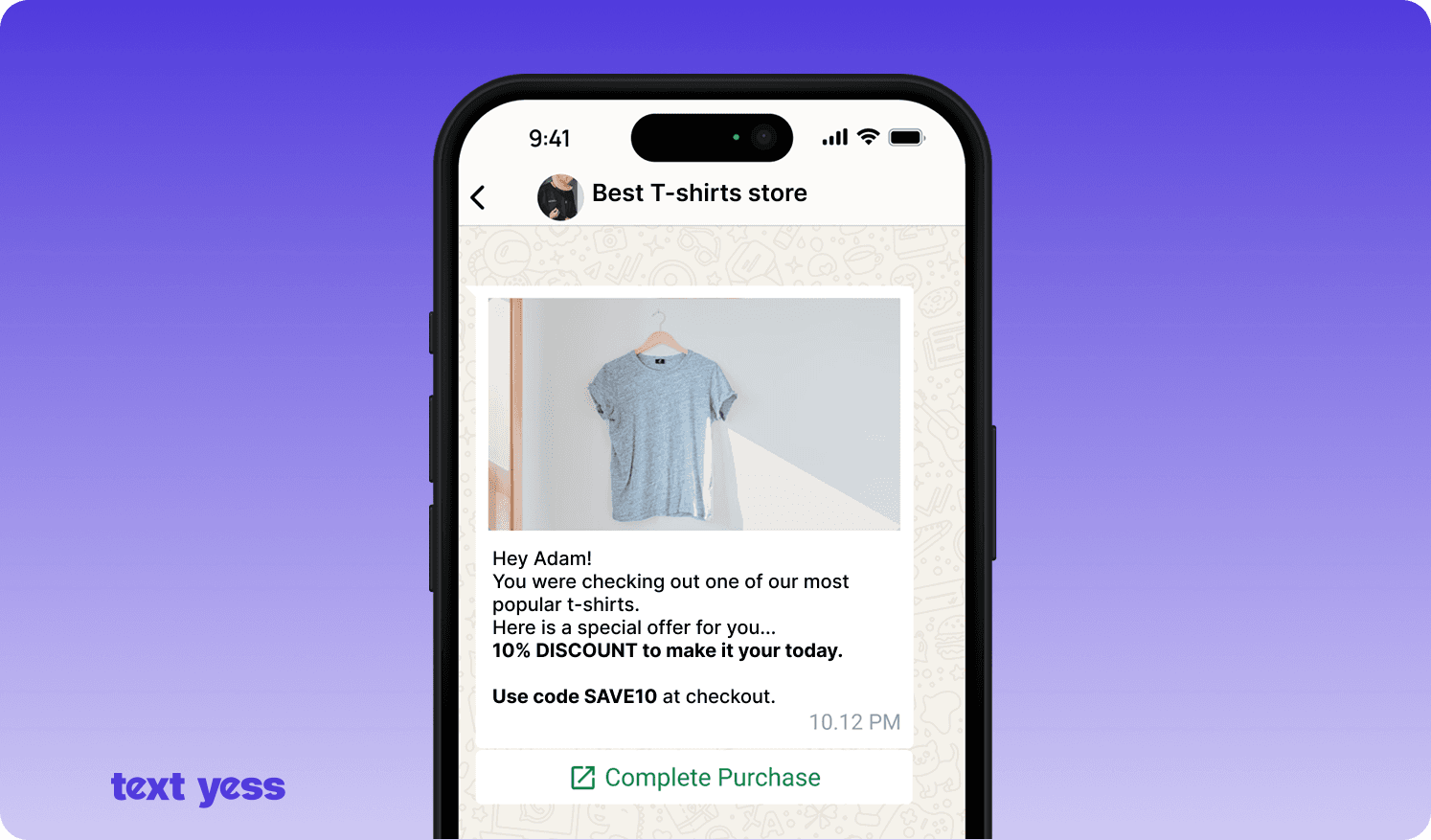
AI agents detect when a customer leaves items in their cart and initiate personalized follow-up conversations via WhatsApp or on-site chat. Unlike generic email sequences, agent conversations adapt based on what the customer was browsing, their purchase history, and the time of day.
Timing matters here. An agent might reach out within minutes for a high-intent shopper or wait until the next morning for someone browsing late at night. TextYess, for instance, handles this kind of timing logic automatically: syncing with your store data to decide when and how to re-engage each shopper.
During any conversation, AI agents suggest products based on browsing behavior, past purchases, stated preferences, and questions asked in the current session. Recommendations feel natural because they emerge from dialogue rather than appearing as generic "you might also like" widgets, which over 75% of consumers find irrelevant.
A customer asking about running shoes might receive suggestions filtered by their preferred brands, price range, and the terrain they mentioned. All without filling out a quiz or profile.
AI agents identify high-intent moments during conversations and introduce complementary products when they're genuinely relevant. Someone purchasing a camera might hear about a lens that pairs well with their specific model. A customer buying skincare could learn about a serum that addresses the concern they just mentioned.
The key is contextual relevance. Suggestions emerge naturally from the conversation flow rather than feeling forced.
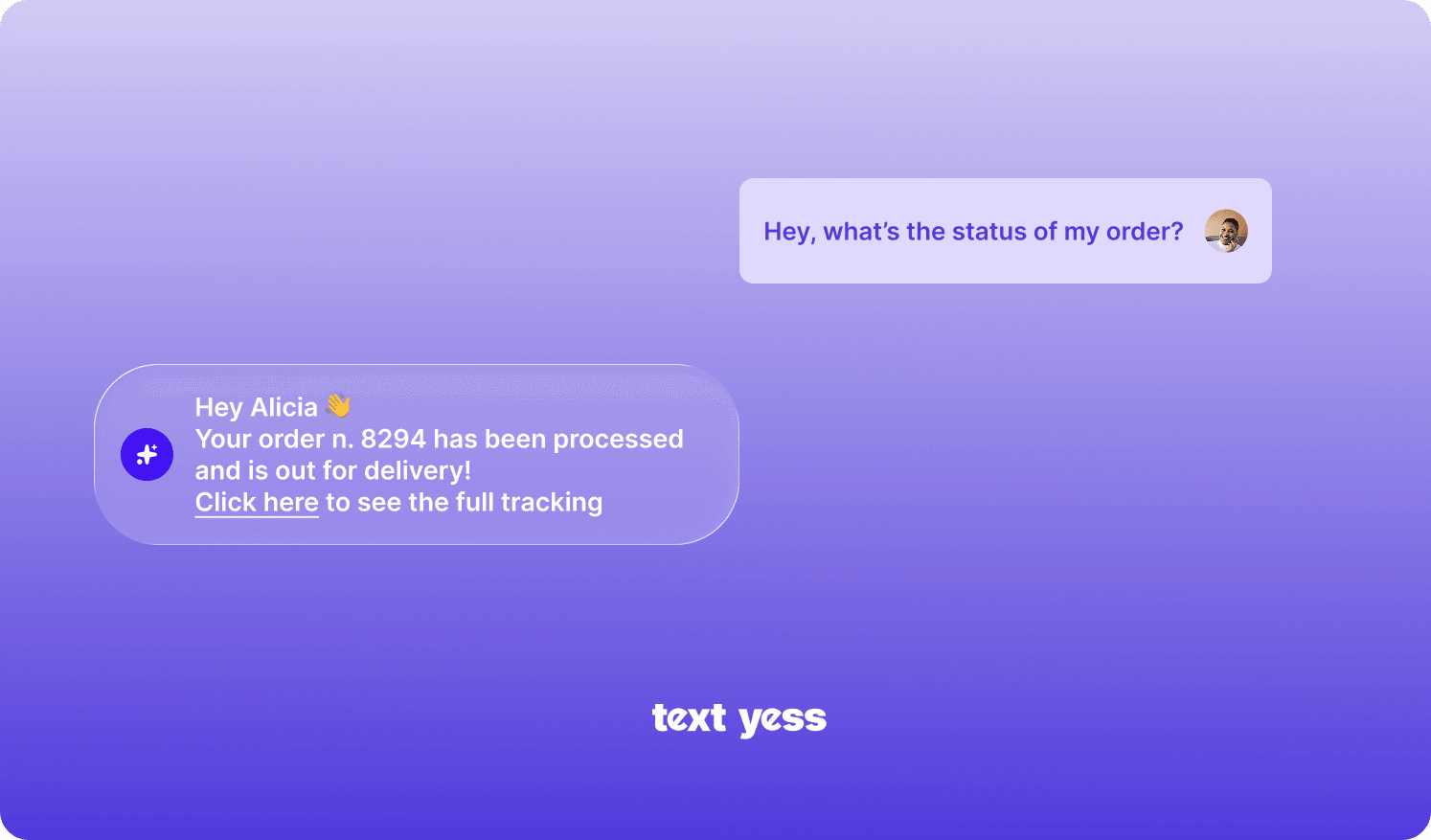
WISMO queries, short for "Where Is My Order," account for a significant portion of customer service volume. AI agents handle WISMO requests instantly by pulling real-time data from logistics systems, providing tracking updates, and proactively notifying customers about delays before they ask.
Fast, accurate post-purchase support builds the trust that leads to repeat purchases.
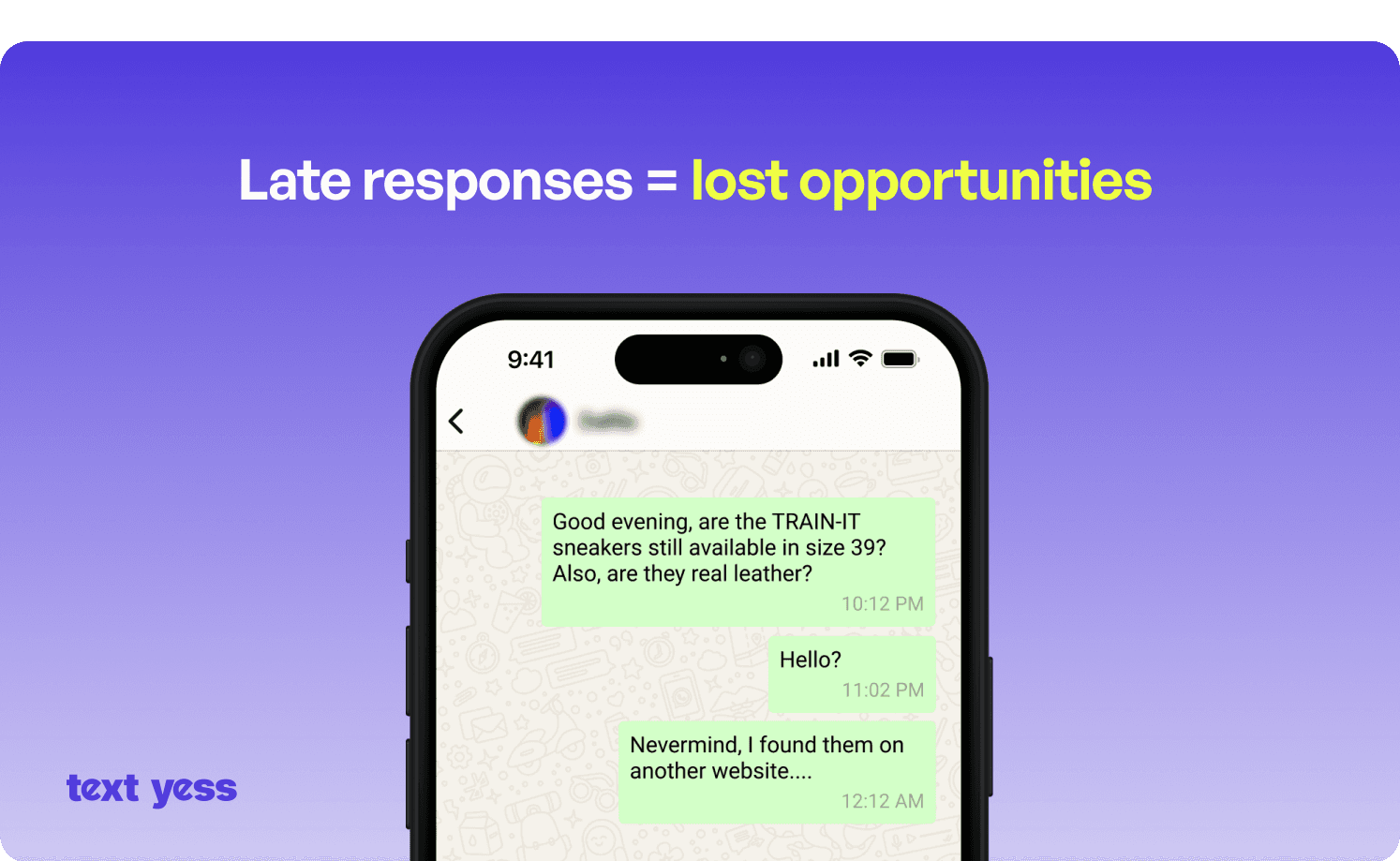
AI agents operate 24/7, capturing sales from customers browsing at 2 AM or shopping from different time zones. Human teams can't provide this coverage cost-effectively, which means many stores lose sales during off-hours.
Beyond specific revenue mechanisms, AI agents deliver broader business outcomes by becoming a real brand enhancer and improving the overall relationship with potential and existing customers. Let's see some exaples.
When customers get relevant answers during their buying journey, friction decreases and purchase likelihood increases. The difference comes from meeting customers where they are in their decision process rather than forcing them through a standardized funnel.
Personalized recommendations delivered at the right moment naturally increase cart size. Shopify research shows AI-powered recommendations can increase order values by half.
An agent that understands a customer's preferences can suggest additions that genuinely complement their purchase.
AI agents handle a high share of routine inquiries autonomously, often 60-80% of common questions about shipping, returns, sizing, and order status. Human agents can then focus on complex issues that actually require human judgment.
This way the job of customer care and assistance becomes even more crucial and not only focused on copy-and-paste activities.
Customers feel remembered when agents recall their preferences, past purchases, and previous conversations. This creates personalized experiences that were previously only possible with dedicated human sales associates.
And ultimately this is the key to a successful relationship with customers: being able to craft tailored experiences for each one of them is how brands will win the competition in the market.
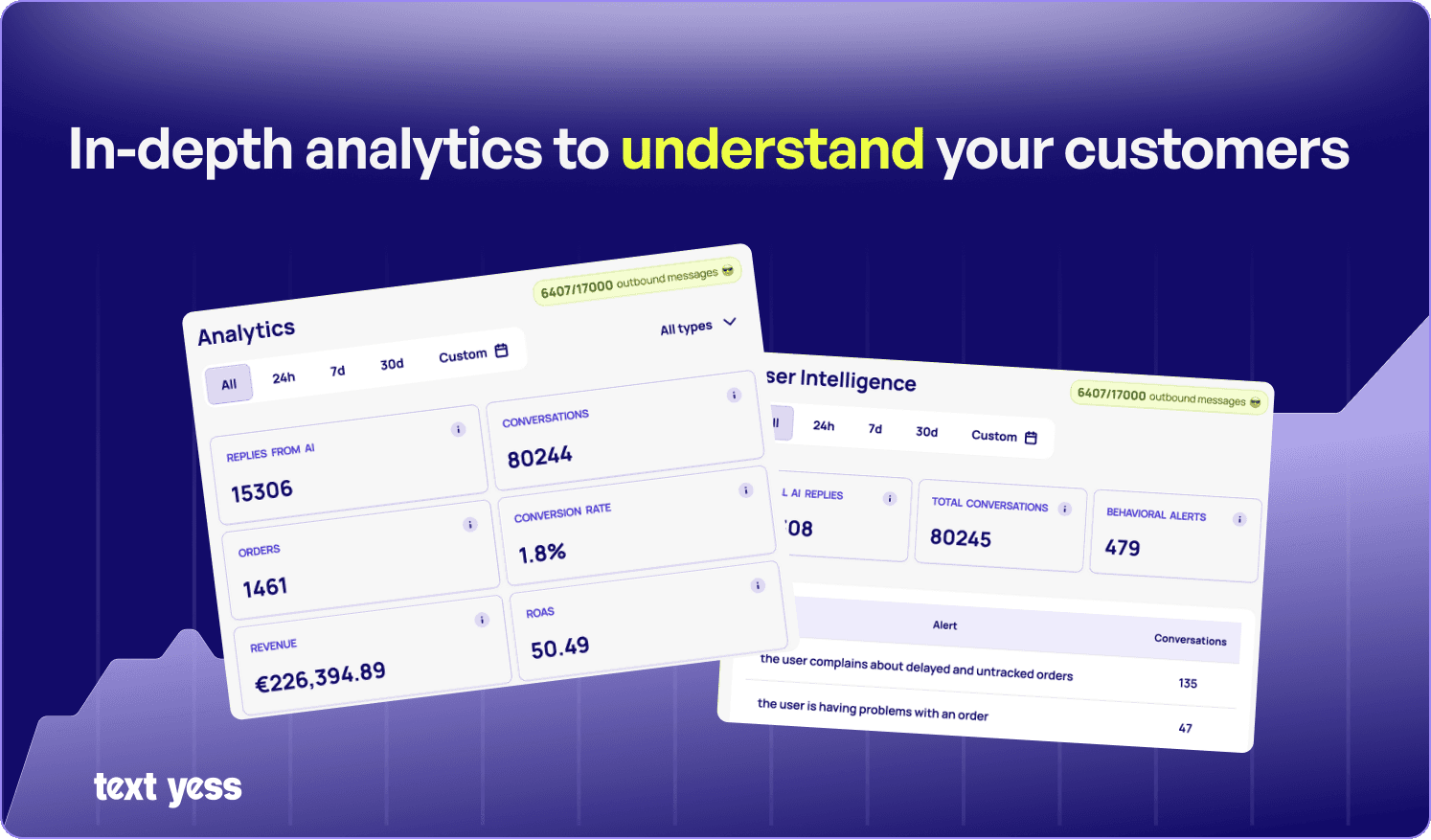
Unlike traditional chat tools that track deflection rates and satisfaction scores, ecommerce-focused AI agents track which conversations lead to orders. Teams can see conversion rates by conversation type and which product recommendations perform best. Tools like TextYess surface this attribution data directly, so you can connect specific conversations to actual revenue rather than guessing at impact.
Let's look at specific scenarios where AI agents in retail generate measurable value.
Conversational product finders help customers narrow choices through natural dialogue. Instead of filtering through dozens of options, a customer describes what they're looking for and the agent guides them to relevant products.
Automated order status responses handle high-volume queries instantly. Customers get immediate answers, support teams avoid repetitive work, and satisfaction stays high even during peak periods.
Agents proactively reach customers with relevant offers based on behavior triggers: browsing specific categories, reaching a cart value threshold, or approaching a replenishment window for previously purchased items.
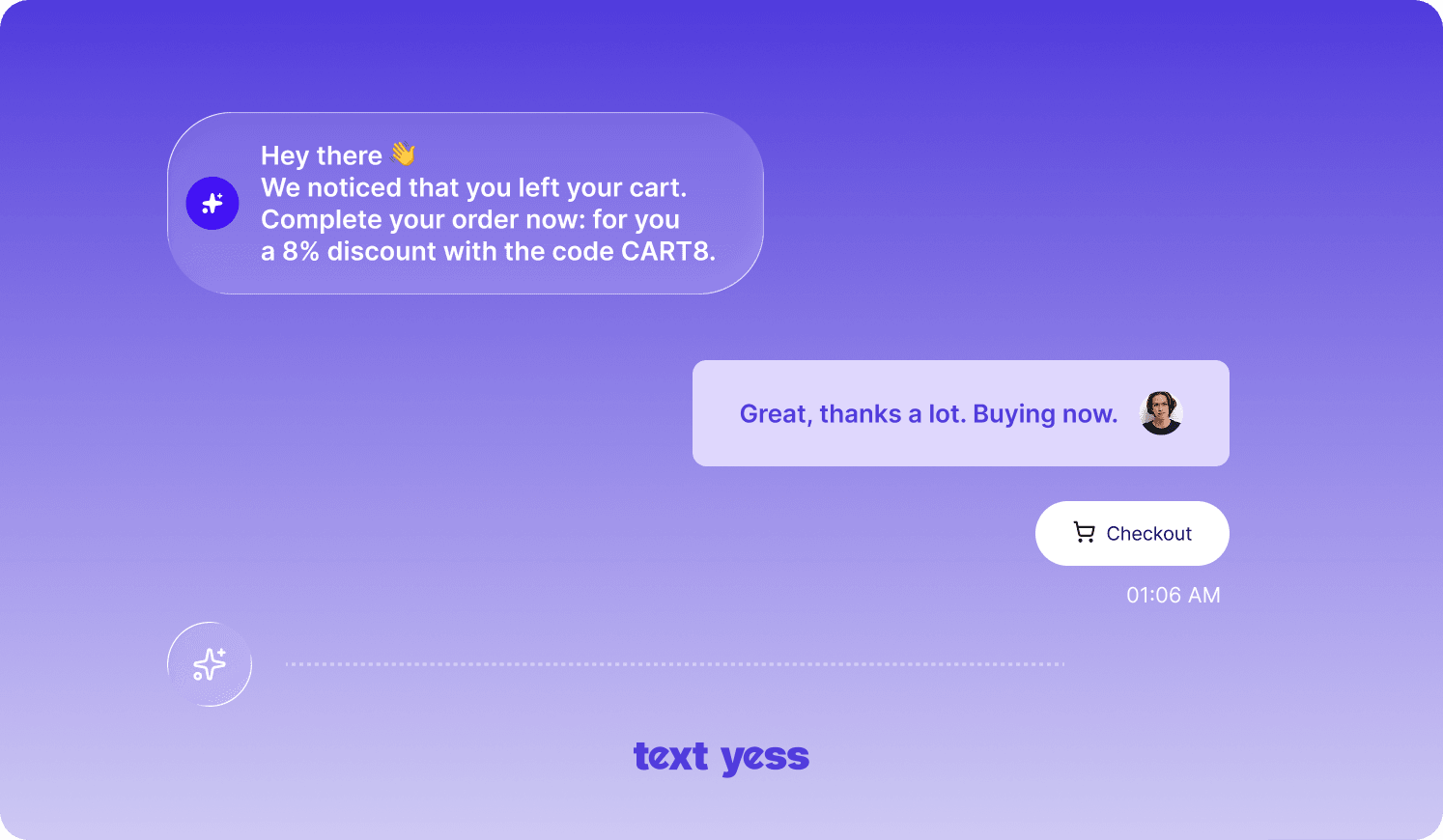
Last-minute questions about shipping costs, return policies, or product details often cause abandonment. Agents answer in real time, addressing objections before they become lost sales.
Automated review requests, replenishment reminders, and loyalty program engagement drive repeat revenue without requiring manual outreach.
Different channels offer distinct advantages for AI agent implementations. Of course, combining them brings the best results by creating more communication channels with potential and existing customers.
WhatsApp messages see open rates above 90%, far higher than email. The conversational familiarity of messaging makes customers more comfortable engaging. For brands selling in markets where WhatsApp dominates communication, this channel often becomes the highest-converting touchpoint.
Website-embedded agents engage visitors during browsing, answer questions in real time, and guide toward purchase. They're particularly effective for complex products where customers have questions that product pages don't fully address.
Voice represents an emerging channel for natural, hands-free shopping assistance. While still maturing, voice agents offer convenience for reordering familiar products, checking order status, or getting quick answers while multitasking.
Technical integration determines whether an AI agent can deliver on its promise. Agentic commerce platforms with flexible APIs connect to existing store systems without requiring custom development.
CMS integration: Automatic syncing of products, inventory, and pricing keeps the agent's knowledge current
Customer data unification: Order history and preferences flow from existing systems into the agent's context
Marketing tool connections: Campaign triggers and attribution data connect to your existing stack
Payment and logistics sync: Real-time order status and transaction data enable accurate responses
The best platforms offer no-code setup that gets brands from connection to live conversations in minutes rather than months.
Implementation follows a straightforward sequence when using modern platforms designed for ecommerce.
1. Connect your ecommerce platform and sync customer data
The first step is integrating with your store's CMS, whether Shopify, WooCommerce, Magento, or similar platforms. This connection pulls your product catalog, customer profiles, and order data into the agent's knowledge base automatically.
2. Configure your AI shopping agent goals and tone
Next, you define how the agent behaves: its personality, response style, and business objectives. Some brands want a sales-forward approach while others prefer a helpful assistant tone. No-code configuration makes this accessible without technical resources.
3. Launch across channels and monitor performance
Finally, go live on your selected channels and use analytics to track conversions, response quality, and revenue attribution. Data from early conversations informs optimization.
TextYess is the AI-first conversational commerce platform built specifically for ecommerce brands. It connects directly to your Shopify store, syncing your product catalog, customer data, and order history so the agent always has accurate, up-to-date context. From there, it operates across WhatsApp and on-site chat — engaging shoppers, recovering carts, answering product questions, and completing purchases without requiring manual intervention from your team.
What sets TextYess apart from generic chatbot tools is its focus on revenue attribution. Every conversation is tracked against actual orders, so you can see which interactions drove purchases, which recommendations converted, and where in the funnel the agent is having the most impact. That kind of visibility makes it straightforward to optimize over time rather than relying on assumptions about what's working.
For brands that want to move beyond rule-based automation and start treating messaging as a genuine sales channel, TextYess offers a no-code setup that gets you from integration to live conversations quickly. Whether you're focused on reducing cart abandonment, increasing average order value, or simply being available to customers around the clock, the platform is designed to handle those goals without adding complexity to your operations.
Discover TextYess to see how an AI-first conversational platform can turn your customer interactions into measurable revenue.
Conversations are becoming a primary revenue channel for ecommerce, not just a support function. The shift from traditional automation to agentic commerce represents a fundamental change in how online stores engage customers.
Instead of pushing shoppers through rigid funnels, AI agents meet them in natural conversation and guide them toward purchase, 24/7, across channels, at scale.
Discover TextYess to explore how an AI-first conversational platform turns customer interactions into measurable revenue.
What is the difference between an AI agent and a traditional chatbot?
A traditional chatbot follows pre-written scripts and decision trees, returning canned responses based on keyword matching. An AI agent understands context, accesses real-time data, and makes autonomous decisions, adapting responses based on the specific customer and situation.
How do AI shopping agents generate revenue for online stores?
Do ecommerce AI agents integrate with Shopify, WooCommerce, and other platforms?
Can AI agents handle customer conversations in multiple languages?
How long does it take to implement an AI agent for an ecommerce store?