Website Chat Automation Strategies That Deliver Higher Conversion Rates
AI shopping assistants can push eCommerce conversion rates from 3% to over 12%. Learn the chat automation strategies that turn site visitors into buyers.
AI shopping assistants can push eCommerce conversion rates from 3% to over 12%. Learn the chat automation strategies that turn site visitors into buyers.
Most website visitors leave without buying anything. The average eCommerce conversion rate hovers around 3%, which means 97 out of every 100 shoppers walk away empty-handed.
Chat automation changes that equation. AI-powered chat agents can push conversion rates from 3% to over 12% by engaging visitors at the exact moment they hesitate, answering questions instantly, and guiding them toward purchase. This article covers the strategies, features, and metrics that turn website conversations into measurable revenue.
Websites using AI chatbots report conversion rates up to 23% higher than sites without chat automation. In eCommerce specifically, top-performing AI agents can push conversion rates from an industry average of around 3% to over 12%. The reason comes down to timing: automated chat removes friction at the exact moment a shopper hesitates.
Think about what happens when a visitor has a question about sizing or shipping. Without chat, they either dig through FAQ pages, send an email and wait, or simply leave. With automated chat, they get an answer in seconds. That immediacy keeps potential buyers engaged instead of bouncing to a competitor.
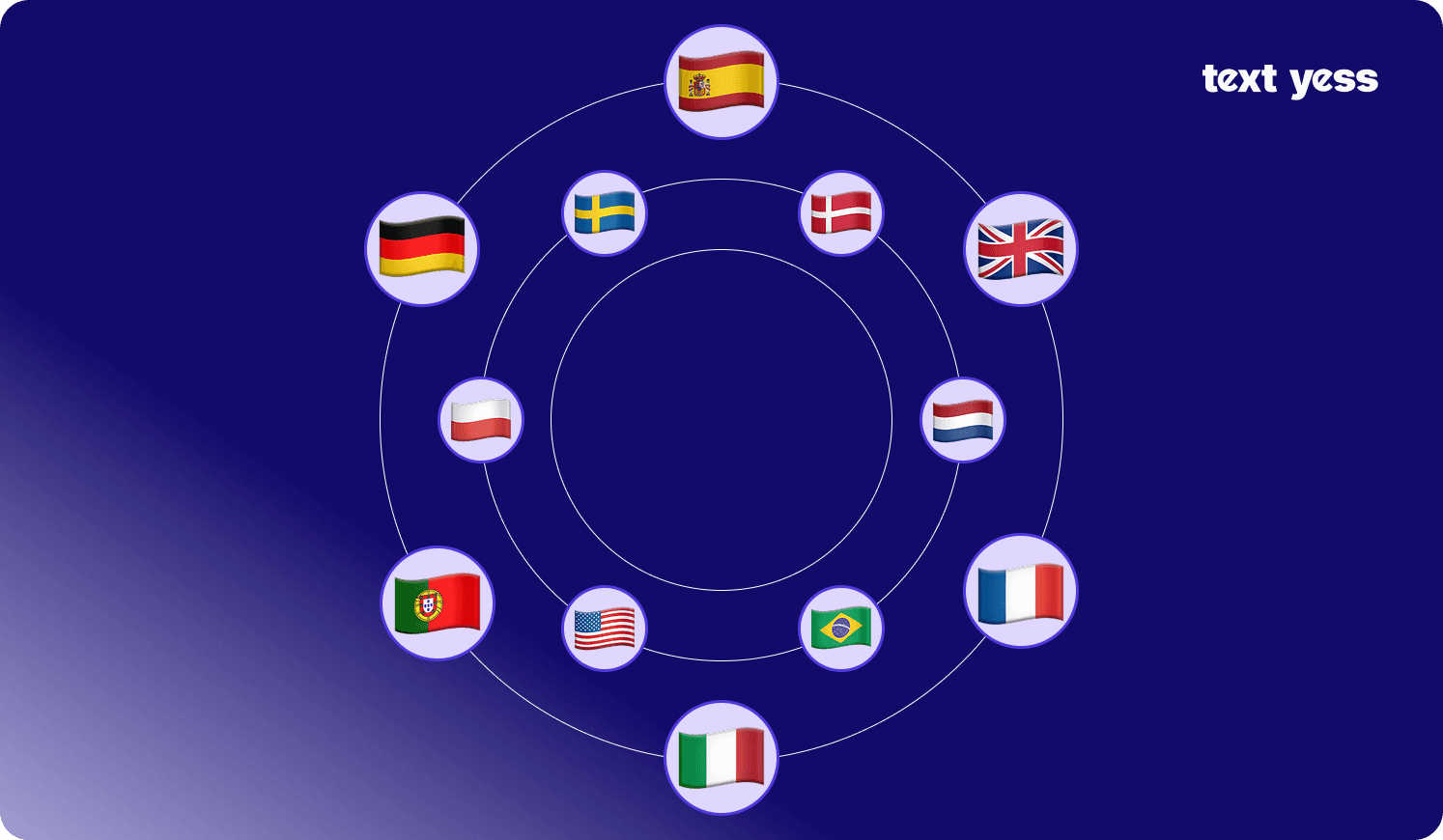
Round-the-clock availability matters especially for brands selling across borders. A shopper in Berlin browsing at midnight expects the same level of service as someone in Madrid at noon. Chat automation serves customers across time zones without requiring additional staff, which is particularly valuable for EU brands reaching global audiences. TextYess, for instance, is built with this cross-border use case in mind, handling multilingual conversations around the clock so brands never miss a sale due to a time zone gap.
Personalization at scale: AI-powered chat uses customer data, browsing behavior, and purchase history to tailor responses in real time. Personalization drives 10 to 15 percent revenue lift; instead of generic answers, visitors receive recommendations relevant to their specific situation.
Proactive engagement: Rather than waiting for someone to click a chat icon, the AI initiates conversations based on behavior triggers like lingering on a product page or showing exit intent. Proactive chat engages significantly more users than passive widgets that wait to be clicked.
Traditional chatbots follow scripted, rule-based responses. They work fine for simple FAQs, but struggle when conversations go off-script. Modern AI-powered chat automation uses natural language understanding and contextual awareness, which explains why it delivers better conversion outcomes.
Feature | Traditional Chatbots | AI Chat Automation |
|---|---|---|
Response Type | Scripted, keyword based | Contextual, intent driven |
Triggers | Static rules | Behavior-based |
Updates | Manual reprogramming | Continuous learning |
Personalisation | Limited | Hyper-personalised |
The practical difference shows up in how each handles unexpected questions.
A rule-based bot might respond with "I don't understand" when a shopper asks something outside its script. An AI agent interprets intent, draws on product knowledge, and provides a helpful answer even if the phrasing is unusual.
AI chat automation also improves over time. It learns from interactions, refines responses, and adapts to new products or policies without requiring manual reprogramming. For growing eCommerce teams, this means less maintenance and more consistent performance. Platforms like TextYess are designed around exactly this principle: the AI sharpens its responses as it processes more conversations, reducing the operational burden on the team over time.
When evaluating chat automation tools, certain features directly contribute to higher conversion rates. Let's look at what matters most.
Personalized product recommendations: The AI uses browsing and purchase history to suggest relevant products within the chat, similar to a knowledgeable sales associate who remembers what you looked at last time.
Automated upsell and cross-sell prompts: Chat automation can suggest complementary products or upgrades at the right moment in the conversation without feeling pushy.
Cart recovery and checkout assistance: The system detects abandoned carts and intervenes with reminders, answers last-minute questions, or offers support to complete the purchase.
eCommerce platform integrations: Syncing with the store's CMS, payment systems, and logistics tools ensures the AI has access to real-time product, order, and inventory data.
Real-time conversion tracking and analytics: Dashboards that tie chat interactions directly to revenue show which conversations led to purchases and which flows need optimization.
Platforms built specifically for eCommerce typically offer these features out of the box. The integration depth matters: an AI agent that knows current stock levels, shipping times, and order status can answer questions that directly influence purchase decisions. TextYess connects directly to a store's product catalog and order management system, giving the AI the live data it needs to respond with accuracy rather than approximation.
Cart abandonment remains one of the biggest revenue leaks in eCommerce, with average abandonment rates around 70%. Proactive chat strategies can recover a meaningful portion of lost sales when deployed effectively.
Exit intent detection tracks when a visitor is about to leave the page, typically by monitoring mouse movement toward the browser's close button. Triggering a chat message at this moment can re-engage shoppers before they bounce. A simple "Have any questions before you go?" often opens a conversation that leads to conversion.
Automated messages sent after a visitor leaves items in their cart can be delivered via on-site chat when the shopper returns, or through WhatsApp to bring them back. Timing matters here: messages sent within an hour of abandonment typically perform better than those sent days later.
The AI identifies hesitation signals like viewing the same product multiple times or lingering on a sizing guide, then initiates helpful conversations. "I noticed you're looking at our running shoes. Can I help you find the right size?" feels helpful rather than intrusive.
Scheduled follow-up messages sent hours or days after abandonment reconnect with shoppers who didn't complete their purchase. Time-delayed messages work especially well when combined with personalized product reminders based on what was left in the cart.
Limiting chat to the website alone misses opportunities to engage customers where they already communicate. Unified conversational commerce spans multiple channels while maintaining consistent customer experiences.
Unified inbox for all customer conversations: A single interface to manage messages from website chat, WhatsApp, and voice prevents conversations from falling through the cracks. Teams can see the full history regardless of which channel the customer used.
Channel-specific conversation strategies: Different channels work better for different purposes. WhatsApp excels for proactive campaigns and post-purchase updates. On-site chat handles immediate purchase assistance. Voice suits complex queries that benefit from real-time dialogue.
Consistent customer profiles across touchpoints: Syncing customer data across channels ensures the AI "remembers" each shopper regardless of where they reach out. Someone who asked about sizing on WhatsApp yesterday doesn't have to repeat themselves when they return to the website today.
This unified approach is central to how modern conversational platforms like TextYess operate. Rather than managing separate tools for each channel, teams work from one system with shared data and consistent AI behavior.
The goal isn't to eliminate human agents. It's to handle routine queries autonomously while routing complex issues to humans. This balance maximizes efficiency without sacrificing customer experience.
Common scenarios suited for AI include product questions, order status inquiries, sizing guidance, and FAQs. A well-configured AI agent can resolve 70-80% of support conversations without human intervention, freeing your team to focus on high-value interactions.
Seamless handoff matters when AI cannot resolve an issue. The transition to a human agent preserves conversation context so customers don't have to repeat themselves. Nothing frustrates shoppers more than explaining their problem twice.
Centralized knowledge keeps answers consistent. When product information, policies, and support guidelines live in one place, both AI and human agents draw from the same source. This prevents conflicting information and speeds up response times across the board.
Getting started with chat automation can happen quickly, often in minutes rather than weeks, when you follow a clear process.
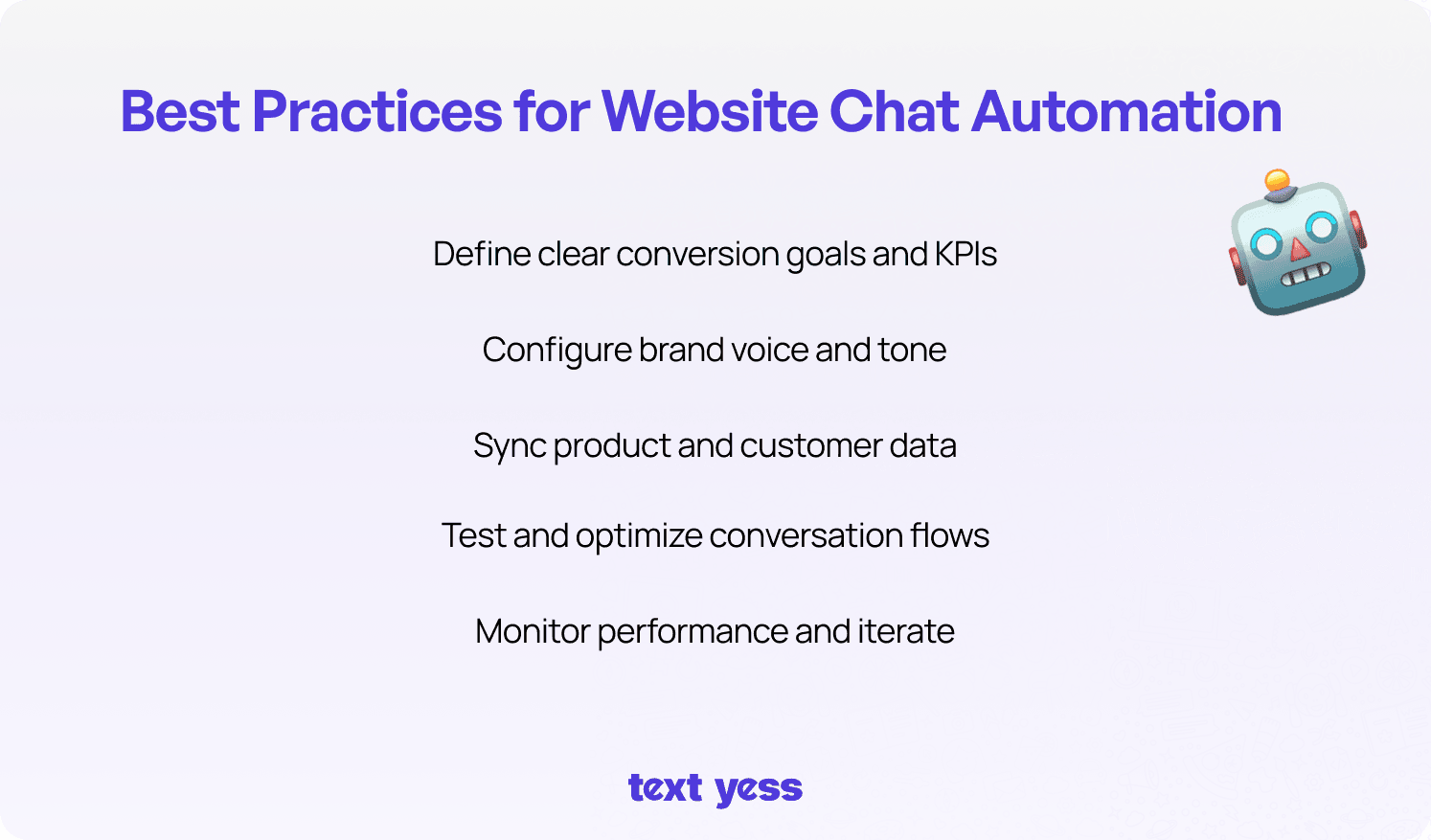
Set specific objectives before implementation. Are you focused on increasing checkout completion? Reducing response time? Recovering abandoned carts? Clear goals shape how you configure the AI and measure success.
Match the AI's communication style to your brand's personality. A luxury fashion brand and a casual streetwear shop sound different, even when answering the same question.
Connect your CMS to ensure the AI has access to accurate product details, inventory levels, and customer history. This integration is what enables personalized, contextually relevant responses. TextYess natively connects with the most common CMS to ensure your AI can rely on the best data available.
Test conversations internally before going live. Walk through common scenarios, identify gaps, and refine responses. Early iteration prevents awkward customer experiences.
Ongoing review of analytics identifies underperforming flows. Which questions does the AI struggle with? Where do conversations drop off? Continuous improvement is what separates good chatbot conversion rates from great ones.
Tip: Many eCommerce teams go from setup to live conversations in under 20 minutes using no-code platforms that connect directly to their store.
Chat automation works best when treated as a revenue channel, not just a support tool. The metrics you track reflect this distinction.
Chatbot conversion rate: The percentage of chat conversations that result in a completed purchase. This is your primary indicator of sales impact.
Revenue attribution to chat interactions: Trace completed orders back to specific chat conversations to understand true ROI. Look for platforms that provide this attribution automatically.
Response time and resolution benchmarks: Measure first-response time (aim for under ten seconds) and resolution time as indicators of customer experience quality.
Autonomous resolution rate: The percentage of queries resolved without human intervention. Higher rates mean more efficiency, though quality matters more than quantity.
Teams that track these metrics consistently can identify what's working, spot opportunities for improvement, and demonstrate clear ROI to stakeholders.
TextYess's AI shopping assistant is built specifically for eCommerce brands that want to close the gap between browsing and buying. Unlike general-purpose chatbot platforms adapted for retail, TextYess is designed from the ground up around the eCommerce purchase journey — from the first product question to post-checkout follow-up. It connects directly to a store's catalog, inventory, and order data, so every conversation the AI has is grounded in accurate, real-time information rather than static scripts.
Where TextYess stands out is in its approach to proactive engagement. The platform monitors on-site behavior and triggers personalized conversations at the moments that matter most — when a shopper lingers on a product page, hesitates at checkout, or shows signs of leaving. Those timely nudges, delivered in the brand's own voice, are what drive the conversion rates TextYess customers report. Brands using the platform have seen chat conversion rates reach 25%, a figure that reflects both the quality of the AI's responses and the precision of its engagement timing.
The setup is intentionally straightforward. Teams can connect their store, configure the agent's tone and goals, and go live in minutes — no developer required. For eCommerce teams looking to treat chat as a genuine revenue channel rather than a support afterthought, TextYess provides the infrastructure to do exactly that.
Website chat automation transforms support from a cost center into a sales channel. The key is building on unified data, proactive engagement, and eCommerce-specific features that tie conversations directly to revenue.
For teams ready to turn chat into a new sales engine, the path forward is clear: choose a platform built for eCommerce, integrate deeply with your existing stack, and measure what matters. Companies using AI shopping assistants like TextYess have seen chat conversion rates reach 25%, with a cost-effective solution that brings conversational commerce to its full potential.

How quickly can website chat automation be set up on an eCommerce store?
Does website chat automation integrate with Shopify and other eCommerce platforms?
What happens when the AI chat agent cannot answer a visitor's question?
Can website chat automation support multiple languages for international shoppers?
How is chatbot conversion rate measured and attributed to chat interactions?