Laei Shop: 400% increase in Trustpilot reviews with automated WhatsApp flows
Discover how Laei Shop increased Trustpilot reviews by 400% using automated WhatsApp post-purchase flows to collect feedback at scale, without manual follow-ups.
Discover how Laei Shop increased Trustpilot reviews by 400% using automated WhatsApp post-purchase flows to collect feedback at scale, without manual follow-ups.
At a glance. Laei Shop replaced manual review follow-ups with a fully automated post-purchase WhatsApp flow built on TextYess. The result: a 400% lift in Trustpilot reviews, no added operational effort, and a TrustScore strong enough to convert first-time visitors.
Laei Shop is a fashion and lifestyle DTC brand selling online to a fast-growing customer base. Like most modern ecommerce brands, social proof is one of the highest-leverage drivers of new-customer conversion — but only if it shows up at the moment of decision. Trustpilot reviews influence that decision twice: on the product page itself and earlier, when shoppers Google the brand before clicking through.
The problem wasn’t that Laei Shop’s customers were unhappy. It was that almost no one was being asked for a review.
Despite a steady stream of orders, only a small fraction of customers ever left feedback on Trustpilot. Three things were working against the team:
Manual follow-ups were inconsistent. Someone had to remember to send the ask, and that someone had higher-priority work most days. Some weeks every customer got a message; other weeks, nobody did.
Email asks got buried. Even when the request went out, post-purchase emails compete with shipping confirmations, marketing campaigns, and promotional clutter. Open rates hovered where most ecommerce emails do — under 25%.
The timing was off. Asks went out when the team had time to send them, not when the customer was most likely to respond. A review request a week after delivery lands very differently from one a month later.
The compounding effect: a TrustScore that didn’t reflect the actual quality of the product, and a weak signal for first-time shoppers researching the brand on Google.
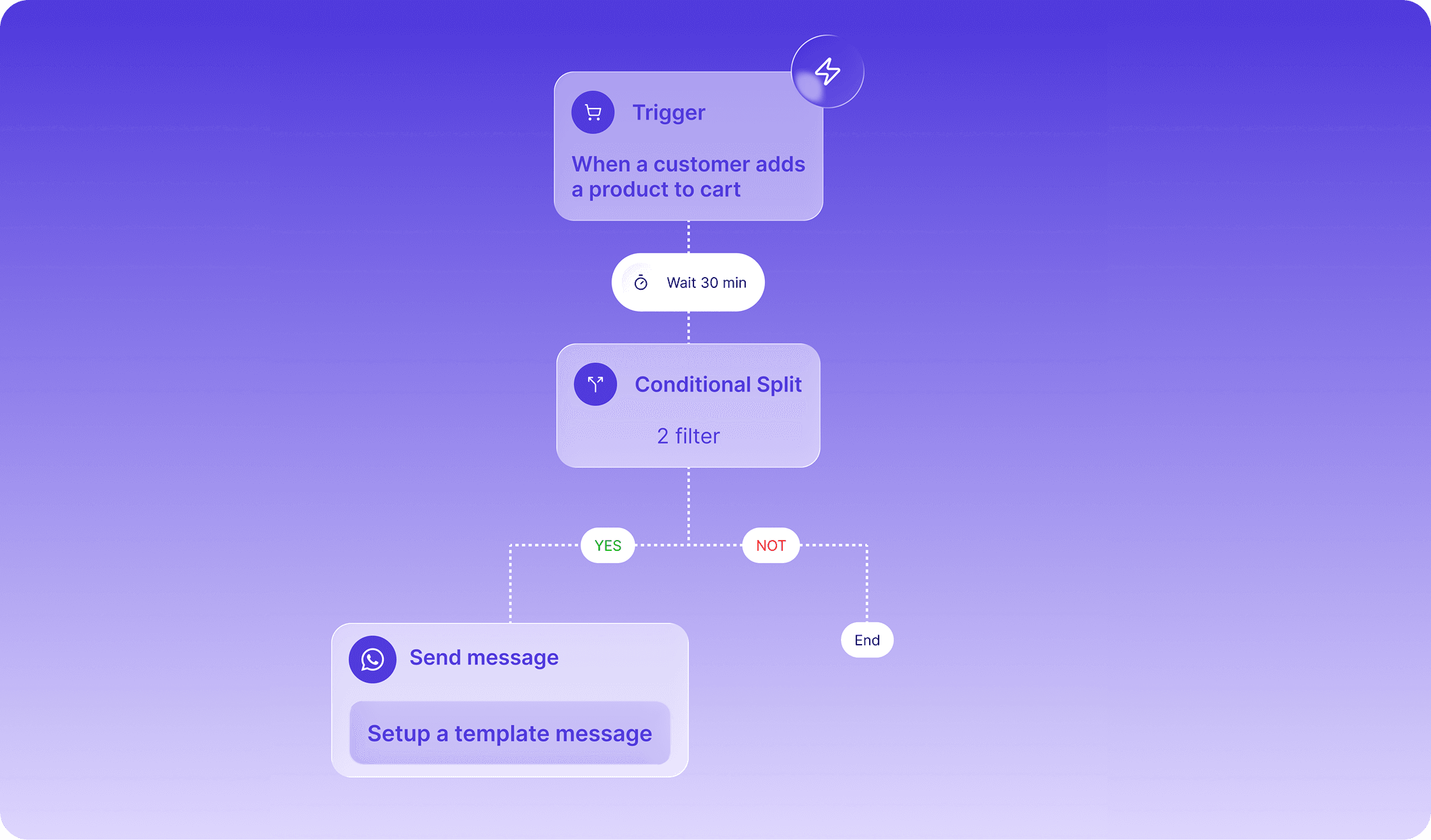
Laei Shop replaced the manual process with a single, always-on flow inside TextYess. Every customer now receives a personalized review request on WhatsApp at the moment they’re most likely to act — without anyone on the team having to think about it.
The flow does four things:
Triggers automatically on delivery confirmation. TextYess listens to the Shopify event stream, so the moment a parcel is marked delivered, the clock starts on the review request — no spreadsheets, no manual exports.
Waits for the optimal moment. Instead of firing immediately (when the customer hasn’t opened the box yet) or a month later (when the memory has faded), the message lands in the window where satisfaction is highest and the experience is still fresh.
Personalizes every message. The WhatsApp message pulls in the customer’s name and the specific product they purchased, and includes a direct Trustpilot link — no hunting for the right page, no friction between intent and action.
Catches problems before they become bad reviews. If a reply signals an issue, the flow routes the conversation to support instead of pushing the review link. Unhappy customers get help; happy customers get asked.
For the deeper mechanics of how flows like this are built — segmentation, triggers, branching, follow-up logic — see the step-by-step guide to WhatsApp marketing campaigns for ecommerce and the breakdown of WhatsApp drip campaigns.
The setup took less time than a single week of manual review follow-ups. The Laei Shop team:
Connected Shopify and Trustpilot to TextYess. Orders, customers, and product catalog synced automatically. The Trustpilot integration enabled direct, pre-populated review links.
Configured the post-delivery trigger. The flow fires on delivery confirmation, with a built-in wait window timed to land the message when the customer has had time to actually use the product.
Designed the message. A short, conversational WhatsApp message — customer name, product name, one sentence of context, one direct link. No promotional clutter.
Added branching for unhappy customers. If the reply signals dissatisfaction (a return, a complaint, a question), the flow re-routes to support. This protects the TrustScore from being driven down by issues the team could have resolved directly.
Layered in a reminder. Customers who opened the first message but didn’t review get an automatic nudge a few days later — the same reminder logic that lifts response rates across post-purchase WhatsApp automations.
From wiring to launch, the entire system was live in a single afternoon.
Once the flow was live, the impact compounded over weeks:
400% increase in Trustpilot reviews. Every shipped order now generates an ask. The volume of incoming reviews quadrupled compared to the manual baseline.
Higher review consistency across orders. No more “weeks where nobody got asked.” The ask is now structural, not dependent on memory.
Stronger social proof without added operational effort. No new hire, no extra weekly task, no spreadsheet. The team got more output from less work.
A higher-quality TrustScore. With more recent, more frequent reviews, the Bayesian-weighted TrustScore moved up — and stayed up — because the system keeps feeding it new ratings every week.
The change visitors see on Google and on Trustpilot’s brand page isn’t just a higher star count. It’s recency. New shoppers researching Laei Shop now see reviews from the last few days, not the last few months — which is what 83% of consumers say they actually care about.
Laei Shop’s outcome is repeatable. The pattern behind it isn’t.
1. WhatsApp open rates beat email by an order of magnitude. Post-purchase email asks get opened by 15–25% of recipients. WhatsApp messages get opened by 90% or more, usually within minutes. When the goal is response (not awareness), channel choice matters more than copy.
2. Timing matters more than messaging. The single biggest lever in review collection isn’t what you say — it’s when you say it. A great message sent four weeks late underperforms a basic message sent at the right moment. Automation is the only way to consistently hit that window.
3. Automation removes the only real bottleneck: human memory. Most review-collection programs fail not because the strategy is wrong, but because no one consistently executes it. Trigger-based flows eliminate that gap. Once the system is live, every customer gets the same ask at the same moment in their journey — without anyone on the team thinking about it.
If your Trustpilot profile is underweight for the volume of orders you’re shipping, you’re not alone — and the fix is faster than most teams expect. TextYess connects to Shopify and Trustpilot, automates the ask on WhatsApp, and protects your TrustScore by routing unhappy customers to support instead of a review form.