Best Conversational Commerce Platforms for Ecommerce in 2026
Looking for the best conversational commerce platforms for ecommerce? We've gathered 5 options for you to help you find the best one for your business.
Looking for the best conversational commerce platforms for ecommerce? We've gathered 5 options for you to help you find the best one for your business.
Every unanswered question is a lost sale. Most ecommerce brands know this and still treat chat like overhead, a necessary cost to keep complaints from turning into chargebacks.
In 2026, the gap between brands using chat to contain damage and brands using it to drive revenue has become impossible to ignore. The difference isn't budget but tools.
This guide covers the top conversational commerce platforms, what to actually look for when you're evaluating them, and how to find the right fit for your store.
The best conversational commerce platforms for eCommerce include TextYess for AI-first revenue attribution built for eCommerce businesses, Gorgias for Shopify-native support, and Tidio for SMB accessibility. LivePerson serves enterprise-grade deployments, ManyChat handles social media automation, and Ada focuses on high-volume support deflection. Each platform enables personalized shopping experiences, cart recovery, and 24/7 assistance across messaging channels.
Conversational commerce is the practice of using messaging channels—chat, WhatsApp, SMS, and voice—to sell products and support customers in real time. Instead of clicking through product pages and checkout flows, shoppers ask questions, receive recommendations, and complete purchases directly within a conversation.
A conversational commerce platform is the software that powers these interactions. The core components include:
AI-powered agents: Automated assistants that handle sales and support conversations without human intervention
Multi-channel messaging: Unified communication across website chat, WhatsApp, SMS, and voice
eCommerce integrations: Direct connections to product catalogs, order data, and customer profiles
Analytics and attribution: Tools that track how conversations drive revenue
What separates conversational commerce platforms from traditional chatbots is the two-way dialogue. Customers interact with AI agents that guide them toward a purchase—similar to how a knowledgeable sales associate would in a physical store.
Choosing the right platform depends on your primary use case, technical resources, and revenue goals. Here's how the leading options compare.
Platform | Primary Focus | Channels | eCommerce Integration Depth | Setup Complexity |
|---|---|---|---|---|
TextYess | Sales + Support | Chat, WhatsApp, Voice | Deep (products, orders, customers) | No-code, minutes |
Gorgias | Support | Chat, Email, Social | Shopify-native | Moderate |
Tidio | Support + Chat | Chat, Email | Basic | Low |
LivePerson | Enterprise AI | All major channels | Custom | High |
Intercom | Product Messaging | Chat, Email | Moderate | Moderate |
ManyChat | Marketing Automation | Messenger, Instagram, SMS | Limited | Low |
Ada | Support Deflection | Chat, Messaging | Moderate | Moderate |
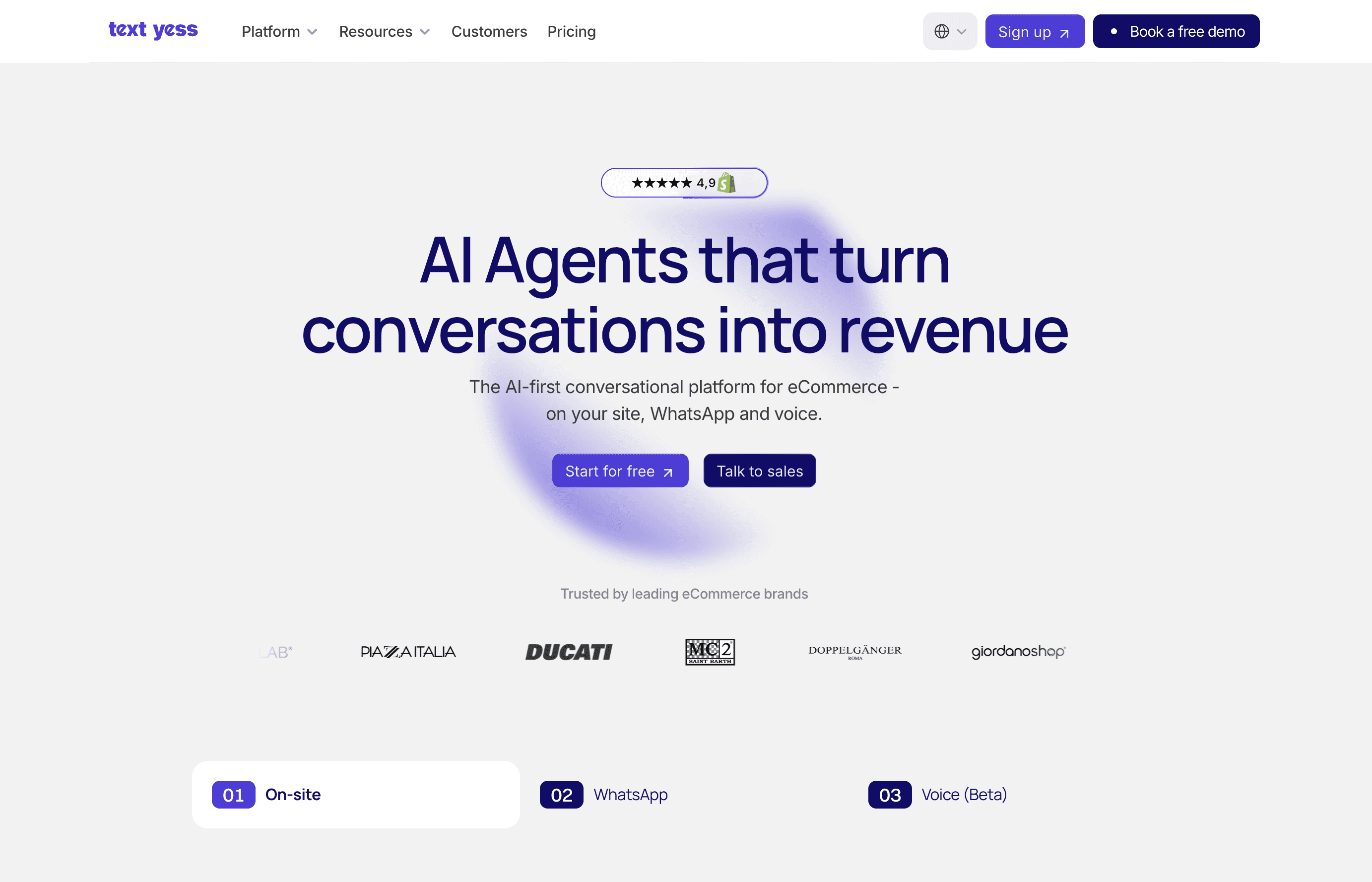
TextYess is an AI-first platform built specifically for eCommerce that deploys agents across on-site chat, WhatsApp, and voice. The platform connects directly to your store to pull live product data, inventory, and order information into every conversation.
Setup takes minutes rather than weeks, with no-code configuration. For brands focused on measurable outcomes, TextYess provides conversation-to-revenue tracking that shows exactly which interactions generate orders.
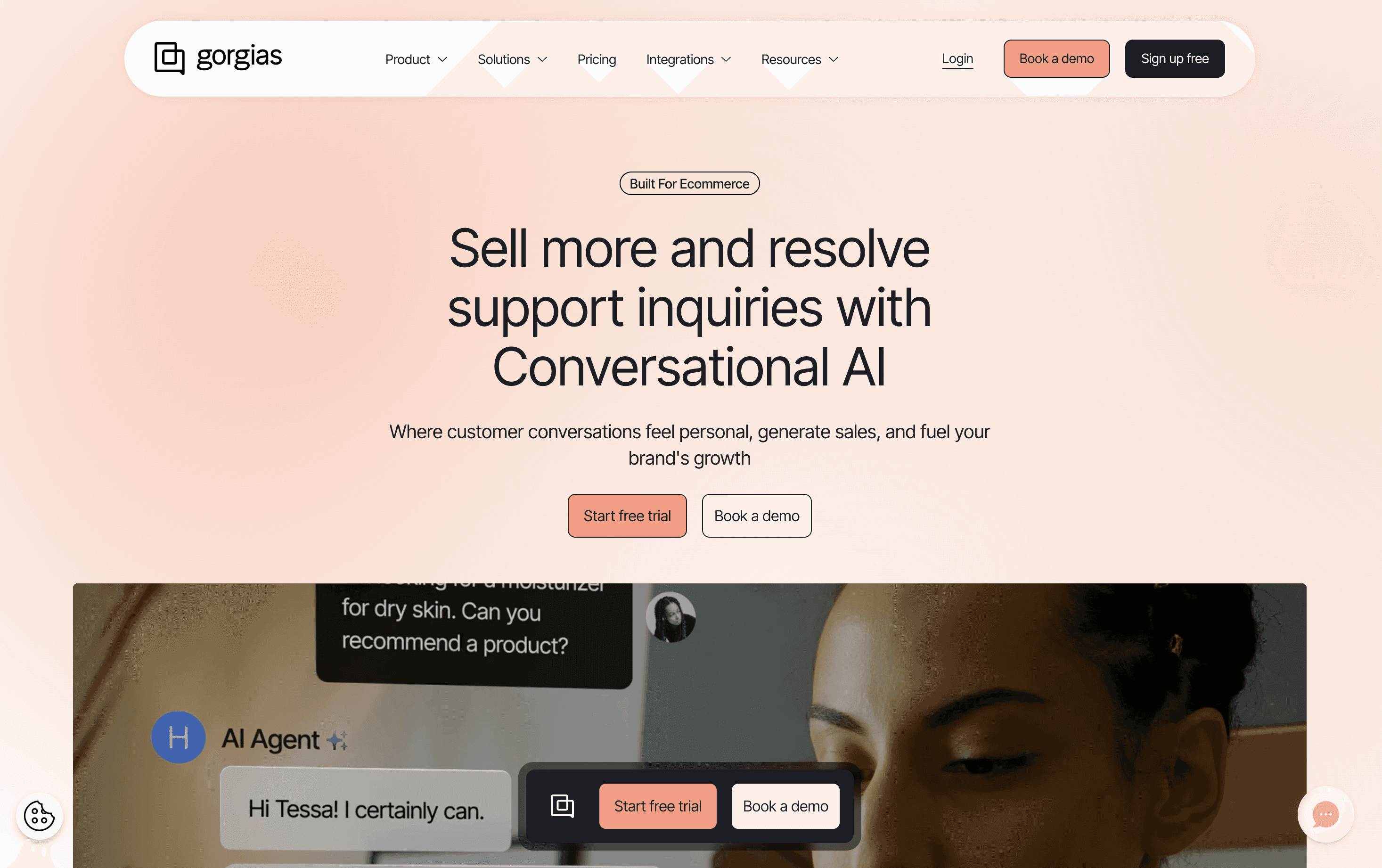
Gorgias is a helpdesk-first platform popular with Shopify merchants. Its strength lies in ticketing and support automation, with native integrations that pull order data directly into support conversations.
The platform works well for support-heavy teams. If your primary goal is reducing ticket volume rather than driving conversions, Gorgias handles that use case effectively.
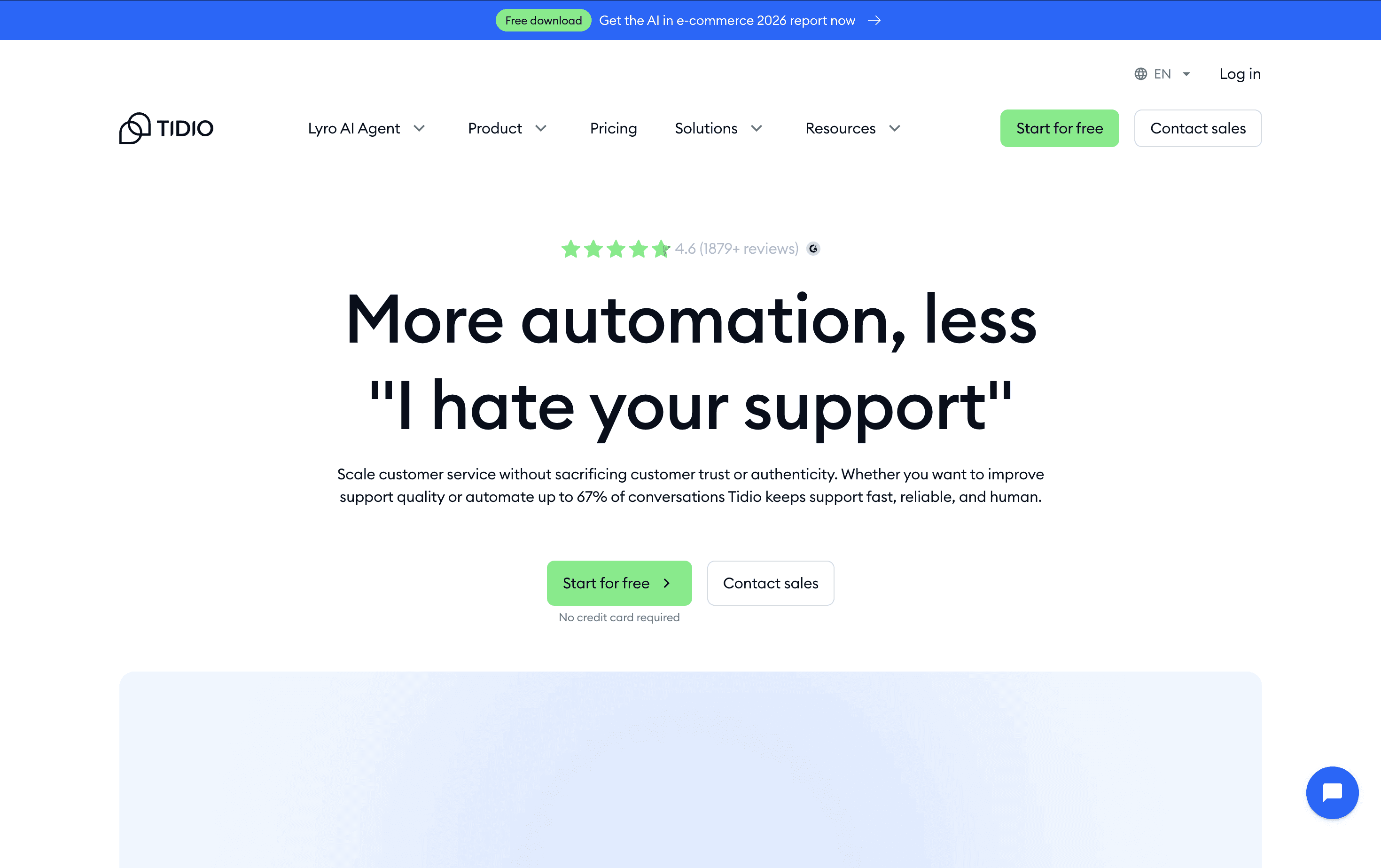
Tidio offers an affordable entry point for small to mid-sized stores, combining live chat with basic chatbot flows. Most teams can get started without technical resources.
The trade-off is AI depth. Tidio's automation capabilities are more limited compared to platforms built specifically for autonomous selling.
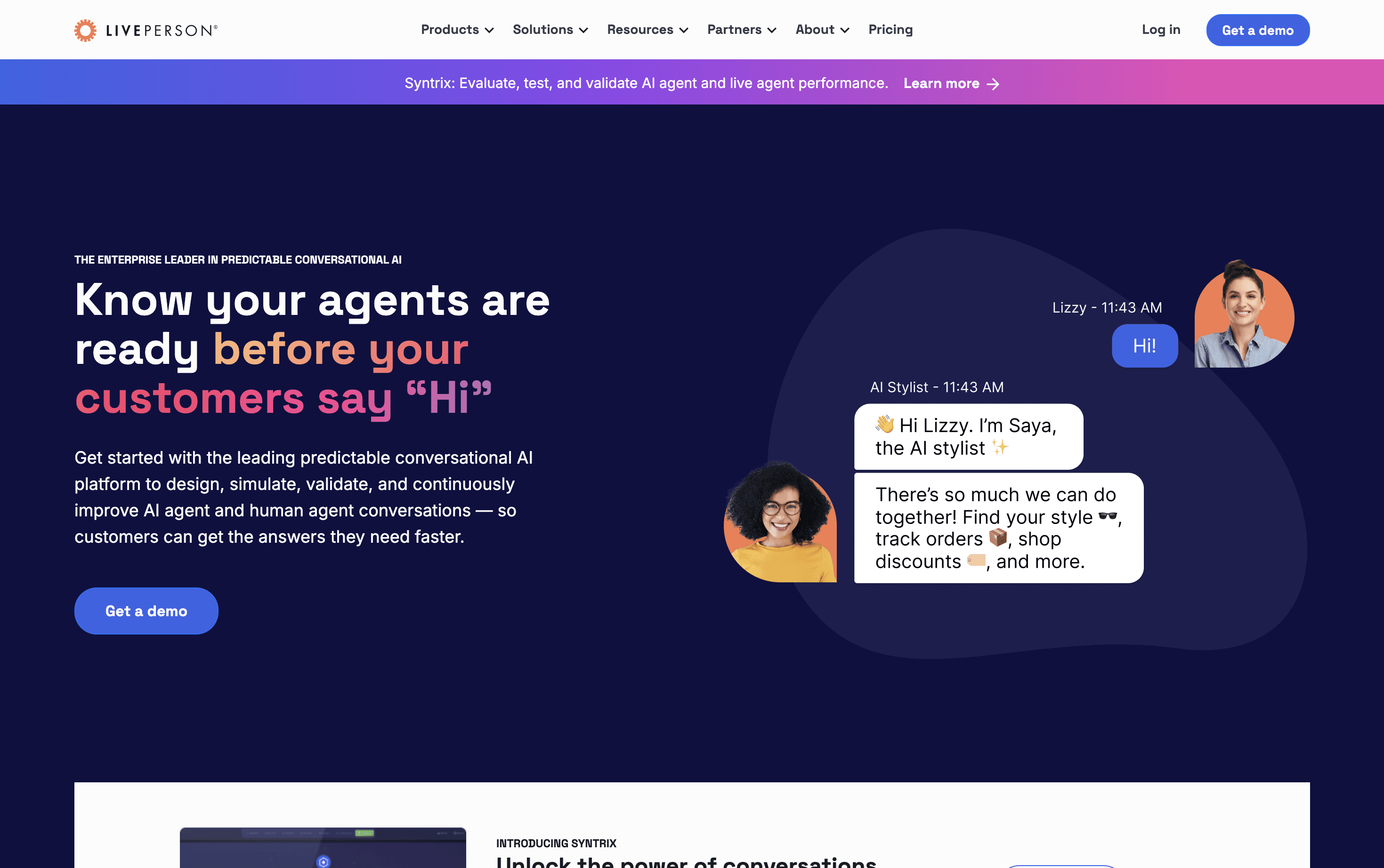
LivePerson is an enterprise-grade conversational AI platform with broad channel coverage and advanced natural language understanding. It handles complex, high-volume deployments across multiple markets and languages.
Implementation typically requires dedicated resources and longer timelines. For large organizations with the technical capacity to manage a sophisticated deployment, LivePerson delivers powerful capabilities.

Intercom is a product-led messaging platform with strong onboarding and in-app support tools. It's particularly effective for SaaS-influenced brands that want to guide users through product experiences.
While less eCommerce-specific than other options, Intercom offers flexibility for brands selling digital products or subscriptions.

ManyChat focuses on marketing automation for Instagram and Messenger, with a visual flow builder that makes campaign creation accessible. It's effective for social-first brands running promotions through social channels.
The limitation is eCommerce data integration. ManyChat connects less deeply with product catalogs and order systems, which can limit personalization in sales-focused conversations.
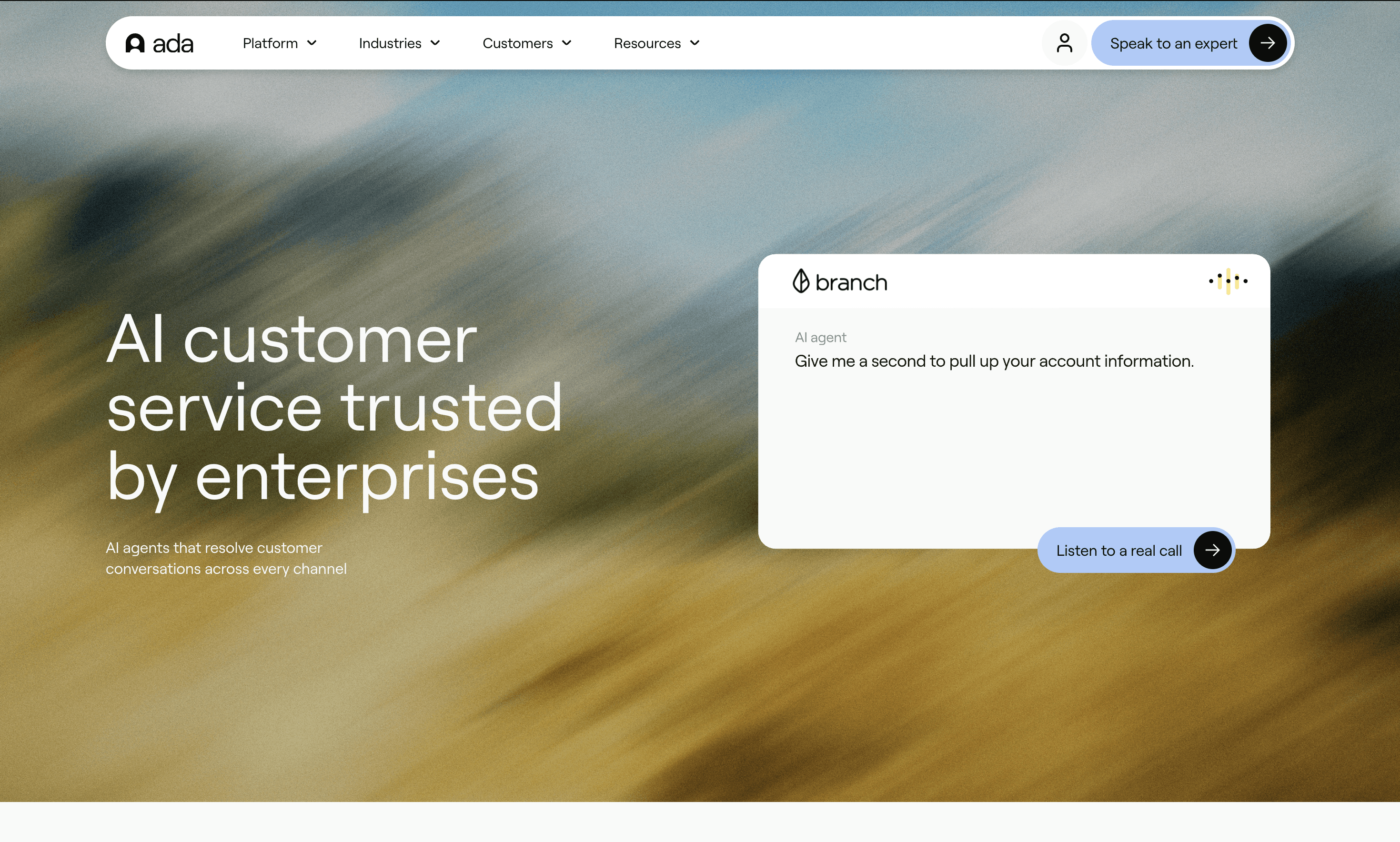
Ada is an AI-first support automation platform that excels at deflecting high-volume inquiries. It's designed to handle routine questions autonomously, reducing the load on human support teams.
The platform is positioned more for cost reduction than revenue generation.
When evaluating platforms, certain capabilities directly impact eCommerce success.
Customers expect to reach brands on the channels they already use. A platform with unified multi-channel support prevents fragmented experiences and saves your team from managing separate tools for each touchpoint.
The platform's ability to sync with your eCommerce system—Shopify, WooCommerce, or similar—determines whether conversations can include real-time product data, order status, and inventory information. Shallow integrations create data gaps that limit effectiveness.
A unified profile combines a customer's message history, past orders, and preferences into a single view. When someone who browsed winter coats on your site later messages on WhatsApp, the AI agent already knows their preferences.
AI analyzes customer behavior, purchase history, and real-time intent to deliver personalized recommendations. This level of personalization previously required dedicated sales staff. Now it happens automatically across thousands of simultaneous conversations.
Effective platforms can start conversations based on specific behaviors. When a shopper lingers on a size chart, abandons their cart, or returns to view the same product multiple times, the AI can proactively reach out with helpful information.
Understanding which conversations lead to conversions is essential for optimization. Look for platforms that provide clear attribution—showing exactly how much revenue originated from conversational channels.
Implementing a conversational commerce platform delivers measurable business outcomes.
When customers can ask questions and receive instant, personalized answers, the hesitation that typically causes cart abandonment disappears.McKinsey finds that personalization leaders generate 40% more revenue than average performers, and real-time guidance moves shoppers from browsing to buying.
With anaverage cart abandonment rate of 70.22%, proactive WhatsApp or SMS messages can automatically remind shoppers to complete purchases they left behind. Timing matters here—sending a personalized message within an hour of abandonment while purchase intent remains fresh typically outperforms email.
AI agents handle routine inquiries without human intervention. A higher autonomous resolution rate means lower support costs and faster response times—often under ten seconds compared to minutes or hours with human-only teams.
For brands serving multiple countries, AI agents can respond in local languages without the need to hire multilingual teams. This goes beyond translation—it means understanding regional preferences and communication styles.
Analytics are crucial for understanding the ROI of your conversational strategy. Not all platforms offer eCommerce-specific metrics—many generic chatbot tools lack the capability for direct revenue attribution.
Key metrics worth tracking:
Conversion rate by channel: Which touchpoints drive the most sales
Response time: How quickly agents reply—top performers respond in under ten seconds
Autonomous resolution rate: What percentage of conversations AI handles without escalation
Campaign ROAS: Revenue attributed directly to proactive outreach like abandoned cart messages
Customer intent signals: Purchase readiness based on conversation patterns
A high autonomous resolution rate with a low conversion rate suggests the AI is handling conversations efficiently but not closing sales. A strong campaign ROAS with a poor cart recovery rate means outbound messaging works better than recovery flows. Review metrics as a set to prioritize where to optimize next.
There's a significant difference between traditional rule-based chatbots and modern AI-first platforms.
Rule-based bots rely on scripted flows and keyword matching. They require manual scripting for every scenario and break when customers phrase questions unexpectedly. If someone asks "do you have this in blue?" instead of "color options," a rule-based bot might not understand.
AI-first platforms use natural language understanding, contextual responses, and learn from data. They understand intent, pull real-time information, and handle nuanced conversations without rigid flows. When a customer asks about running shoes, the agent can recommend specific models based on stated preferences and what similar customers chose.
For eCommerce, this difference directly impacts conversion rates. AI agents can dynamically recommend products, check order status, and personalize offers in ways rule-based bots cannot.
Evaluating platforms requires focusing on revenue outcomes rather than feature lists alone.
Are you focused on increasing sales, reducing support costs, or both? Your answer determines whether you prioritize a sales-first or support-first tool.
Check which channels the platform supports and whether all conversations flow into one unified inbox. Managing conversations across website chat, WhatsApp, and voice from separate tools creates operational chaos.
Verify that the platform has native connectors for your CMS, payment provider, and logistics tools. An AI agent that can't access live inventory or order status is essentially a fancy FAQ.
Prioritize platforms that clearly show how conversations tie directly to placed orders and revenue. Without a direct line between conversations and orders, you won't know which campaigns are worth scaling.
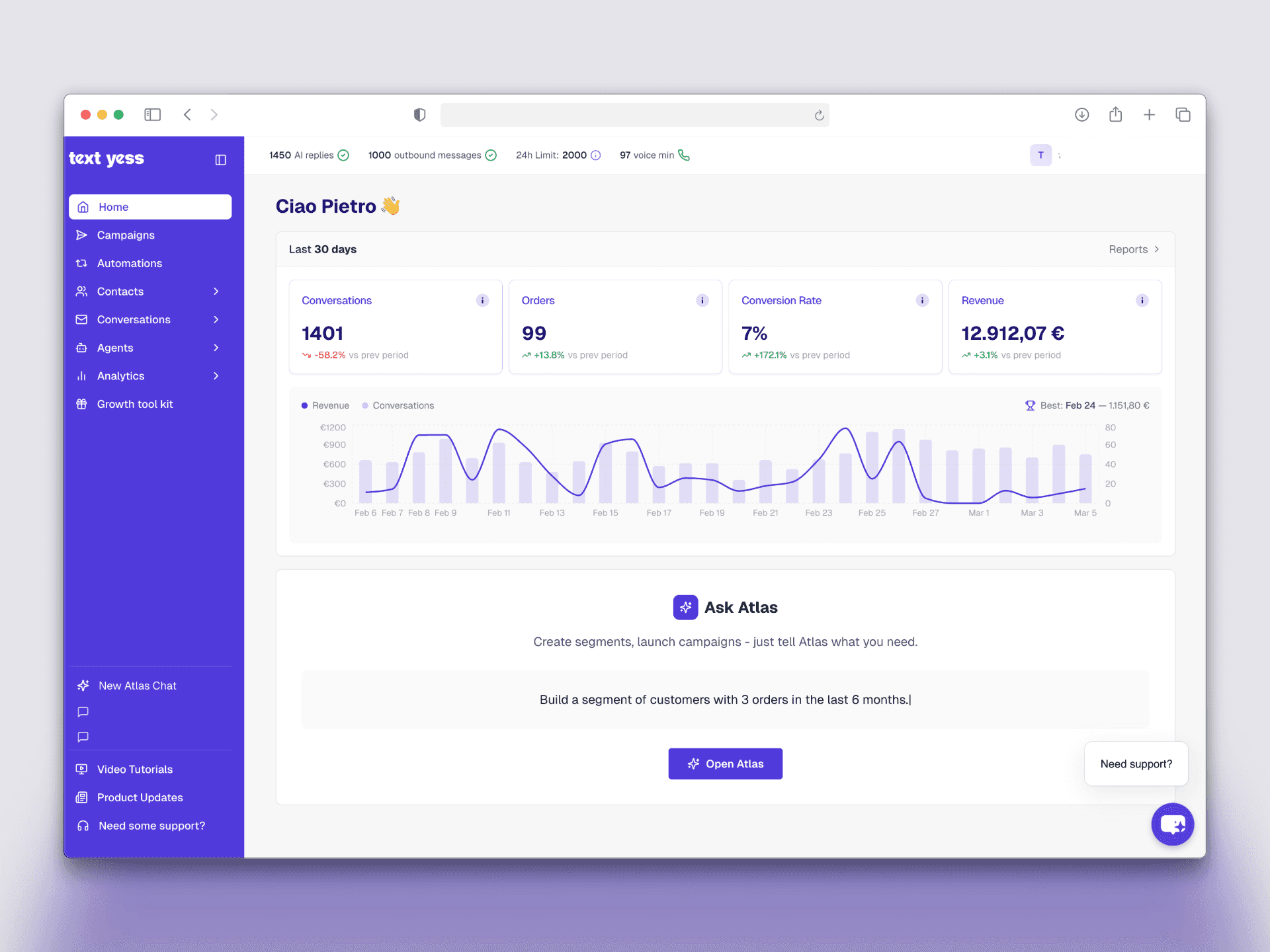
Look for platforms that allow you to go live quickly without developer resources. Some solutions enable teams to go from integration to live AI agent in a single session.
Getting started follows a logical progression. Most brands can launch within days rather than months.
The first step involves integrating with Shopify, WooCommerce, or your eCommerce platform to pull in products, orders, and customer data. Most platforms offer one-click connectors that sync automatically.
Setting up the AI agent means defining its objectives—sales focus, support focus, or both—and aligning its voice with your brand identity. Modern platforms make this configuration possible without code.
Start with one channel, such as on-site chat. Beginning with abandoned cart recovery and product page chat focuses your efforts where purchase intent is highest. After reviewing analytics from initial conversations, expand to WhatsApp commerce, voice, or other touchpoints.
Conversational commerce—a market projected to reach $38.49 billion by 2032— represents a shift from reactive support to proactive revenue generation. The brands seeing the strongest results treat messaging channels as primary storefronts—not just places to answer questions.
The technology has matured to the point where AI agents can autonomously handle the majority of customer interactions while driving measurable sales outcomes. Platforms like TextYess enable brands to turn conversations into revenue with AI agents across site, WhatsApp, and voice, going from setup to sales in minutes.
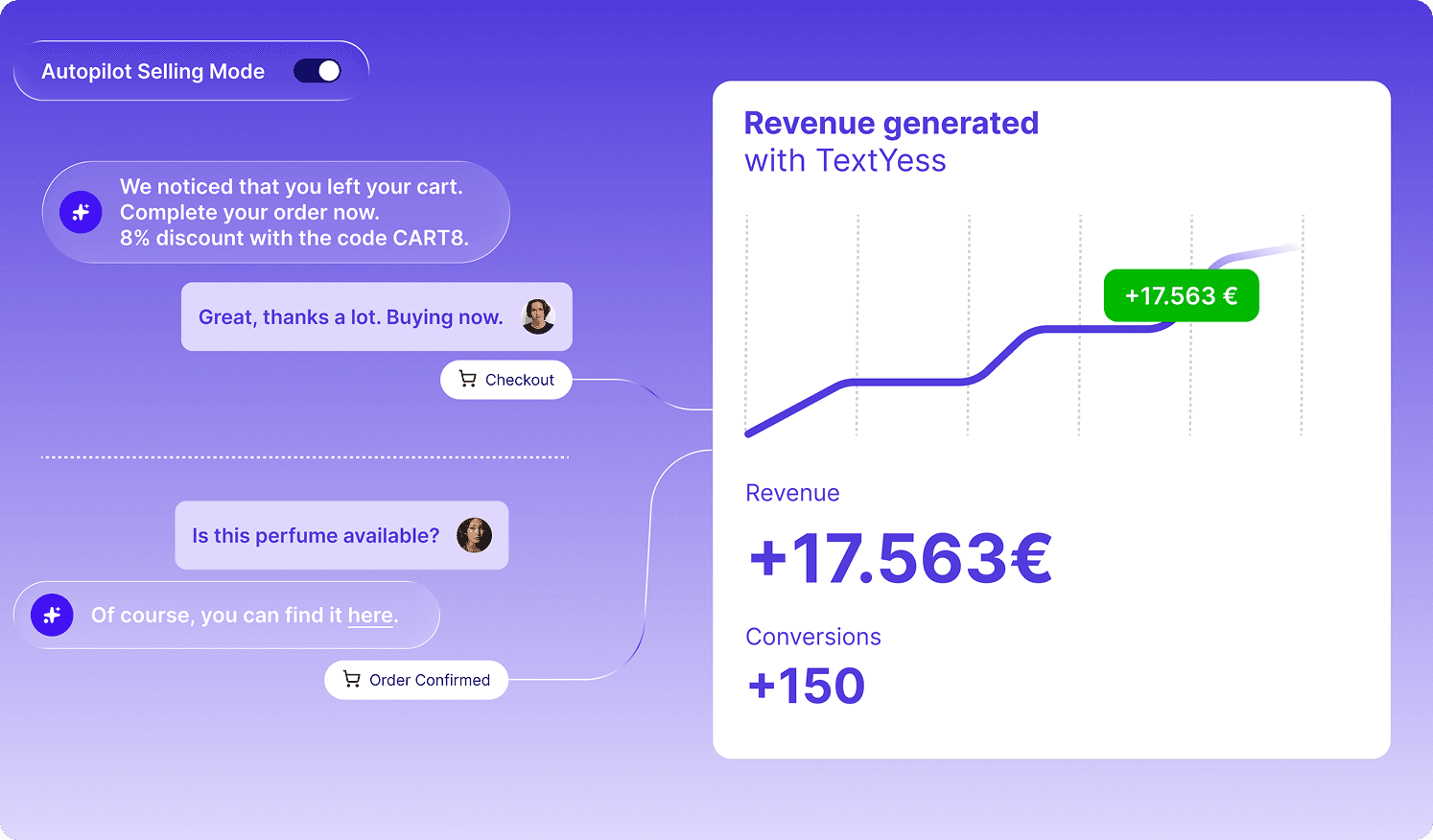
For teams evaluating where TextYess fits within this landscape, the platform is built around the three capabilities that most directly drive conversational revenue: deep eCommerce data integration, proactive conversation triggers, and unified multi-channel management.
When a shopper abandons a cart or lingers on a product page, TextYess agents can proactively reach out via on-site chat or WhatsApp using live inventory, order, and customer profile data, not static scripts. Every interaction flows into a single inbox, so teams maintain full visibility across channels without switching tools. Real-time analytics then show exactly which conversations generated orders, making it straightforward to identify what to scale. Setup requires no developer resources—connect your store, configure the AI Shopping Agent's goals and tone, and go live.
What is the difference between a chatbot and a conversational commerce platform?
How long does it take to implement a conversational commerce platform?
Do conversational commerce platforms support multiple languages?
Are conversational commerce platforms GDPR compliant for EU businesses?
Can conversational commerce platforms integrate with Shopify and other eCommerce systems?
What is an autonomous support rate and why does it matter?