WhatsApp Commerce for Ecommerce: How to Drive More Sales
WhatsApp commerce for ecommerce turns conversations into revenue. Learn how to set up, send promotional messages, and automate sales with AI agents.
WhatsApp commerce for ecommerce turns conversations into revenue. Learn how to set up, send promotional messages, and automate sales with AI agents.
Email open rates hover around 20% on a good day. WhatsApp promotional messages hit 98%.
That gap represents a massive opportunity for online retailers who want their marketing to actually get seen.
This guide covers how to set up WhatsApp commerce for your store, the strategies that drive real sales, and how to send promotional messages that convert without getting your account restricted.
Promotional WhatsApp messages are business-initiated, non-transactional messages designed to market products, share special offers, or boost customer engagement. Since 2021, Meta has allowed businesses to send promotional content through the WhatsApp Business API, provided they follow strict guidelines around user consent, template approval, and content policies. With open rates reaching up to 98%, WhatsApp has become one of the most effective channels for eCommerce communication.
The distinction between WhatsApp tools matters here. The WhatsApp Business App is a free mobile application built for small businesses, offering basic features like product catalogs, quick replies, and away messages. The WhatsApp Business API, on the other hand, is designed for scaling. It enables automation, CRM integrations, and high-volume messaging through approved partners.
WhatsApp Business App: Best for small retailers managing a limited number of conversations manually, with a broadcast limit of 256 contacts per list
WhatsApp Business API: Built for brands that want to automate, personalize, and send messages at scale, with tiered messaging limits starting at 1,000 per week
WhatsApp Commerce: The practice of using either tool to drive product discovery, conversations, and purchases directly in chat
WhatsApp outperforms traditional channels for eCommerce because it offers direct, personal, and immediate communication. Let's look at why this matters for retailers looking to increase conversion rates.
WhatsApp messages appear in a personal messaging app that 83% of users open daily. Unlike email, which often lands in promotions folders or gets ignored entirely, WhatsApp messages feel immediate and personal. The result is dramatically higher open rates compared to email marketing.
Customers who opt in to receive WhatsApp messages are signaling buying intent. Unlike passive social media followers who might scroll past your content, WhatsApp subscribers have given explicit permission to hear from you about products and offers. That makes them warm leads from the start.
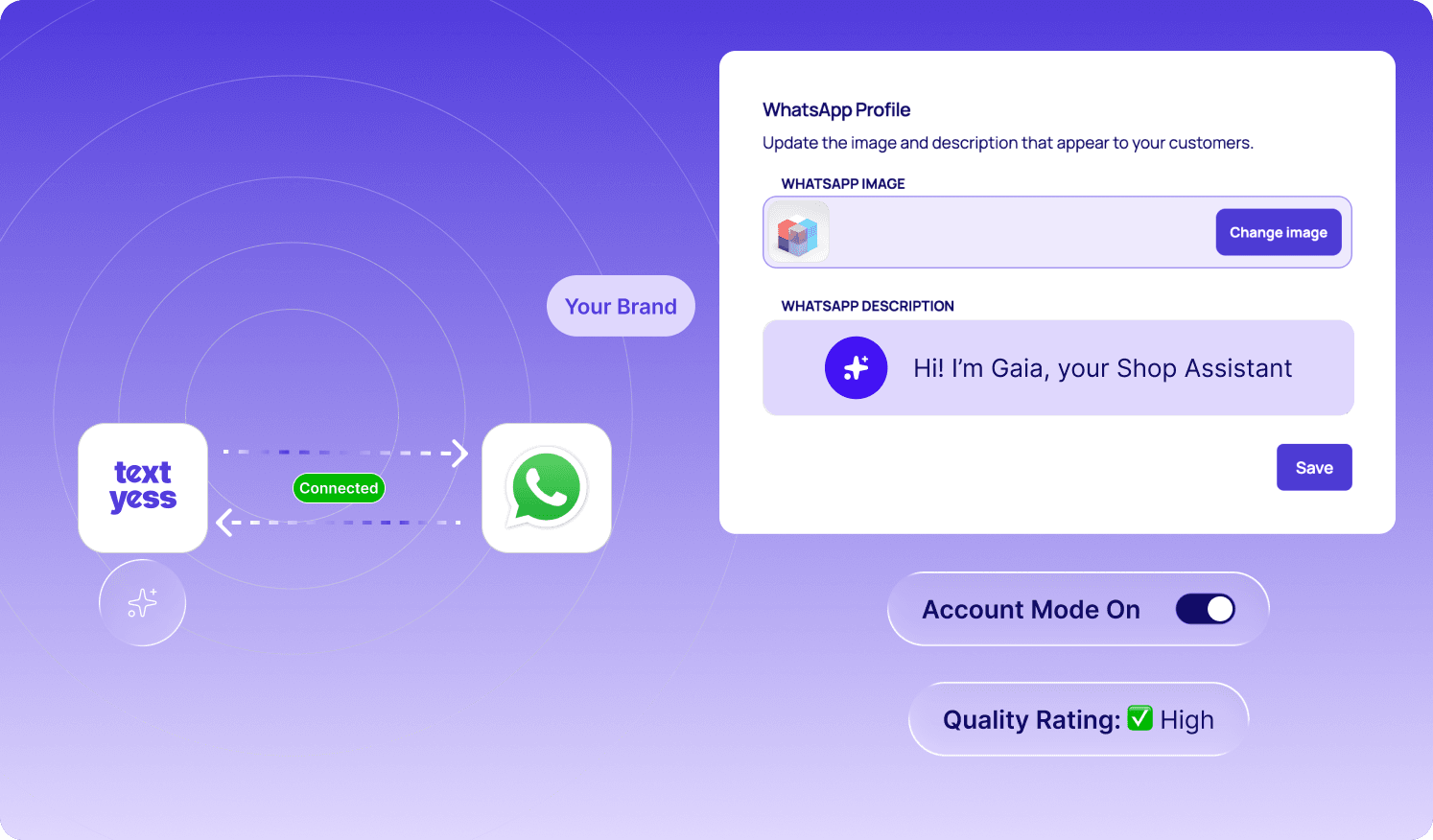
One-to-one messaging allows retailers to tailor recommendations to individual customer preferences and purchase history. A customer asking about sizing or color options can get an immediate, personalized response. This approach makes customers feel valued, building trust that's difficult to achieve with mass email campaigns. Tools like TextYess are built specifically for this kind of personalized, data-driven conversation at scale.
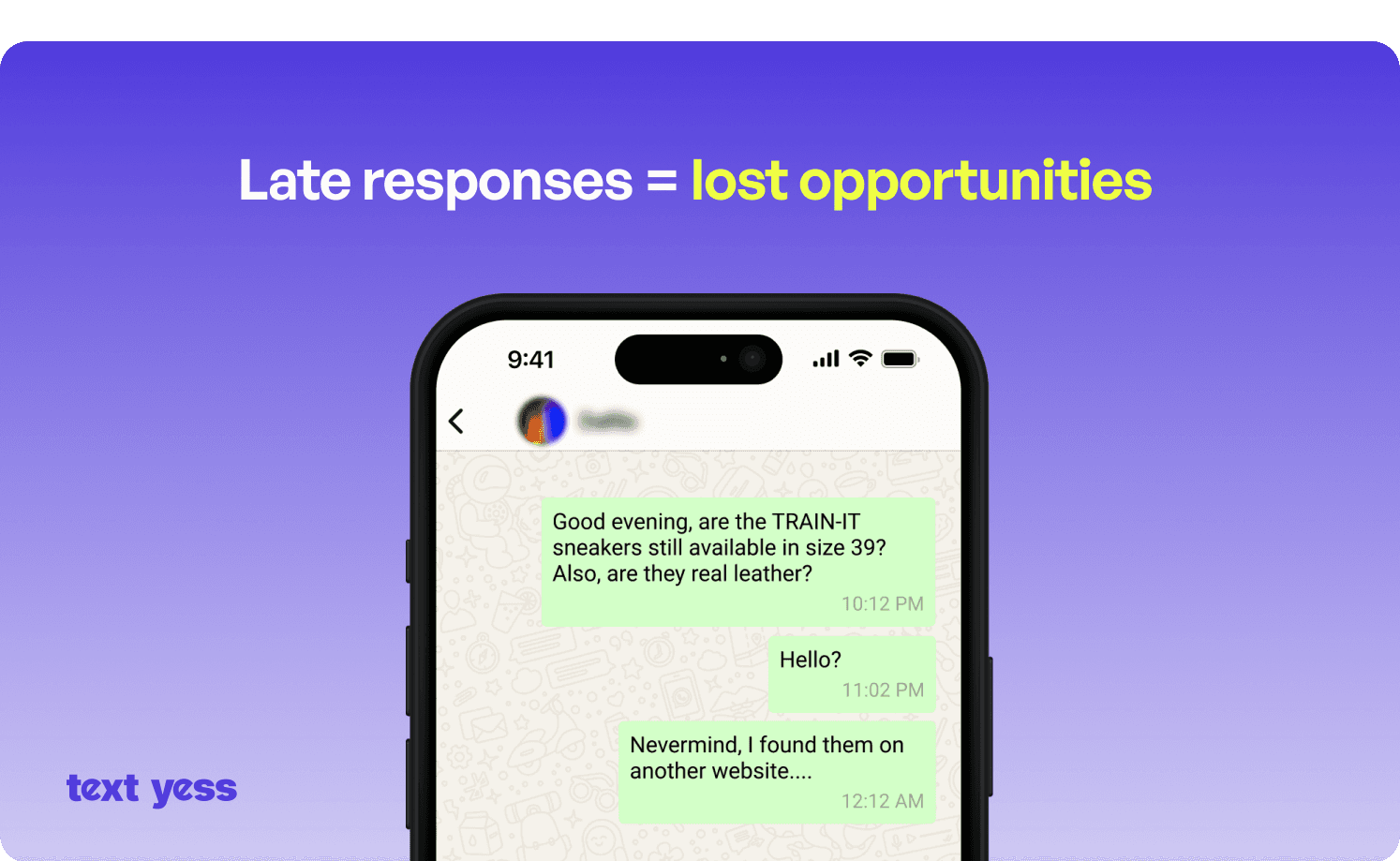
Real-time conversations reduce the friction between interest and purchase. When questions about products, shipping, or availability get answered in seconds rather than hours, customers are far more likely to complete their orders. The lack of timely support is one of the main reasons customers abandon purchases on eCommerce platforms.
Getting started with WhatsApp commerce involves a few key steps. Here's a practical walkthrough for retailers starting from scratch.
Register for a WhatsApp Business account by verifying your business phone number. Complete your profile with your display name, description, business address, operating hours, and website link. Creating a business account also allows you to obtain the verification badge, which assures customers of your profile's reliability.
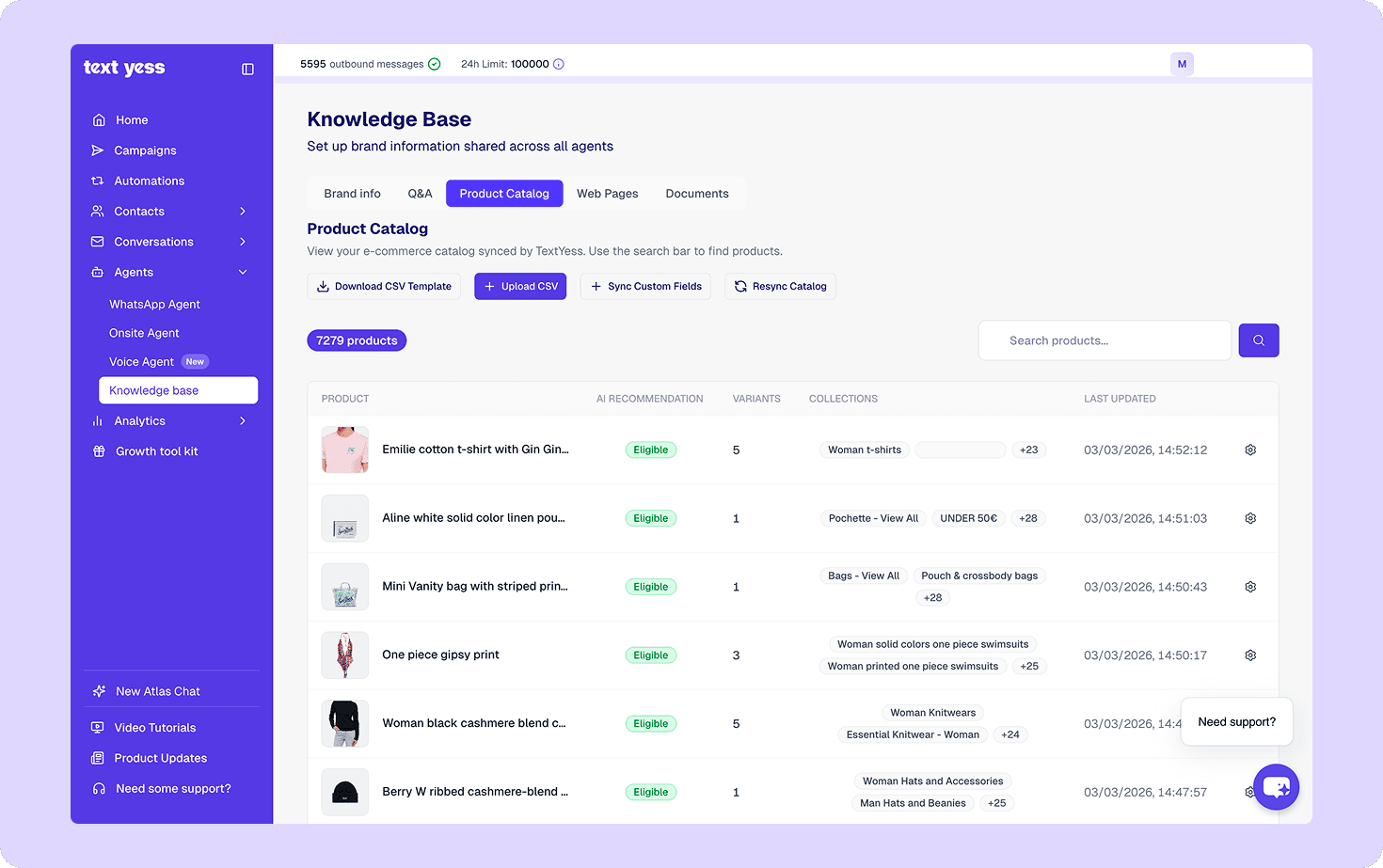
Sync your product data from platforms like Shopify or WooCommerce so customers can browse items directly in chat. WhatsApp Business supports catalogs with up to 500 products, including prices and images. Customers can tap items to add them to a virtual cart and complete orders in a few clicks.
Platforms like TextYess automate this sync process, keeping your WhatsApp catalog current with your store's inventory without manual updates.
Explicit consent is required before sending promotional messages. You can collect opt-ins through several methods:
Checkbox at checkout asking if customers want order updates via WhatsApp
Pop-up widget on your website offering exclusive deals for subscribers
QR codes on packaging or in-store signage
"Message us on WhatsApp" buttons in email signatures and social media bios
Set up welcome messages for new subscribers, away messages for off-hours, and quick replies for common questions. AI-powered agents can handle conversations autonomously around the clock, recommend products based on customer preferences, and answer FAQs without manual effort.
Send your first promotional message to a small segment of subscribers, then track delivery, open, and reply rates. Testing with a smaller group first helps refine your messaging before broader rollout. Monitor your quality rating carefully, as spammy behavior can lead to lower messaging limits.
The following tactics turn WhatsApp into a revenue channel rather than just a support tool.
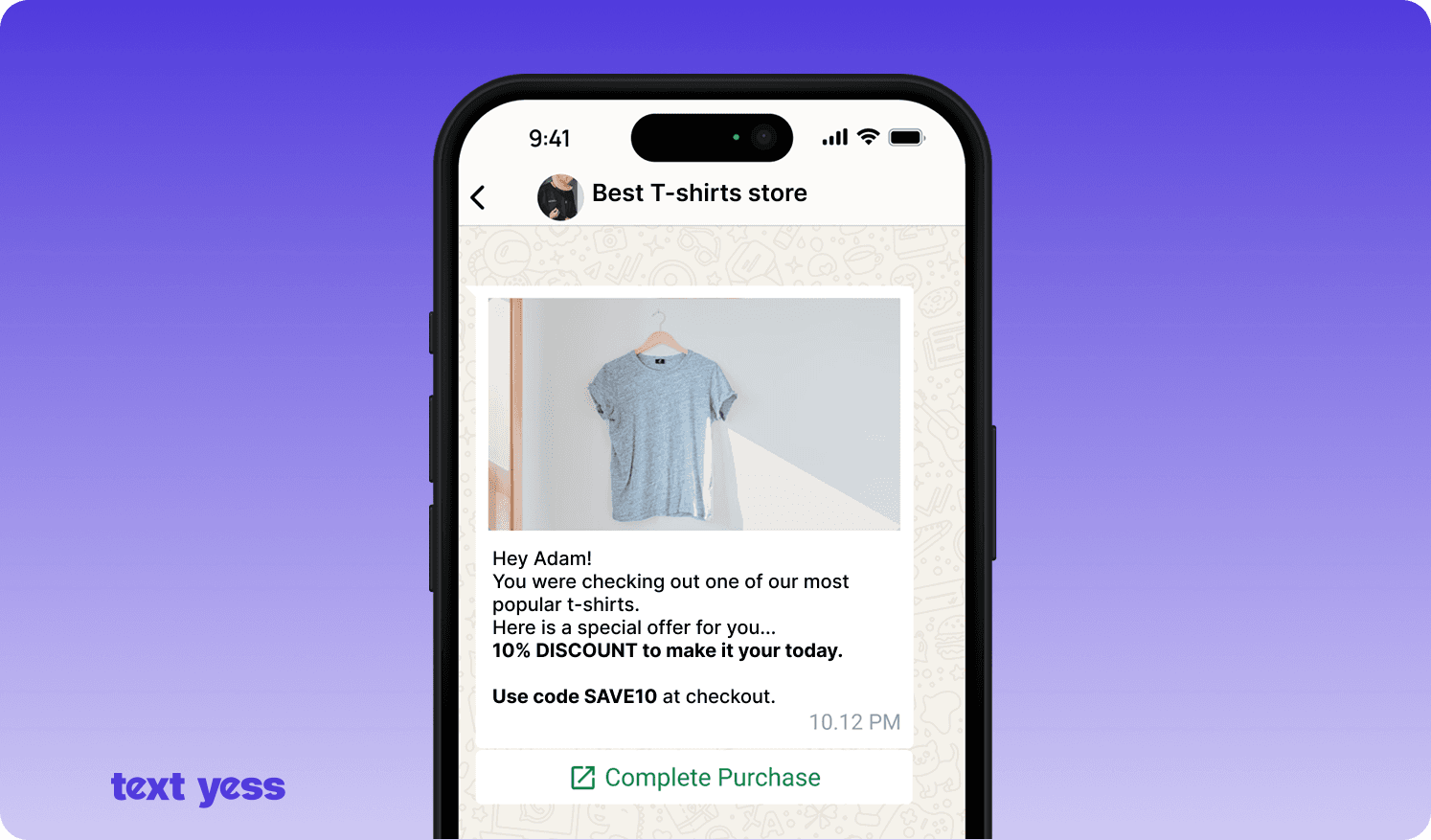
Send automated messages to customers who added items but didn't complete checkout — 70.22% of online carts are abandoned on average. For best results, send within a few hours of abandonment and include a direct link back to their pre-filled cart. A friendly reminder with the specific items they left behind performs better than generic "come back" messages. TextYess handles this automatically, triggering cart recovery sequences based on your store's real-time order data.
Use purchase history and browsing behavior to suggest relevant products. If a customer bought running shoes last month, a message about new running socks or athletic wear feels helpful rather than intrusive. AI agents can analyze unified customer data to deliver recommendations that feel personal rather than generic.
Announce time-sensitive deals to your WhatsApp subscribers before anyone else. This creates urgency and rewards them for being on your list. A 24-hour exclusive discount for WhatsApp subscribers encourages both immediate purchases and long-term loyalty to the channel.
Allow customers to browse catalogs, ask questions, and complete orders entirely within WhatsApp, where 50% of users make purchase decisions directly. Payment links and in-chat checkout create a seamless experience from discovery to purchase. The customer never has to leave the conversation to complete their order.
Send order confirmations, shipping updates, and delivery notifications through WhatsApp. Follow up a week or two later requesting reviews or offering complementary products. A customer who bought a coffee maker might appreciate a message about filters or specialty beans.
Crafting effective promotional messages requires attention to content, format, timing, and compliance. Here's what works.
Lead with the benefit: State what the customer gets before anything else
Keep it short: Aim for messages that don't require scrolling to read completely
Use conversational language: Write like you're texting a friend, not drafting a press release
Include one clear CTA: Tell them exactly what to do next, like "Shop now" or "Reply YES"
Include product images, videos, and interactive catalog cards in your messages. Visual content dramatically increases engagement and helps customers see exactly what they're buying. A photo of the actual product beats a text description every time.
Use customer names, purchase history, and browsing behavior to tailor messages. Generic blasts perform significantly worse than personalized recommendations: "Hi Sarah, the dress you viewed is now 20% off" converts better than "20% off all dresses."
WhatsApp enforces strict policies around promotional messaging. Customers must explicitly consent to receive promotional messages, and you must provide an easy opt-out mechanism like "Reply STOP to unsubscribe." All promotional templates require pre-approval from WhatsApp before you can send them.
A recommended practice is maintaining a 3:1 ratio of informational messages to promotional messages. Too many promotional messages can hurt your quality rating and lead to restrictions on your account.
AI agents transform WhatsApp from a manual, time-intensive channel into a scalable sales engine. This is the evolution beyond basic automation like quick replies and away messages.
AI agents provide 24/7 availability, answering product questions, providing recommendations, and processing orders even when your team is offline. A customer browsing at midnight can get the same quality assistance as someone shopping at noon.
AI agents trained on your product catalog and customer data can suggest relevant items to thousands of customers simultaneously. Each conversation feels personal because the agent draws on that specific customer's history and preferences.
AI agents connected to your eCommerce stack access order history, preferences, and past interactions from all channels. A customer who chatted on your website last week and is now messaging on WhatsApp gets a seamless experience. The agent knows their size preferences, past purchases, and open support tickets.
TextYess unifies customer data across site, WhatsApp, and voice channels, so every conversation builds on what you already know about each shopper.
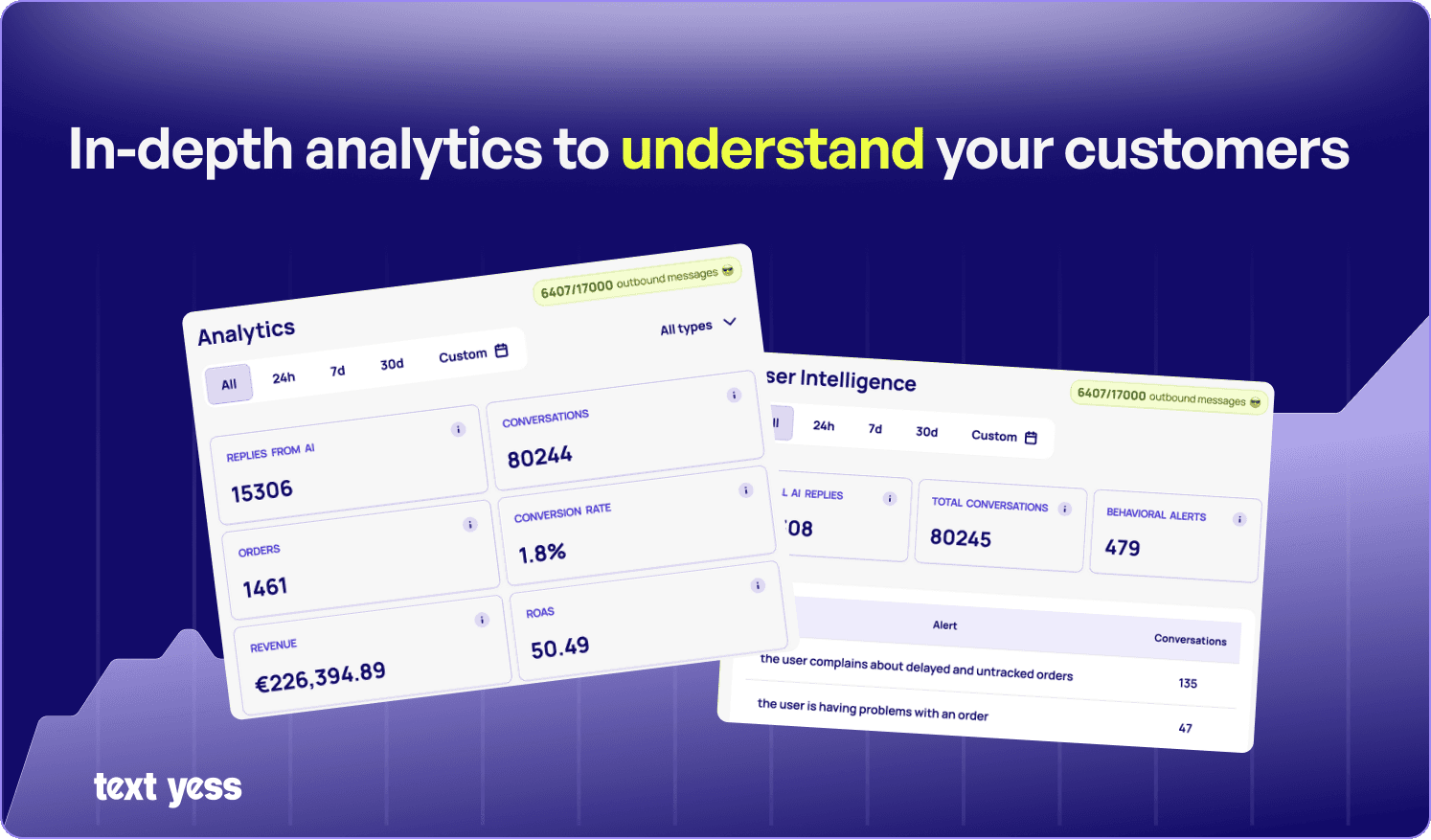
To understand if WhatsApp is generating revenue, track eCommerce-specific KPIs rather than just messaging metrics like open rates.
Metric | What It Measures | Why It Matters |
|---|---|---|
Conversation-to-Order Rate | Percentage of chats resulting in purchase | Indicates conversion effectiveness |
Revenue per Conversation | Average order value from WhatsApp | Shows monetary impact per chat |
Campaign ROAS | Revenue relative to campaign cost | Determines profitability |
First Response Time | How quickly customers receive replies | Faster responses correlate with higher conversion |
Autonomous Resolution Rate | Inquiries handled without human agents | Measures AI effectiveness and cost savings |
This metric shows the percentage of WhatsApp conversations that result in a completed purchase. Tracking it requires a system that can attribute orders back to specific WhatsApp interactions, giving you a clear view of your conversational commerce effectiveness.
Measure the total revenue generated from specific WhatsApp campaigns like abandoned cart reminders, promotional blasts, and new product launches. This helps you understand which tactics drive the most sales and where to focus your efforts.
Track how quickly your team or AI agents respond to incoming messages and resolve customer inquiries. Faster response and resolution times typically lead to higher customer satisfaction and increased conversion rates.
Compare the performance of different message types by analyzing their open rates, click-through rates, and conversion rates. Understanding whether promotional, transactional, or conversational messages perform best allows you to optimize your content mix.
TextYess is a conversational commerce platform built specifically for online retailers who want to do more with WhatsApp than send the occasional broadcast. It connects directly to your Shopify or WooCommerce store, syncing products, orders, and customer data automatically so your WhatsApp catalog stays accurate without any manual work on your end.
Where TextYess goes further than basic API access is in the AI layer. Its agents are trained on your product catalog and customer history, which means they can handle inbound questions, recommend relevant products, recover abandoned carts, and process orders — all without a human in the loop. For retailers who want to scale WhatsApp without scaling headcount, that autonomy is what makes the economics work.
The platform also brings together data from your website, WhatsApp, and voice channels into a single view, so every customer interaction builds on the last. A shopper who browsed your site yesterday and messages you on WhatsApp today gets a response that reflects what you already know about them — not a cold start. That continuity is what separates a genuinely useful shopping assistant from a glorified FAQ bot.
WhatsApp works best when treated as a primary revenue channel, not just a support tool. The path forward involves setting up properly, building your subscriber list consistently, automating with AI, sending personalized promotional messages, and measuring results carefully.
For retailers who want to turn conversations into revenue without scaling headcount, conversational commerce platforms provide the automation and insights to make this practical. TextYess offers AI agents that handle sales and support conversations 24/7, sync with your eCommerce stack, and track the metrics that matter for revenue.
What is the difference between WhatsApp Business App and WhatsApp Business API?
Can I send bulk promotional messages on WhatsApp without getting blocked?
What is the 24-hour messaging window rule on WhatsApp Business?
How do I integrate WhatsApp with Shopify or WooCommerce?
Can WhatsApp replace email marketing for online stores?
How do online retailers collect WhatsApp opt-ins legally?