9 Best AI Marketing Agents for Ecommerce in 2026
Compare the 9 best AI marketing agents for ecommerce in 2026. Automate cart recovery, WhatsApp campaigns, and customer support — and drive more conversions around the clock.
Compare the 9 best AI marketing agents for ecommerce in 2026. Automate cart recovery, WhatsApp campaigns, and customer support — and drive more conversions around the clock.
Most ecommerce teams are still running marketing the old way: manually building campaigns, chasing abandoned carts with delayed emails, and watching support tickets pile up overnight. Meanwhile, AI marketing agents are handling all of this autonomously, around the clock, across WhatsApp, website chat, and voice.
The shift is already underway — Gartner predicts 40% of enterprise apps will feature AI agents by end of 2026. Brands using AI agents report conversion rates between 15% and 30% on conversational channels, with cart recovery rates that outperform traditional email by a wide margin.
This guide covers the 10 best AI marketing agents for ecommerce in 2026, what separates them from basic chatbots, and how to choose the right one for your store.
An AI marketing agent is autonomous software that handles tasks like customer service, cart recovery, and personalized product recommendations to boost sales. Unlike chatbots that wait for input and respond with scripted answers, AI marketing agents make decisions, pull real-time data, and take action across platforms like WhatsApp and Shopify without manual intervention.
The word "autonomous" is key here. A chatbot follows a script. An AI marketing agent reasons through what a customer wants, checks live inventory, and acts on that information.
For ecommerce brands, this translates to campaigns that design themselves, support queries that resolve in seconds, and product suggestions that feel personal rather than random.
Traditional chatbots respond to keywords with pre-written replies. Automation tools execute preset rules (if cart abandoned, send email). AI marketing agents do something different: they reason and adapt based on context.
Capability | Traditional Chatbot | Automation Tool | AI Marketing Agent |
|---|---|---|---|
Responds to queries | Yes | No | Yes |
Follows preset rules | Yes | Yes | Adapts dynamically |
Makes autonomous decisions | No | No | Yes |
Uses real-time customer data | Limited | Limited | Yes |
Executes multichannel campaigns | No | Partial | Yes |
When a customer asks "will this fit me?" a chatbot might link to a size chart. An AI marketing agent checks previous orders, notes the customer bought a medium last time, and recommends the same size in the new style.
The practical applications span the entire customer journey. Here's where AI marketing agents deliver measurable impact.
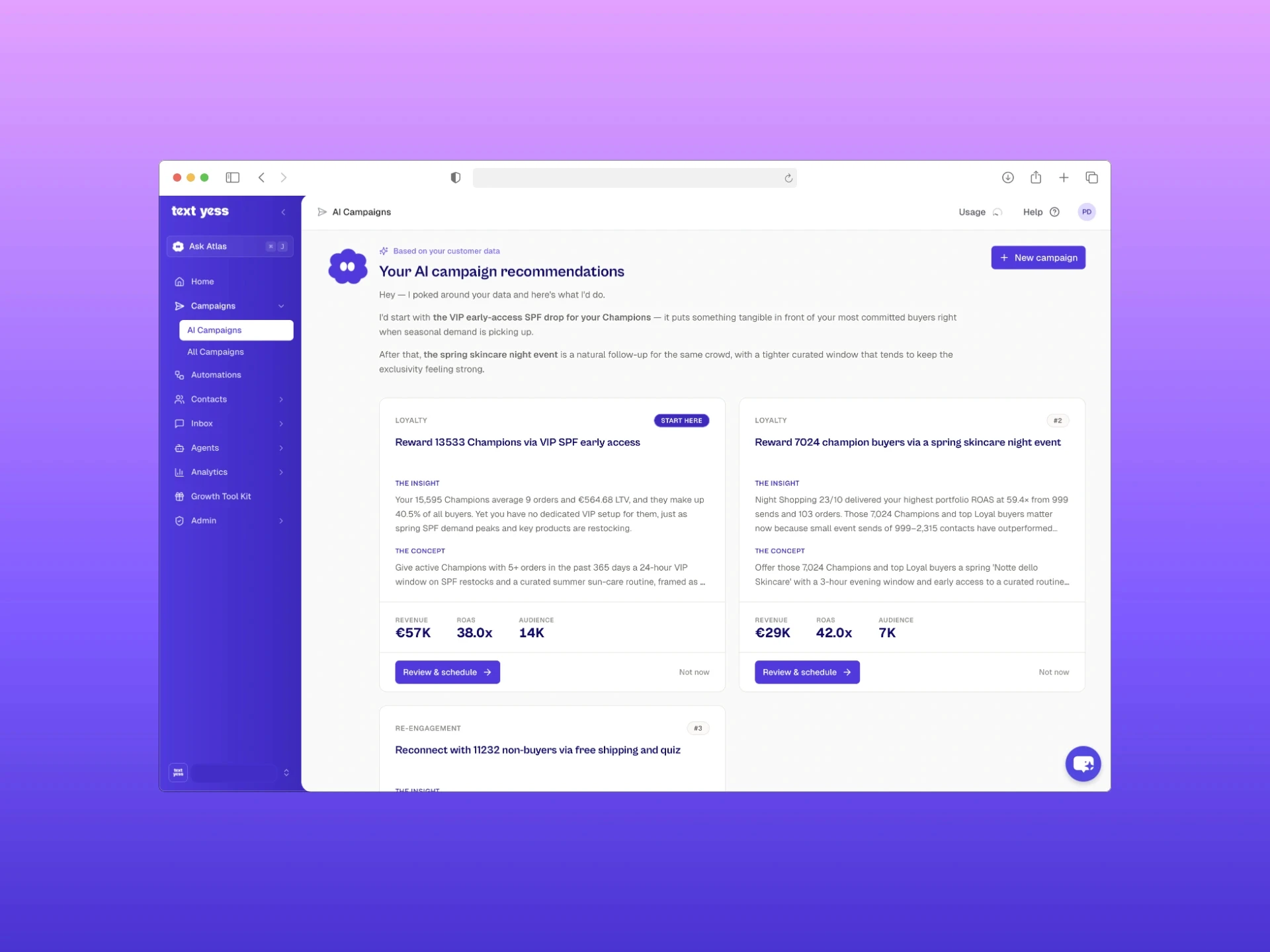
AI agents design, segment, and schedule WhatsApp messages without manual planning. Seasonal promotions, product drops, retention campaigns: the agent analyzes purchase history and browsing patterns to determine who receives what message and when.
This replaces the work of a dedicated CRM strategist. The campaign comes to you, not the other way around.
With Baymard Institute reporting 70.22% average cart abandonment, AI agents send trigger-based recovery messages with the specific items left behind, a direct link back to checkout, and often a time-sensitive incentive. Timing matters here. Messages sent within an hour of abandonment typically outperform those sent later.
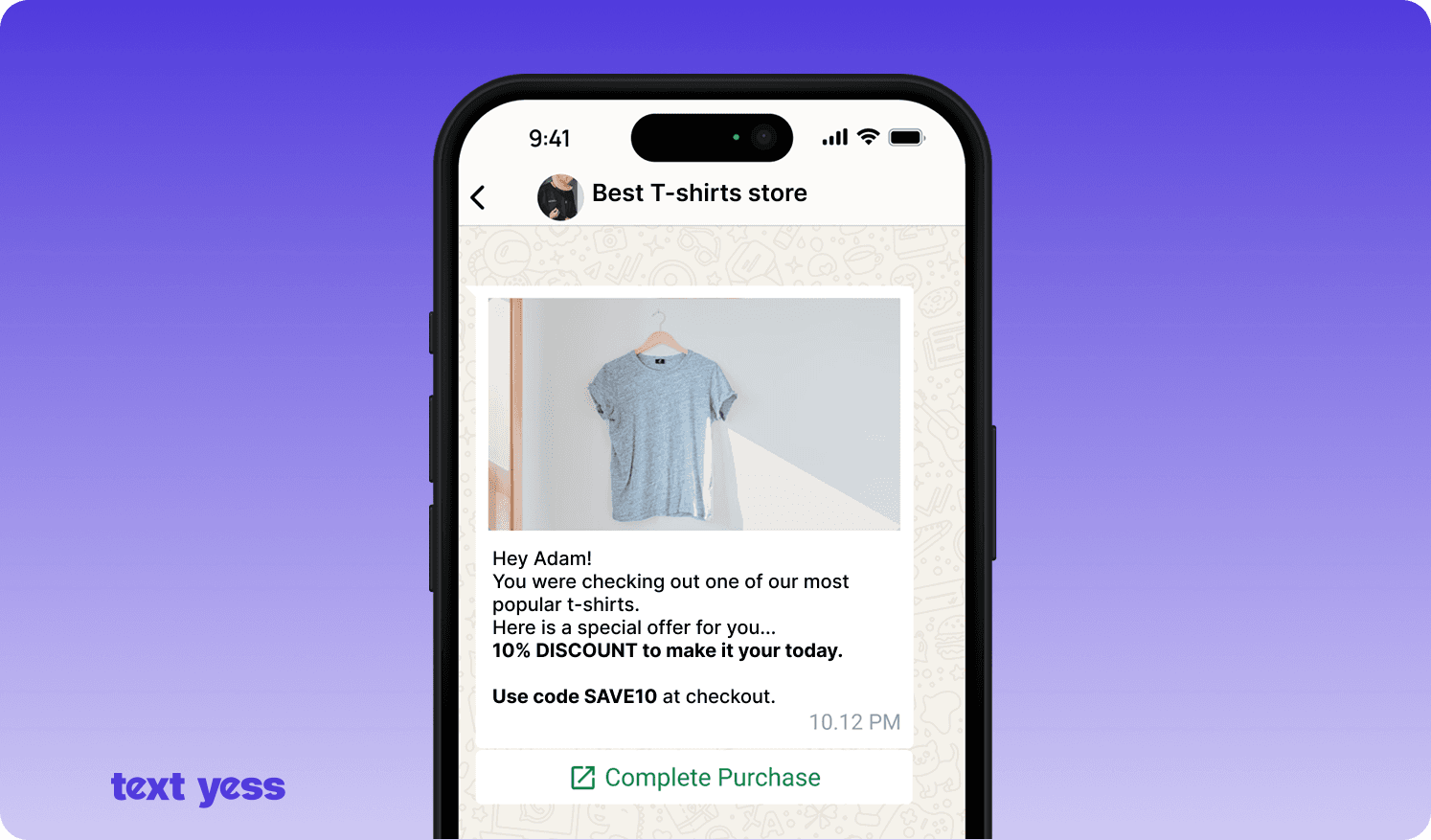
Based on browsing behavior, purchase history, or a direct question ("I'm looking for a gift under €50"), the agent surfaces relevant products with images and key details. This functions like a personal shopping assistant rather than a search bar.
FAQ handling, order status updates, shipping questions: AI agents resolve routine inquiries autonomously on site, WhatsApp, and voice. Complex cases escalate to human agents, and Gartner projects 80% of common issues will be resolved autonomously by 2029.
Each platform below serves a distinct use case. The right choice depends on primary channel, team size, and whether the priority is sales conversion, support automation, or campaign execution.
Best for: conversational commerce across WhatsApp, site, and voice
TextYess is an AI-first conversational platform that turns messaging channels into revenue. It combines proactive WhatsApp campaigns, trigger-based automations, and an AI agent that handles inbound conversations autonomously.
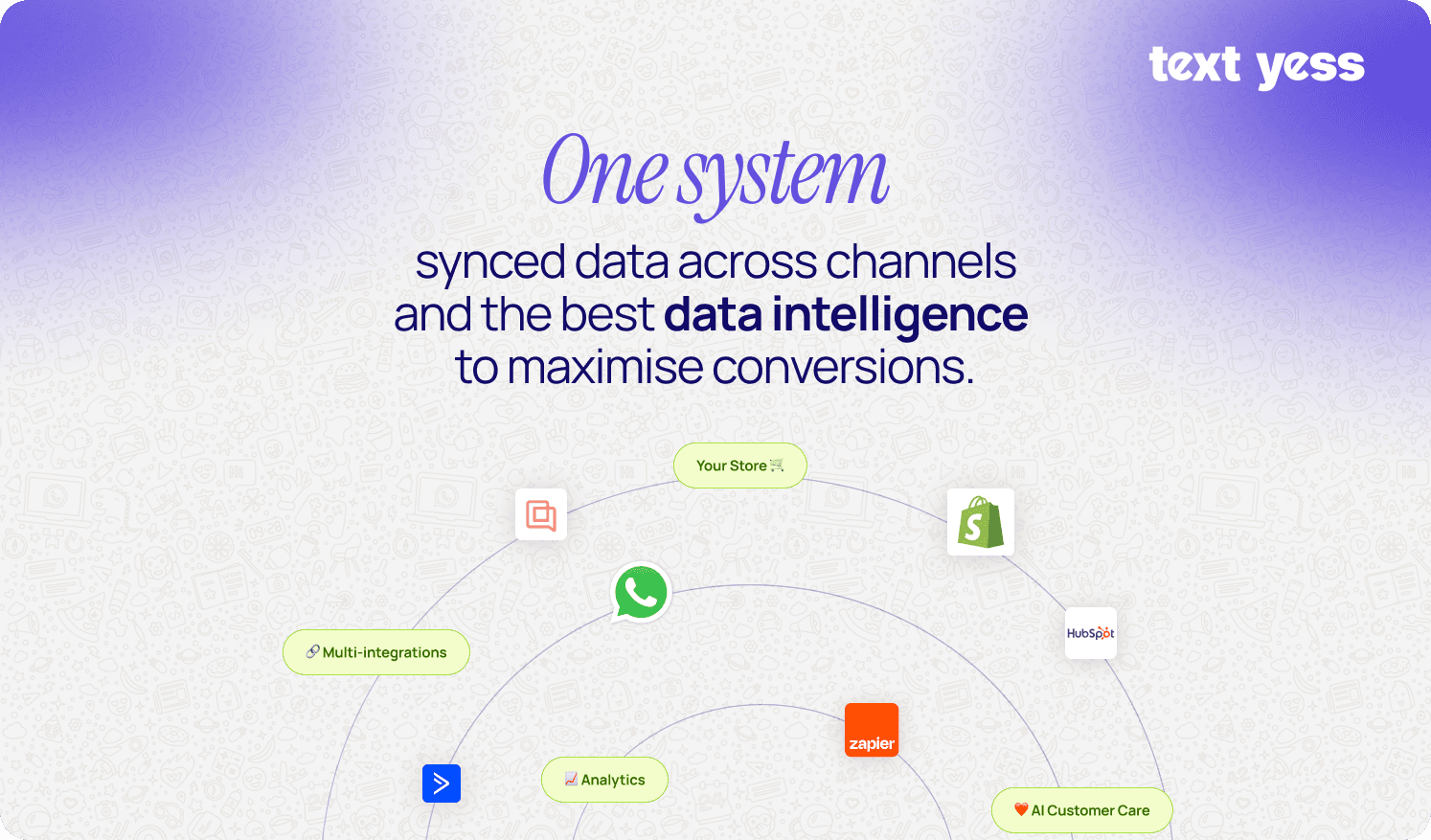
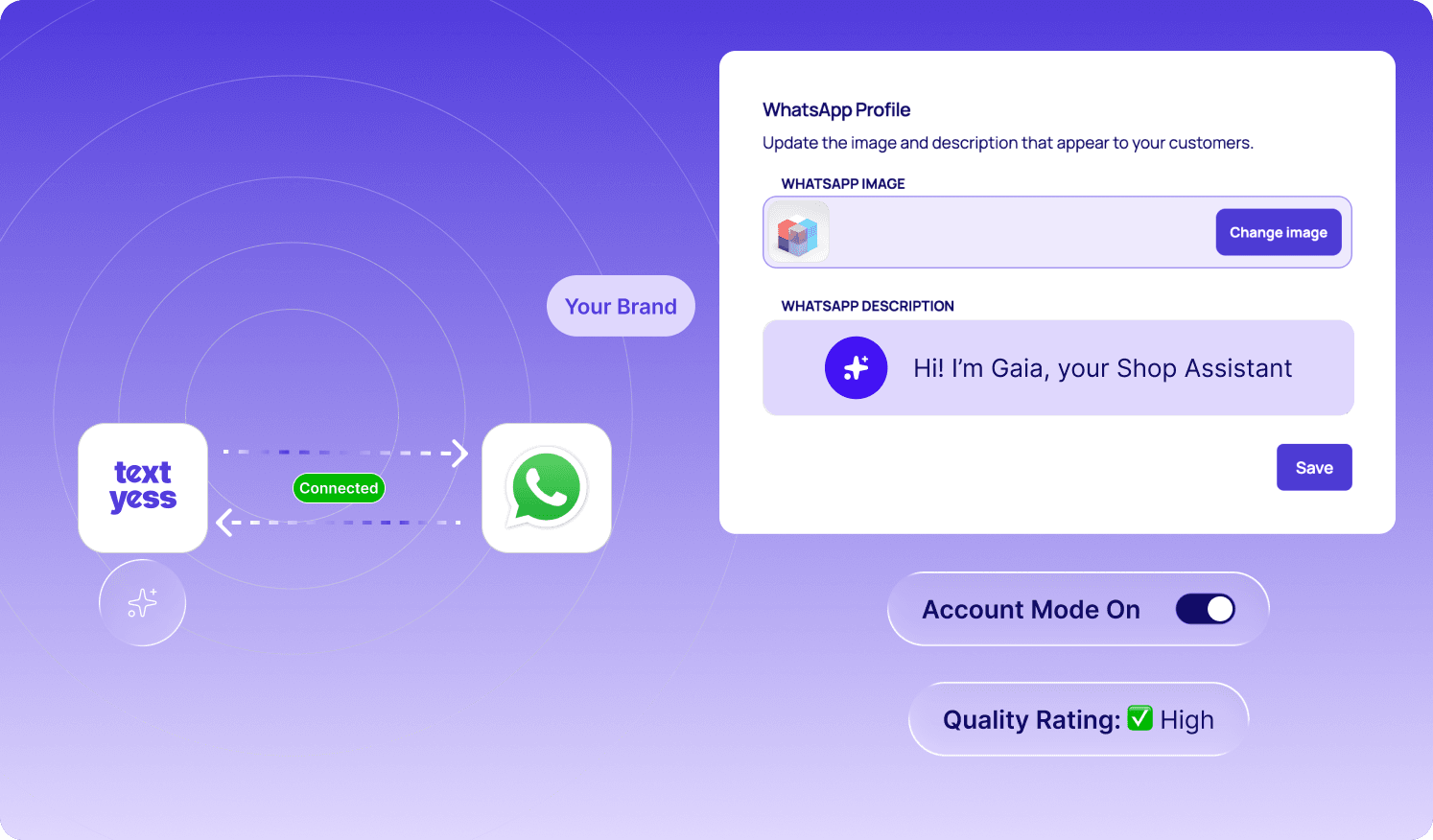
The platform connects directly to Shopify or any CMS, syncing products, orders, and customer data. Setup takes minutes with no code required. What sets it apart is unified customer profiles across every touchpoint and real-time revenue attribution tied to conversations.
Best for: AI-enhanced retention marketing in email and SMS
Klaviyo adds predictive analytics and send-time optimization to its email and SMS platform. For brands already operating inside the Klaviyo ecosystem, the AI features extend existing workflows rather than replacing them.
Best for: on-site AI shopping assistance
Zipchat focuses on website chat, delivering product recommendations and instant answers to shopper questions. It's particularly suited to Shopify stores looking to improve conversion from existing traffic.
Best for: WhatsApp commerce in European markets
Charles serves D2C brands in the DACH region with WhatsApp-driven campaigns and customer engagement. The platform emphasizes compliance with European messaging regulations.
Best for: AI-powered support automation
Gorgias automates customer service for Shopify stores, deflecting tickets with AI while maintaining a unified helpdesk. It's built for support-heavy operations rather than proactive sales.
Best for: social messaging commerce
Konvo enables AI conversations across WhatsApp and Instagram, targeting brands that drive sales through social messaging channels.
Best for: enterprise AI customer engagement
Ada offers multilingual automation at scale, serving large ecommerce operations with global audiences and complex support requirements.
Best for: support automation with strong containment rates
Zowie focuses on autonomous customer service handling for mid-market and enterprise brands.
Best for: AI-driven ecommerce intelligence
Moby functions as a business intelligence agent rather than a direct marketing executor. It analyzes ad performance and surfaces insights for DTC brands optimizing growth through analytics.
Not all platforms deliver equal value. A few capabilities separate effective AI marketing agents from basic chatbots.
When a customer who browsed winter coats on a website later messages on WhatsApp, the AI agent already knows their preferences. This continuity creates relevant conversations rather than generic responses.
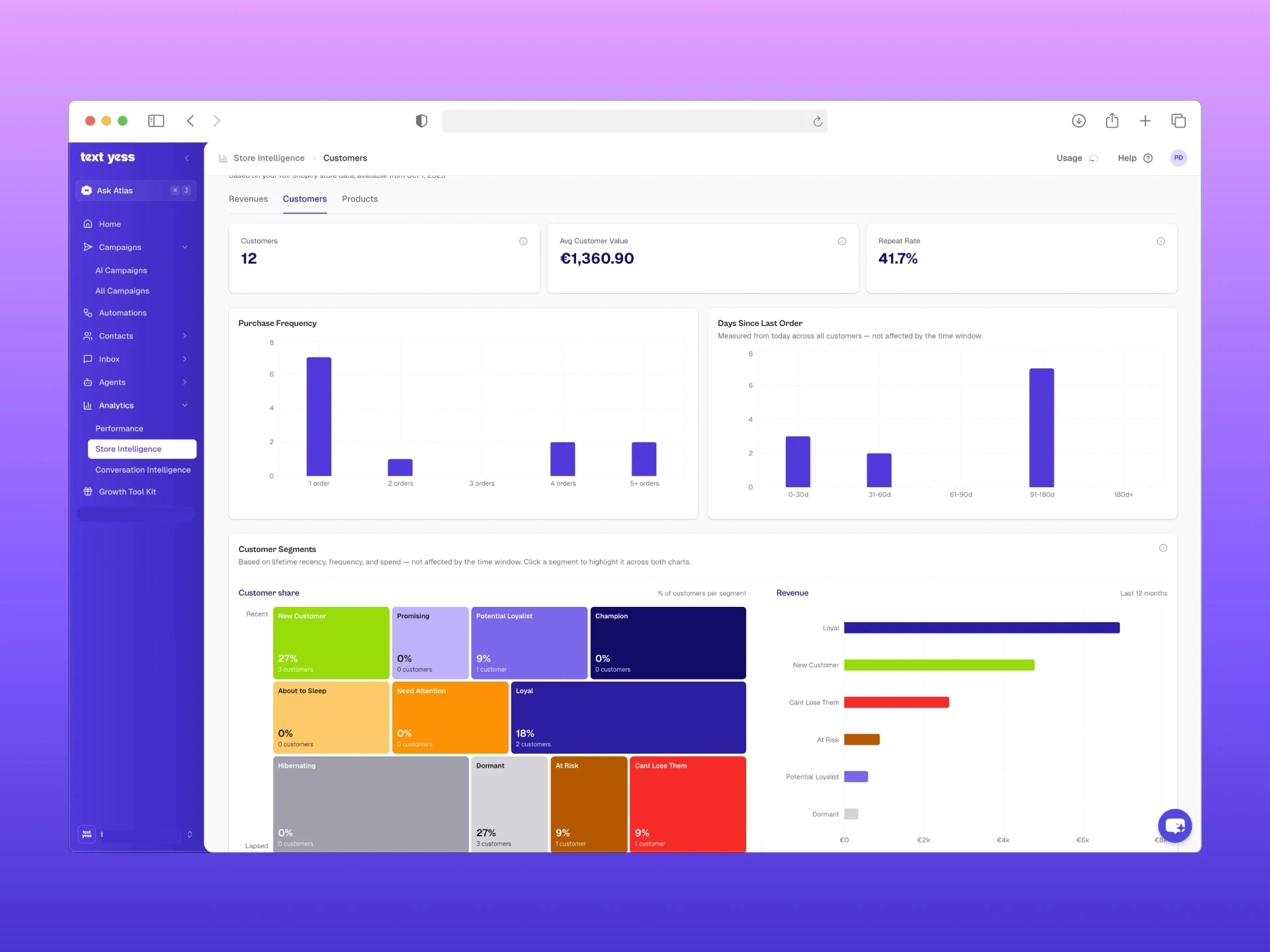
Managing all conversations in one inbox reduces operational complexity. It also captures revenue across touchpoints that would otherwise require separate tools and workflows.
The platform's ability to connect with a store, marketing tools, and payments determines whether conversations can include real-time inventory, order status, and personalized product data.
Understanding which conversations lead to conversions is essential for optimization. Platforms that provide clear attribution show exactly how much revenue originated from conversational channels and which campaigns perform best.
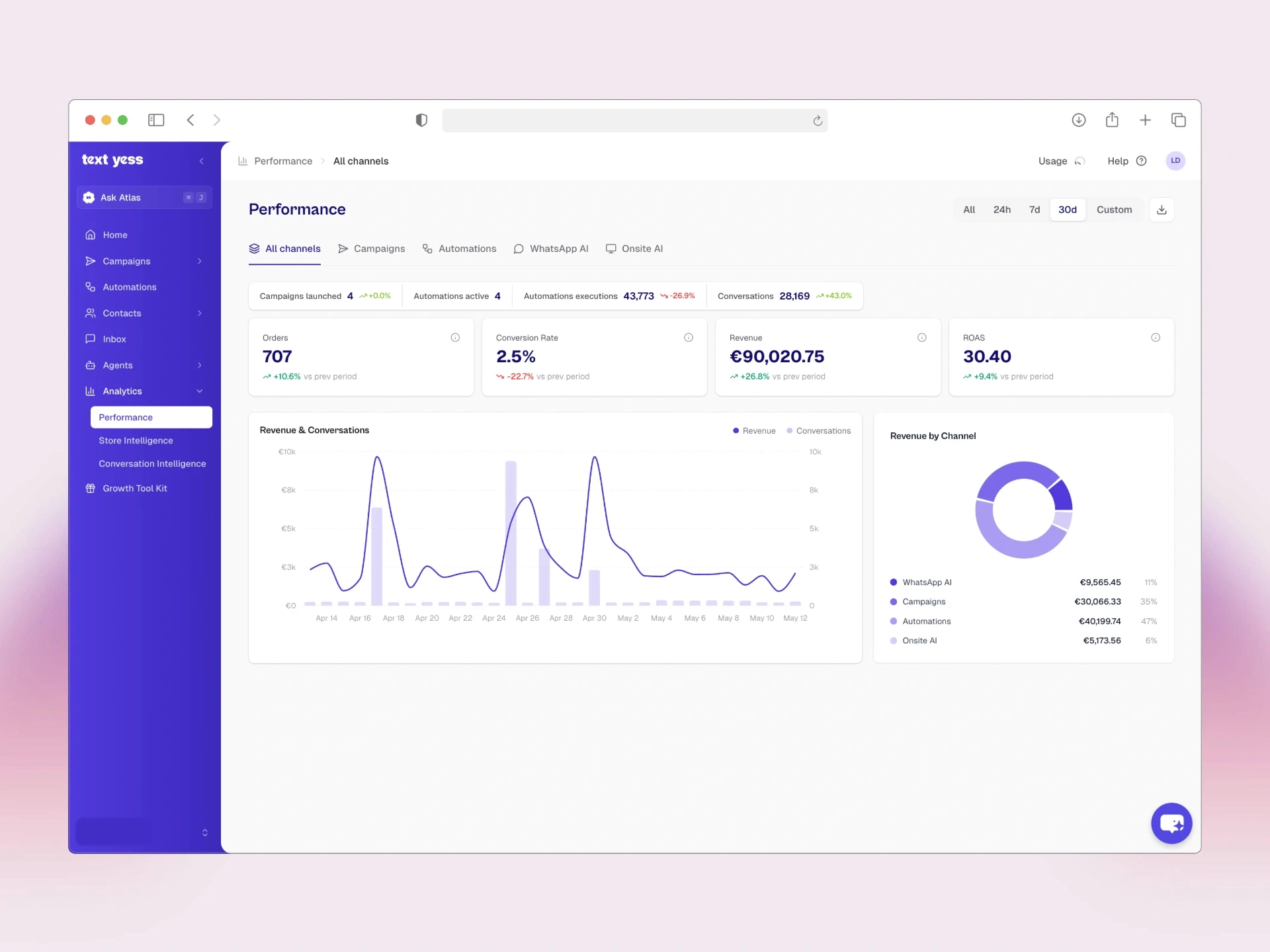
Fast deployment matters. The best solutions enable teams to launch AI agents quickly without developer resources. For brands selling across markets, conversations that feel local drive higher conversion.
The decision framework comes down to five factors:
Primary channel: match the agent to where customers engage (WhatsApp, site, email, or voice)
Team size: solo operators benefit from no-code simplicity, while enterprises may want customization
Use case priority: support automation, sales conversion, or campaign execution
Integration needs: compatibility with the existing ecommerce stack
Budget: pricing tier aligned with expected message volume and feature requirements
Implementation follows a logical progression. Most platforms aim for same-day deployment.
Sync the store (Shopify, WooCommerce, or similar) to import products, orders, and customer data. This connection enables the AI agent to provide accurate, real-time information.
Set the agent's objectives (sales focus, support focus, or both) and align its voice with brand identity. Upload FAQs, product information, and any specific policies the agent will reference.
Activate welcome flows, cart recovery sequences, and proactive campaigns. Starting with high-intent touchpoints focuses effort where purchase intent is highest.
Use analytics to measure revenue, refine messaging, and optimize performance. The feedback loop between data and action is what separates brands that scale from those that stall.
24/7 availability: engage shoppers and answer questions at any hour
Higher conversion rates: proactive nudges and personalized recommendations move browsers to buyers
Reduced support costs: autonomous handling of common queries frees human agents for complex cases
Faster time to value: no-code setup means revenue impact within days, not months
Scalable personalization: deliver localized, relevant conversations to thousands simultaneously
TextYess is built for ecommerce brands that want to move beyond reactive chat and use messaging as a primary sales driver. It connects directly the CMS, pulling in live product data, inventory, and order information so the AI agent can have genuinely useful conversations.
From the moment a shopper asks their first question, the agent is working toward a sale. It can proactively trigger conversations when shoppers show high-intent signals, recover abandoned carts via WhatsApp with personalized follow-ups, and send post-purchase updates that reduce support load while reinforcing trust.
For brands selling across multiple markets, TextYess supports multi-language conversations that adapt to customer preferences. Setup is no-code, which means most teams go from integration to live AI agent in a single session.
How much does an AI marketing agent for ecommerce cost?
Can an AI marketing agent replace a human marketing team?
Which ecommerce platforms integrate with AI marketing agents?
How long does it take to see results from an AI marketing agent?
Is customer data safe with an AI marketing agent?