Conversational Commerce Tactics: How to Drive More Revenue
Conversational commerce is the practice of using messaging, chat, and voice channels to engage customers in real-time buying conversations that drive revenue. Learn how it can boost your revenue.
Most eCommerce brands treat chat as a support channel: a place to answer questions and resolve complaints. The brands growing fastest in 2026 have figured out something different: conversations are where sales happen now.
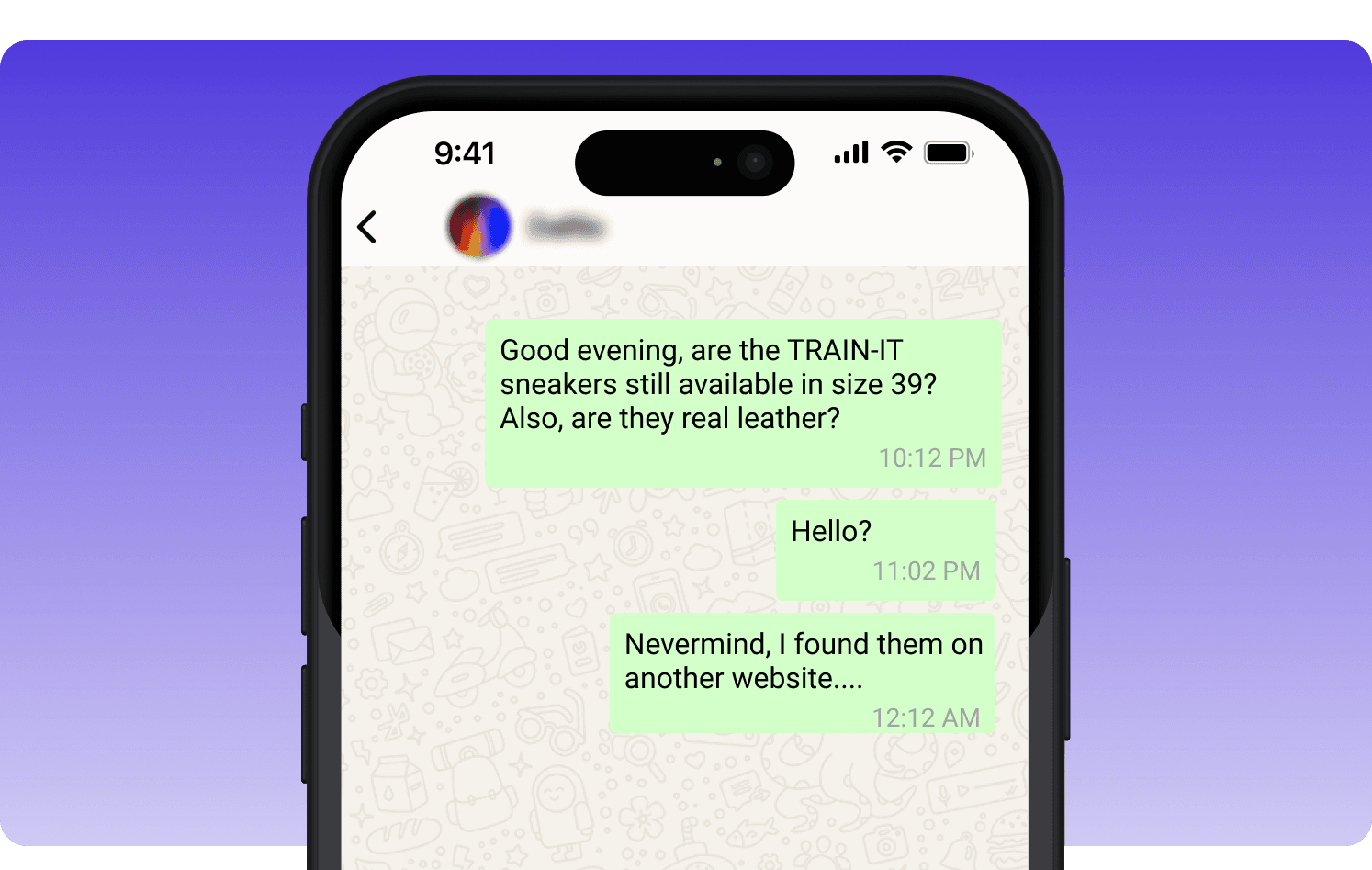
When a customer can ask about sizing, get a personalized recommendation, and complete their purchase without leaving WhatsApp, the path from interest to transaction shrinks dramatically. This guide covers the conversational commerce tactics, platform features, and implementation steps that turn messaging channels into measurable revenue.
What Is Conversational Commerce
Conversational commerce is the practice of using messaging, chat, and voice channels to engage customers in real-time buying conversations. Rather than browsing product pages and clicking through checkout flows, shoppers can ask questions, get recommendations, and complete purchases directly within a conversation.
The channels involved include website chat, WhatsApp, SMS, and voice assistants. What sets conversational commerce apart from traditional eCommerce is the two-way dialogue — customers interact with AI agents or human representatives who guide them toward a purchase, much like a knowledgeable sales associate would in a physical store.
In 2026, conversational commerce — a market projected to reach $20.28 billion by 2030 — has shifted from a "nice-to-have" to essential infrastructure for online brands. AI agents now handle conversations autonomously, answering product questions, suggesting items, and processing transactions without human intervention.
Why Conversational Commerce Drives Revenue for eCommerce Brands
The connection between real-time engagement and purchasing decisions is straightforward: when customers can ask questions and receive instant, personalized answers, the hesitation that typically causes cart abandonment disappears.
Here's how conversations translate into revenue:
Reduced purchase friction: Customers get immediate answers to sizing questions, shipping concerns, or product comparisons — removing the uncertainty that leads to a 70.22% average cart abandonment rate
Higher conversion rates: Personalized guidance moves shoppers from browsing to buying, with some brands reporting chat conversion rates around 25%
Increased average order value: AI agents can recommend complementary products during conversation, naturally expanding basket size
Improved customer retention: Post-purchase support through conversational channels builds loyalty and drives repeat purchases
Another factor worth noting: many purchases now happen on the same day as the initial message. Conversational AI accelerates the purchase cycle by providing information exactly when customers are ready to buy. TextYess, for instance, is built around this principle: its AI shopping agent engages customers at peak intent moments, turning what would have been a bounce into a completed order.
Conversational Commerce Platform Features for Conversion Optimization
Choosing the right conversational commerce platform means evaluating which capabilities actually drive revenue. Let's look at the features that matter most.
Unified Customer Data Across Channels
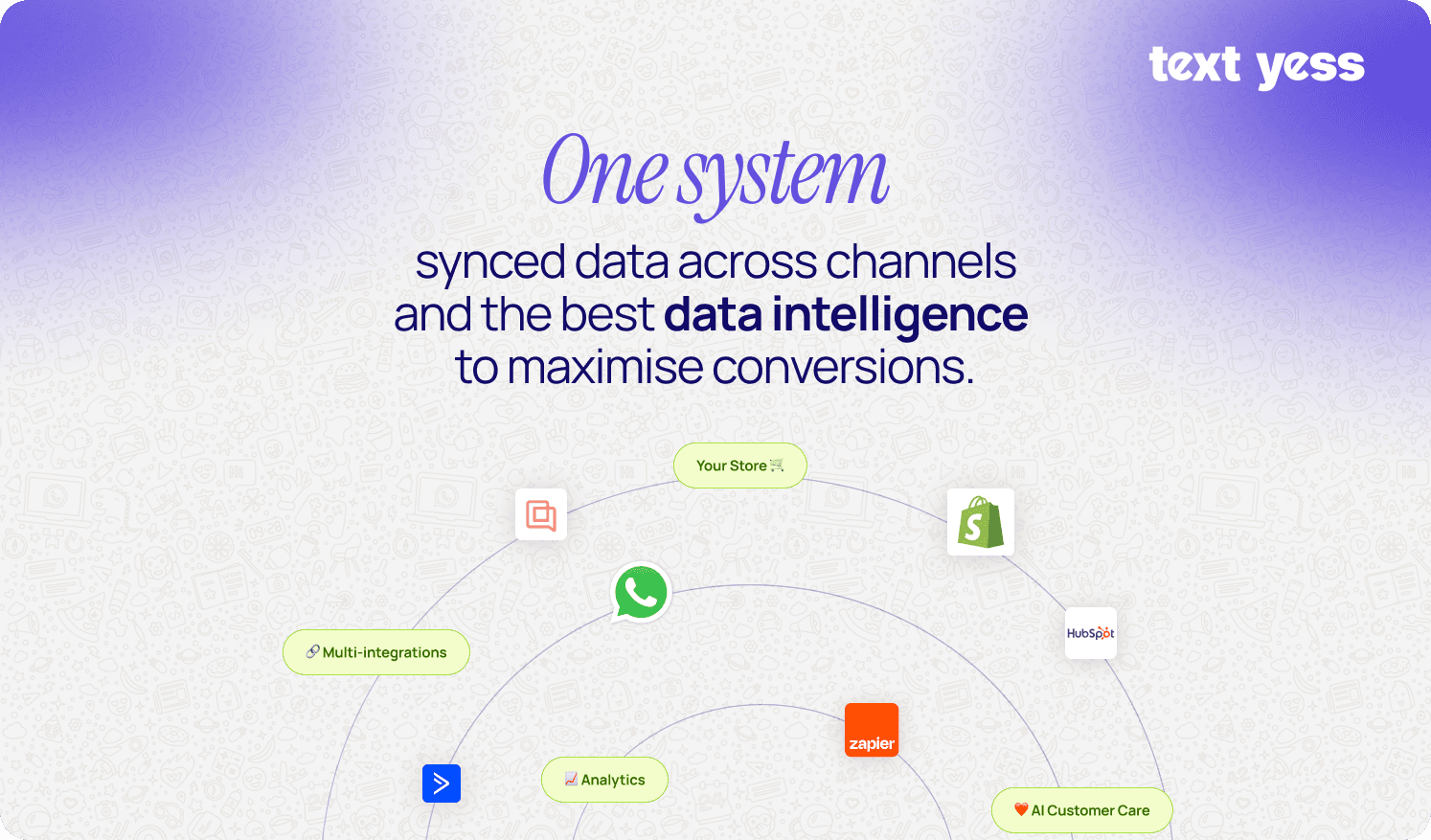
A conversational commerce solution becomes powerful when it centralizes data from your website, WhatsApp, and voice interactions into a single customer view. When a customer who browsed winter coats on your site later messages on WhatsApp, the AI agent already knows their preferences.
This continuity creates relevant conversations rather than generic responses that feel disconnected from the customer's journey.
AI-Powered Personalization at Scale
Modern conversational commerce platforms use AI to analyze customer behavior, purchase history, and real-time intent to deliver personalized recommendations. The AI can suggest products based on what similar customers purchased, current browsing patterns, or the specific questions being asked.
This level of personalization previously required dedicated sales staff. Now it happens automatically across thousands of simultaneous conversations. TextYess handles exactly this by syncing with your product catalog to deliver recommendations that feel hand-picked rather than algorithmic.
Proactive Conversation Triggers
Rather than waiting for customers to initiate contact, effective platforms can start conversations based on specific behaviors. When a shopper lingers on a size chart, abandons their cart, or returns to view the same product multiple times, the AI can proactively reach out with helpful information. Just like it happens in a physical store when you get assisted.
Multi-Channel Unified Inbox
Managing conversations across website chat, WhatsApp, and voice from separate tools creates operational chaos. A unified inbox brings all interactions into one place, making it possible to maintain consistent service quality and track the full customer journey.
Real-Time Revenue Attribution and Analytics
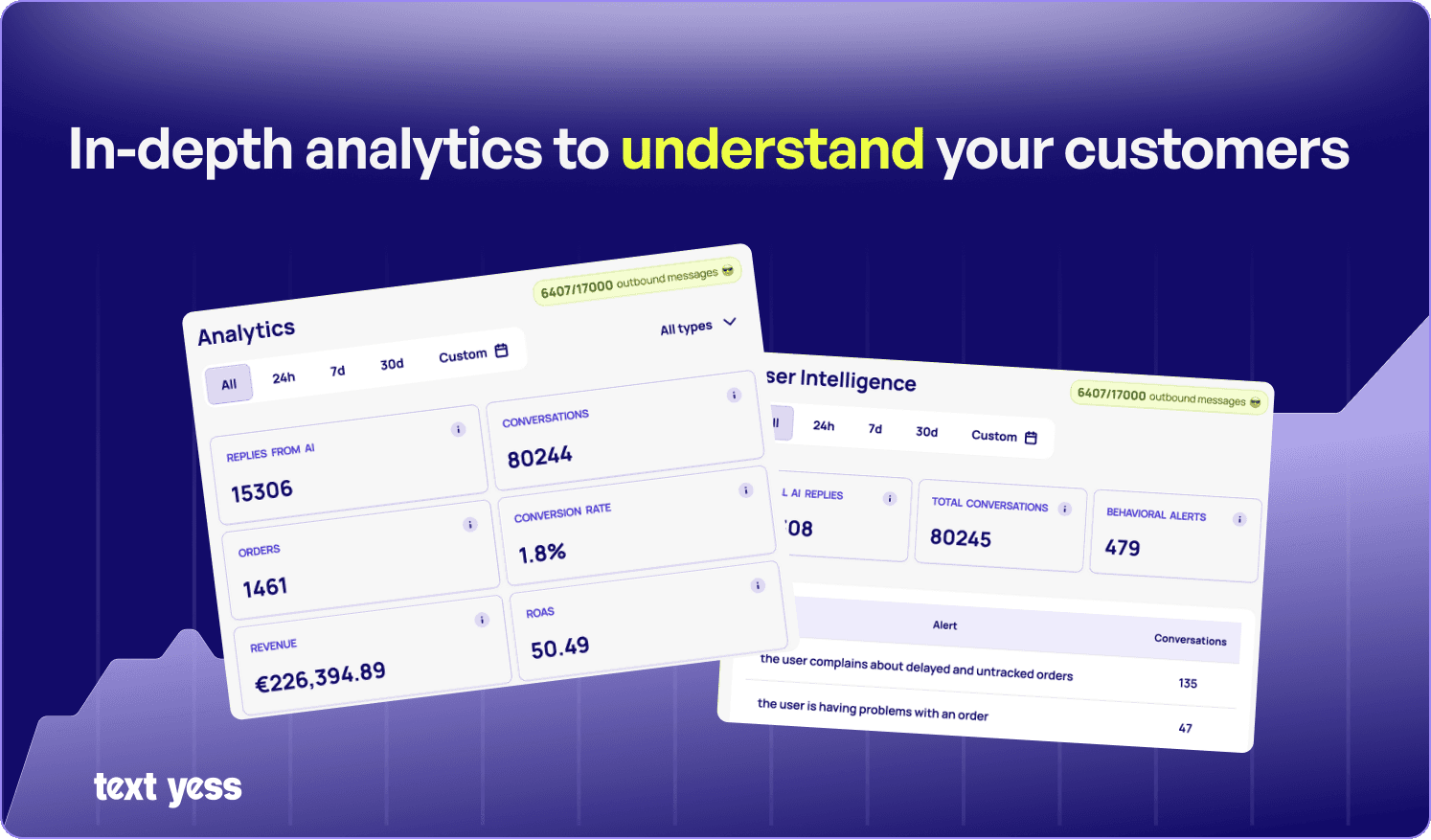
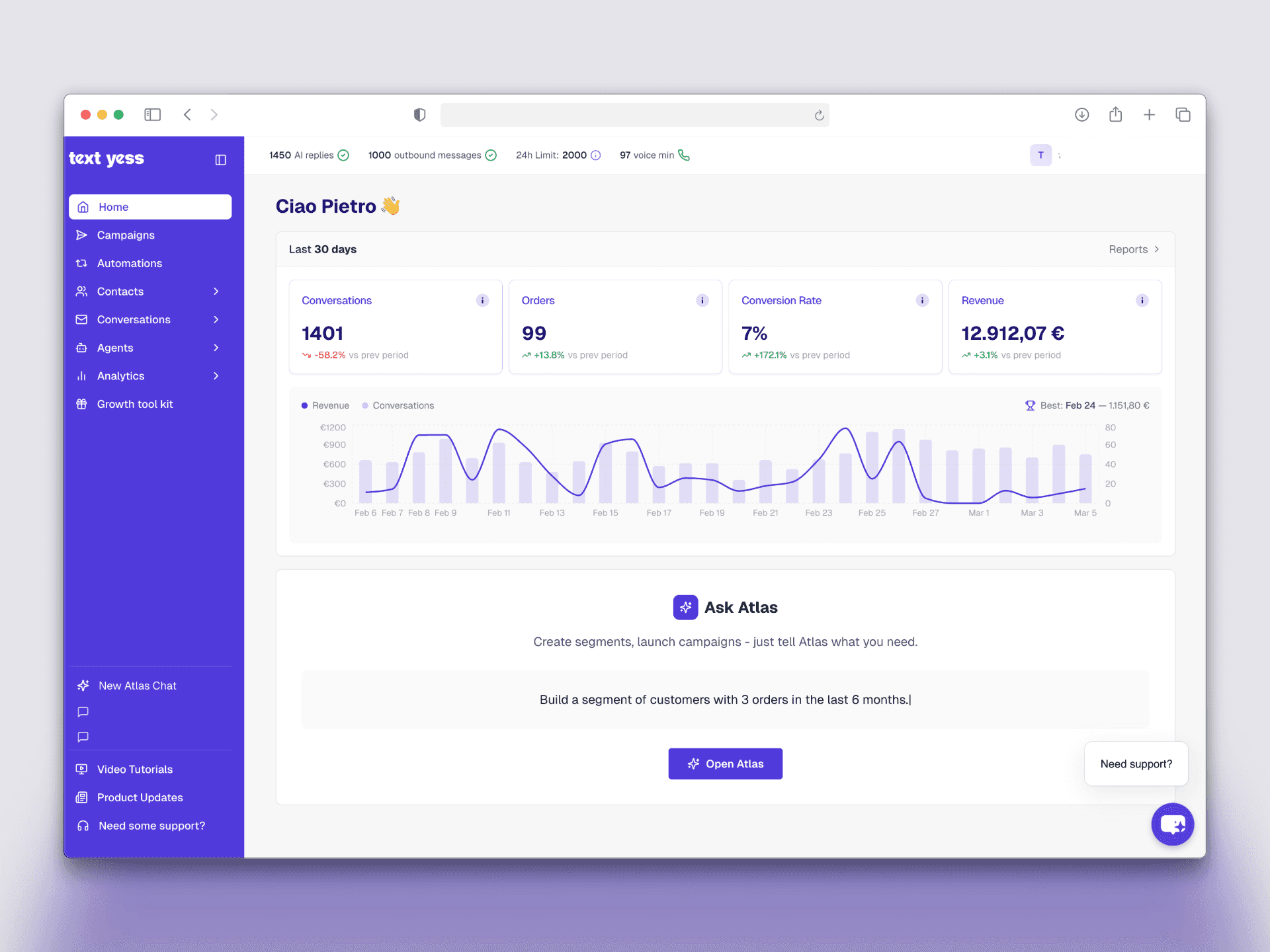
Understanding which conversations lead to conversions is essential for optimization. Look for platforms that provide clear attribution — showing exactly how much revenue originated from conversational channels and which campaigns perform best.
No-Code Setup and Fast Deployment
The best conversational commerce solutions enable teams to launch AI agents quickly without developer resources. Platforms like TextYess allow brands to connect their CMS, configure the AI shopping agent's goals and tone, and start converting conversations into sales within minutes.
Proven Tactics to Increase Revenue with Conversational Commerce
With the right platform in place, several tactics consistently drive measurable revenue growth.
1. Recover Abandoned Carts with Automated Outreach
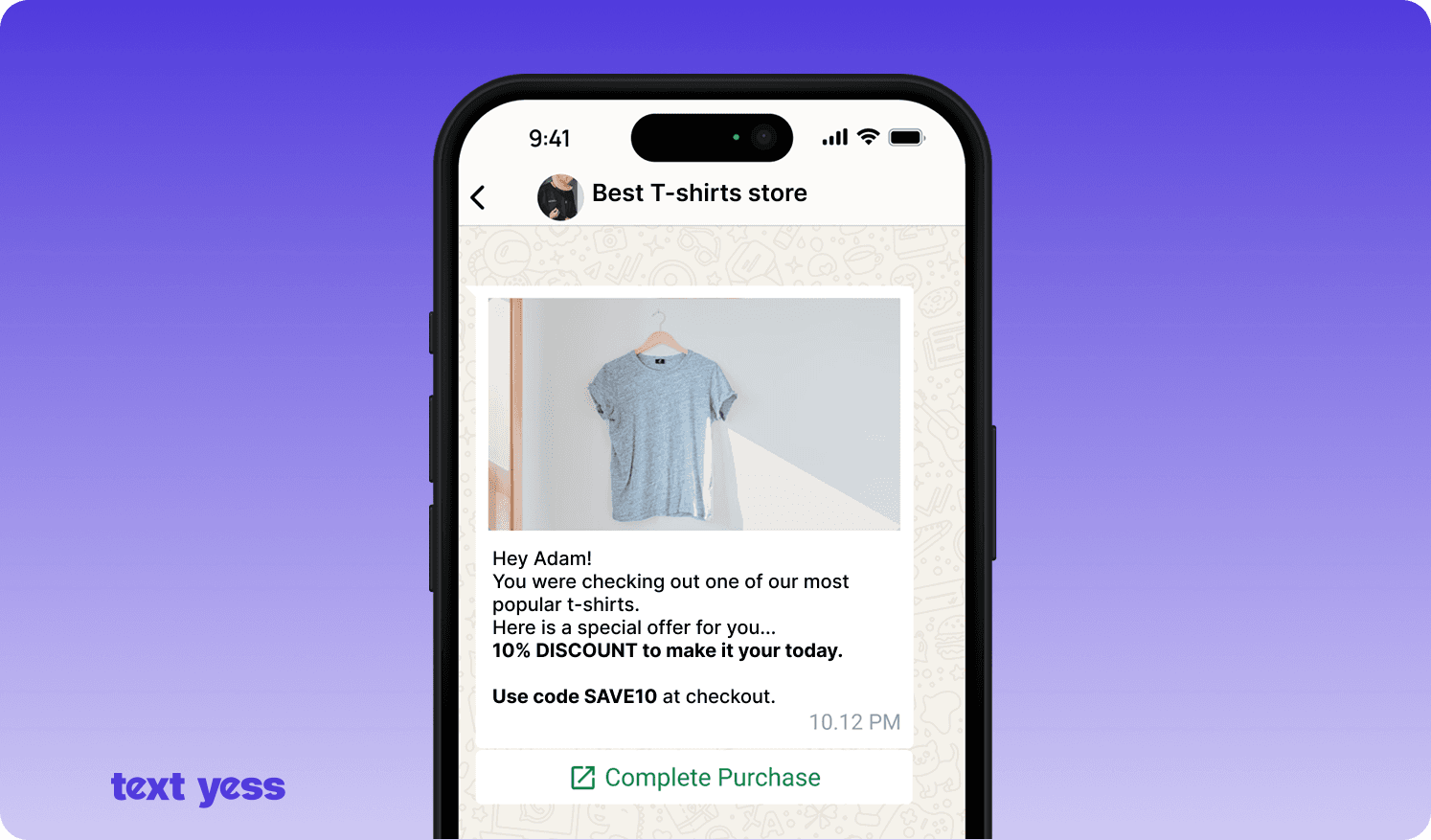
Abandoned cart recovery through WhatsApp or SMS typically outperforms email. The key is timing: sending a personalized message within an hour of abandonment while purchase intent remains fresh.
Effective recovery messages include the specific items left behind, address common objections like shipping costs or return policies, and make it easy to complete the purchase directly within the conversation.
2. Launch Proactive Campaigns on WhatsApp
WhatsApp campaigns for product launches, flashsales, and personalized promotions drive direct purchases with open rates that exceed traditional email's 43.46% average. Because customers have opted in to receive messages, engagement tends to be high.
The conversational nature means customers can ask questions and purchase without leaving the chat — reducing the steps between interest and transaction.
3. Deliver Personalized Product Recommendations
AI agents can analyze customer preferences and purchase history to suggest relevant products during any conversation. When a customer asks about running shoes, the agent can recommend specific models based on their stated preferences and what similar customers chose.
4. Provide 24/7 Sales Support with AI Agents
Customers shop at all hours, and questions that go unanswered often mean lost sales. AI agents handle sales inquiries around the clock, capturing revenue from shoppers in different time zones or those browsing late at night.
5. Use Interactive Buyer Guides to Reduce Purchase Friction
For products with multiple variants or complex selection criteria, guided selling experiences help customers find the right fit. The AI asks qualifying questions — What's your skin type? What size space are you furnishing? — and matches customers with appropriate products.
6. Send Instant Order Updates to Build Customer Trust
Proactive post-purchase communication through conversational channels reduces "where is my order" support tickets while building confidence for repeat purchases. Shipping confirmations, delivery updates, and follow-up messages keep customers informed.
How to Choose the Right Conversational Commerce Solution
Evaluating conversational commerce companies requires focusing on revenue outcomes rather than feature lists alone.
Criteria
What to Look For
Revenue Impact
Integration depth
Native connections to CMS, payments, logistics
Enables real-time product and order data in conversations
Revenue tracking
Conversation-to-conversion attribution
Proves ROI and optimizes campaigns
Language support
Multi-language with localized feel
Captures international revenue
Automation level
High autonomous handling with human escalation
Scales without headcount
Channel coverage
Site, WhatsApp, voice in unified platform
Meets customers where they are
Integration with Your eCommerce Stack
The platform's ability to connect with your store, marketing tools and payments determines whether conversations can include real-time inventory, order status, and personalized product data.
Conversation-to-Revenue Tracking Capabilities
Analytics that tie specific conversations to placed orders make optimization possible. You want to see which messages and campaigns generate the most revenue — not just engagement metrics.
Multi-Language and Localization Support
For brands selling across EU markets or globally, conversations that feel local drive higher conversion. This means more than translation: it requires understanding regional preferences and communication styles.
Autonomous Handling and Human Escalation
The balance between AI automation and seamless handoff to human agents matters. Look for platforms that handle routine inquiries autonomously while routing complex situations to your team.
Scalability Across Site, WhatsApp, and Voice
Platforms that unify multiple channels reduce operational complexity while providing consistent customer experiences.
How to Implement Conversational Commerce in Your eCommerce Store
Getting started with conversational commerce follows a logical progression.
1. Connect Your CMS and Sync Product Data
The first step involves integrating with Shopify, WooCommerce, or your eCommerce platform to pull in products, orders, and customer data. This connection enables the AI agent to provide accurate, real-time information.
2. Configure AI Agent Goals and Brand Tone
Setting up the AI shopping agent means defining its objectives — sales focus, support focus, or both — and aligning its voice with your brand identity. Modern platforms make this configuration possible without code.
3. Start with High-Intent Customer Touchpoints
Beginning with abandoned cart recovery and product page chat focuses your efforts where purchase intent is highest.
4. Expand to Additional Channels Gradually
Once initial touchpoints perform well, scaling from on-site chat to WhatsApp to voice makes sense. Each channel addition builds on the unified customer data you've already established.
How to Measure Revenue Attribution in Conversational Commerce
Tracking the right metrics reveals whether your conversational commerce investment delivers returns. But knowing which numbers to watch — and what to do when they're underperforming — is what separates brands that optimize conversational commerce from those that just run it.
Conversation-to-Conversion Rate
The percentage of conversations that result in a placed order, a direct measure of sales effectiveness. A healthy benchmark varies by channel and product category, but most high-performing AI shoppingagents reach conversion rates between 15% and 30%. If yours is below that, the first places to investigate are response accuracy (is the AI answering questions correctly?) and friction at checkout (can customers complete the purchase without leaving the conversation?).
Revenue Per Conversation
Total revenue attributed to conversational channels divided by number of conversations. This metric tells you the average commercial value of each interaction and is especially useful for evaluating campaign performance. Tracking it over time also reveals whether your AI agent is getting better at upselling and cross-selling — a steady increase in revenue per conversation usually signals that your product recommendations are becoming more relevant.
Cart Recovery Rate
Of all the abandoned cart messages sent, what percentage result in a completed purchase?
This metric sits at the intersection of timing, personalization, and messaging quality. Recovery rates above 10–15% are achievable with well-timed WhatsApp follow-ups that include the specific items left behind and a clear path back to checkout. Track this separately from your general conversion rate — it's one of the fastest levers for immediate revenue impact.
Campaign ROAS
Return on ad spend for proactive WhatsApp or SMS campaigns. Unlike passive chat, outbound conversational campaigns have a direct cost (per-message fees, platform costs), so measuring ROAS is essential for keeping them profitable. The best-performing campaigns tend to be highly segmented — targeting customers based on past purchase behavior or browse history — rather than broadcast to your entire list.
How to Use These Metrics Together
No single metric tells the full story. A high autonomous resolution rate with a low conversion rate suggests the AI is handling conversations efficiently but not closing sales.
A strong campaign ROAS with a poor cart recovery rate means your outbound messaging works better than your recovery flows. Review these metrics as a set — ideally in a dashboard that ties each conversation directly to revenue — and use the patterns to prioritize where to optimize next.
Common Conversational Commerce Mistakes That Hurt Revenue
Even well-resourced brands stumble with conversational commerce: usually not because the technology fails, but because of avoidable implementation decisions. Here are the four mistakes that most consistently damage both revenue and customer trust.
1. Over-Automating Without Human Escalation
Automation is the point, but it has limits.
When an AI agent tries to handle a complaint it can't resolve, or loops a frustrated customer through the same unhelpful responses, the damage to trust outweighs any efficiency gains. The strongest implementations treat AI and human agents as a team: AI handles volume and speed, humans step in when the situation calls for judgment, empathy, or authority.
2. Ignoring integration with your eCommerce stack
An AI agent that can't access live inventory, order status, or customer history is essentially a fancy FAQ. Customers asking "is this still in stock?" or "where's my order?" expect a real answer — not a redirect to your website. Deep integration with your eCommerce platform is what turns a generic chatbot into a genuine sales tool.
3. Failing to Track Conversation-to-Revenue Attribution
Without a direct line between conversations and orders, you're flying blind. You won't know which campaigns are worth scaling, which touchpoints are losing sales, or how to justify the investment internally. Attribution it's all about the feedback loop that makes optimization possible.
4. Launching on Too Many Channels at Once
The appeal of being everywhere is understandable, but spreading effort across site chat, WhatsApp, SMS, and voice before mastering any one of them typically produces underwhelming results across the board. Start where your customers are most active, get the conversion flow right, then expand with the data to back your decisions.
The technology underpinning conversational commerce is moving fast. These are the developments worth paying attention to now.
Generative AI and Autonomous Agents
Earlier chatbots followed scripts. Generative AI holds actual conversations — adapting tone, handling follow-up questions, and responding to context rather than keywords. This shift makes interactions feel less like a support ticket and more like talking to someone who knows the product. For eCommerce brands, it means fewer dropped conversations and higher conversion rates on complex queries.
Voice Commerce and Multi-Modal Conversations
Text is no longer the only interface.
Voice-enabled shopping is gaining ground, particularly on mobile and smart home devices, while multi-modal conversations — where a customer might send a photo, ask a question, and receive a visual recommendation in the same thread — are becoming a realistic expectation. Brands that build for multiple input types now will have a meaningful head start.
Hyper-Personalization Through Unified Data
Personalization used to mean using someone's first name in an email. Now it means an AI agent that knows a customer's last three purchases, their size preferences, and which products they've viewed without buying — and uses all of that to make a recommendation that actually lands. Unified customer data across every touchpoint is what makes this possible at scale.
Privacy-First Personalization Strategies
Personalization and privacy are no longer in opposition — they have to coexist. For brands operating in EU markets, GDPR compliance isn't optional, but it also doesn't have to mean watered-down experiences. The brands navigating this best are building consent-first data strategies that give customers control while still delivering relevance. It's becoming a competitive differentiator, not just a legal requirement.
How TextYess Turns Conversations Into a Revenue Channel
TextYess is built specifically for eCommerce brands that want to move beyond reactive chat and use messaging as a primary sales driver. It connects directly to your Shopify or WooCommerce store, pulling in live product data, inventory, and order information so the AI agent can have genuinely useful conversations.
From the moment a shopper asks their first question, the agent is working toward a sale.
Where TextYess stands out is in how it handles the full arc of the customer journey. It can proactively trigger conversations when shoppers show high-intent signals, recover abandoned carts via WhatsApp with personalized follow-ups, and send post-purchase updates that reduce support load while reinforcing trust. All of this runs autonomously, with clean revenue attribution so you can see exactly which conversations are generating orders.
For brands that sell across multiple markets, TextYess also supports multi-language conversations that adapt to the customer's preference — making it practical for EU-focused stores that need localized experiences without building separate workflows for each region. Setup is no-code, which means most teams can go from integration to live AI agent in a single session.
Conversational commerce represents a shift from reactive support to proactive revenue generation. The brands seeing the strongest results treat messaging channels as primary storefronts.
The technology has matured to the point where AI agents can autonomously handle the majority of customer interactions while driving measurable sales outcomes. Platforms like TextYess enable brands to turn conversations into revenue with AI agents across site, WhatsApp, and voice — often going from setup to sales in minutes.
FAQs About Conversational Commerce for Revenue Growth
What is the difference between conversational commerce and live chat?
How does conversational commerce comply with GDPR in the EU market?
Can small eCommerce stores benefit from conversational commerce?
How long does it typically take to see revenue results from conversational commerce?
What languages do conversational commerce platforms support for international sales?