Top Rated AI Chatbots for Ecommerce in 2026: A Complete Comparison
Compare the top AI chatbots for ecommerce in 2026. Find which platforms recover carts, drive sales, and handle support autonomously across site and WhatsApp.
Compare the top AI chatbots for ecommerce in 2026. Find which platforms recover carts, drive sales, and handle support autonomously across site and WhatsApp.
The AI chatbot category quietly split in two last year. One half learned to resolve tickets faster. The other half learned to sell.
The difference matters more than it sounds. A chatbot that pulls live inventory, applies discounts mid-conversation, and recovers abandoned carts inside WhatsApp operates in a different category than one that redirects shoppers to FAQ pages.
This guide compares the top-rated AI chatbots for ecommerce, breaks down the features that drive conversions, and covers how to choose the right platform for your store.
The best AI chatbots for ecommerce in 2026 combine generative AI, deep platform integrations (Shopify and other CMS, Social, WhatsApp), and autonomous agentic actions. Unlike older chatbots that followed rigid scripts, modern AI chatbots connect directly to product catalogs, order data, and customer profiles. They answer questions, yes. But they also apply discounts, process returns, and complete purchases inside the conversation.
Think of it this way: a chatbot that can't access live inventory is just a fancy FAQ. One that pulls real-time data and takes action becomes a genuine sales tool.
The core functions break down into four areas:
Customer support: instant answers to shipping, returns, and sizing questions
Product discovery: relevant recommendations based on browsing or direct questions
Order management: tracking, status updates, and delivery info in seconds
Sales assistance: personalized nudges that guide hesitant shoppers toward checkout
Traditional chatbots worked like phone trees. Type a keyword, get a scripted response. If your question didn't fit the tree, you hit a wall.
AI agents operate differently. They use natural language processing (NLP) to understand intent, not just keywords. They draw on generative AI to craft responses that feel conversational. And increasingly, they're agentic: capable of taking actions without human intervention.
Capability | Traditional Chatbot | AI Agent |
|---|---|---|
Understanding | Keyword matching | Intent recognition |
Responses | Scripted templates | Dynamic, contextual |
Actions | None | Autonomous (discounts, returns, campaigns) |
Personalization | Generic | Based on customer data |
The shift explains why the 2026 landscape looks so different. The platforms gaining traction aren't just answering questions. They're closing sales.
When comparing platforms, certain capabilities separate tools that perform from tools that just exist.
Modern AI chatbots can go live in minutes. The best platforms sync product catalogs automatically and require no developer resources. If setup takes longer than a day, that's worth questioning.
The chatbot pulls live inventory, pricing, and order history. Without real-time data, responses become inaccurate. Inaccurate responses frustrate shoppers and kill conversions.
This metric measures the percentage of conversations resolved without human escalation. Higher autonomy means lower support costs and faster response times — Gartner predicts agentic AI will resolve 80% of common service issues without human intervention by 2029. Platforms that report this number clearly tend to be more confident in their AI.
Shoppers expect help where they already are. A platform covering on-site chat, WhatsApp, and voice from one unified inbox reduces operational chaos. Managing separate tools for each channel creates friction for teams and inconsistent experiences for customers.
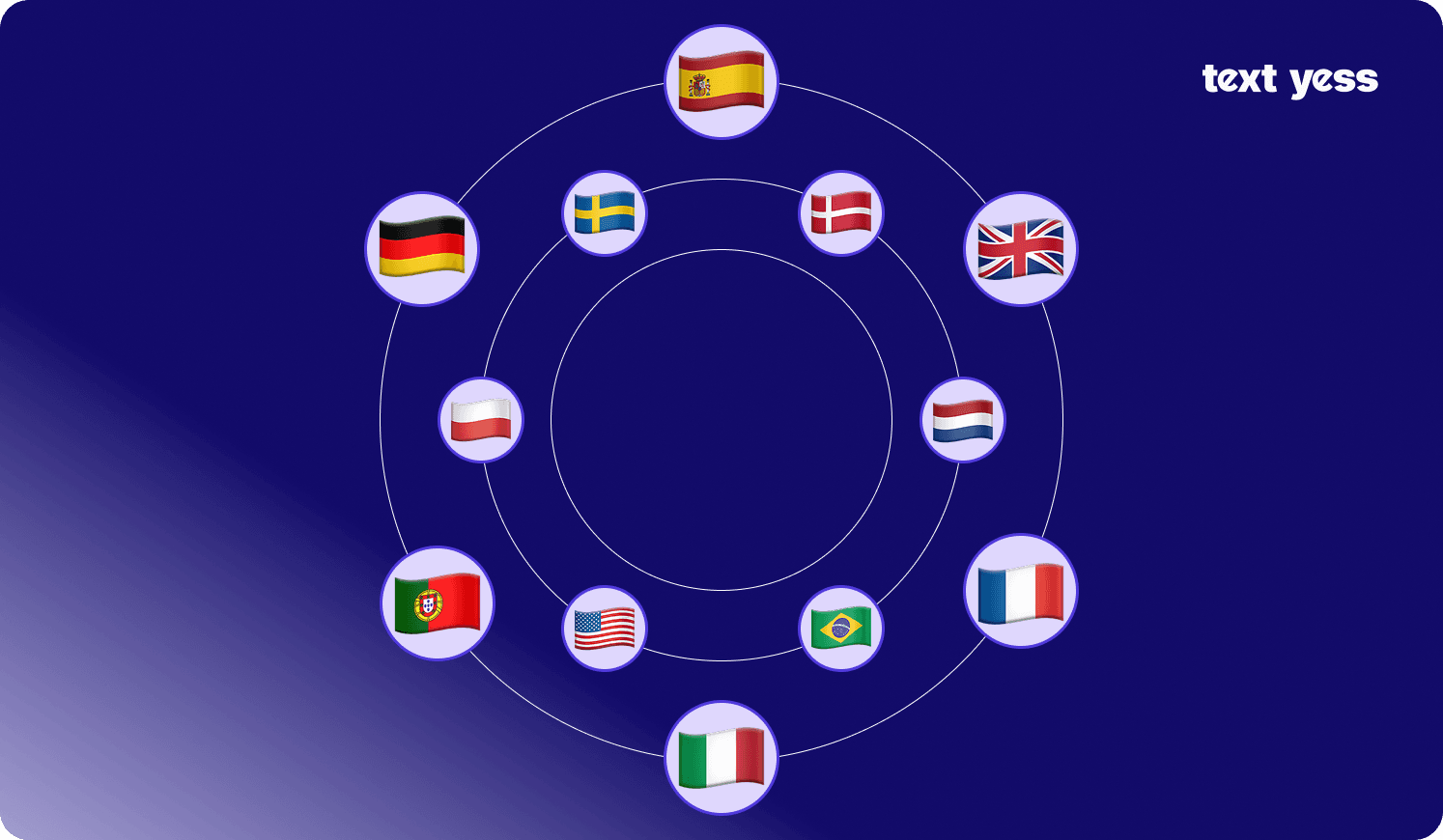
For brands selling globally, the AI handles multiple languages naturally. Native-sounding translations matter, especially in EU markets where localized experiences drive higher conversion.
Support tools rarely track revenue. The best AI chatbots attribute placed orders and conversion rates directly to conversations. Without this, proving ROI becomes guesswork.
The platforms below were selected based on ecommerce focus, AI capabilities, and channel coverage. Each excels in different areas.
Platform | Best For | Channels | Key Strength |
|---|---|---|---|
TextYess | Revenue-focused AI across channels | Site, WhatsApp, Voice | Unified data, proactive selling |
Tidio | Small teams needing quick setup | Site, Messenger | Visual flow builder |
Gorgias | Support-heavy Shopify stores | Site, Email, Social | Ticket management |
Zendesk AI | Enterprise support operations | Site, Email, Voice | Robust reporting |
Zowie | High automation rates | Site, Messaging | Ticket deflection |
Ada | Large brands with high volumes | Site, Messaging | Multi-language NLP |
TextYess is an AI-first platform built specifically for ecommerce. It covers on-site chat, WhatsApp (campaigns, automations, AI agent), and voice. The platform emphasizes revenue attribution, hyper-personalization using unified customer data, and no-code setup. Brands treating conversations as a sales engine rather than a support cost tend to find the strongest fit here.
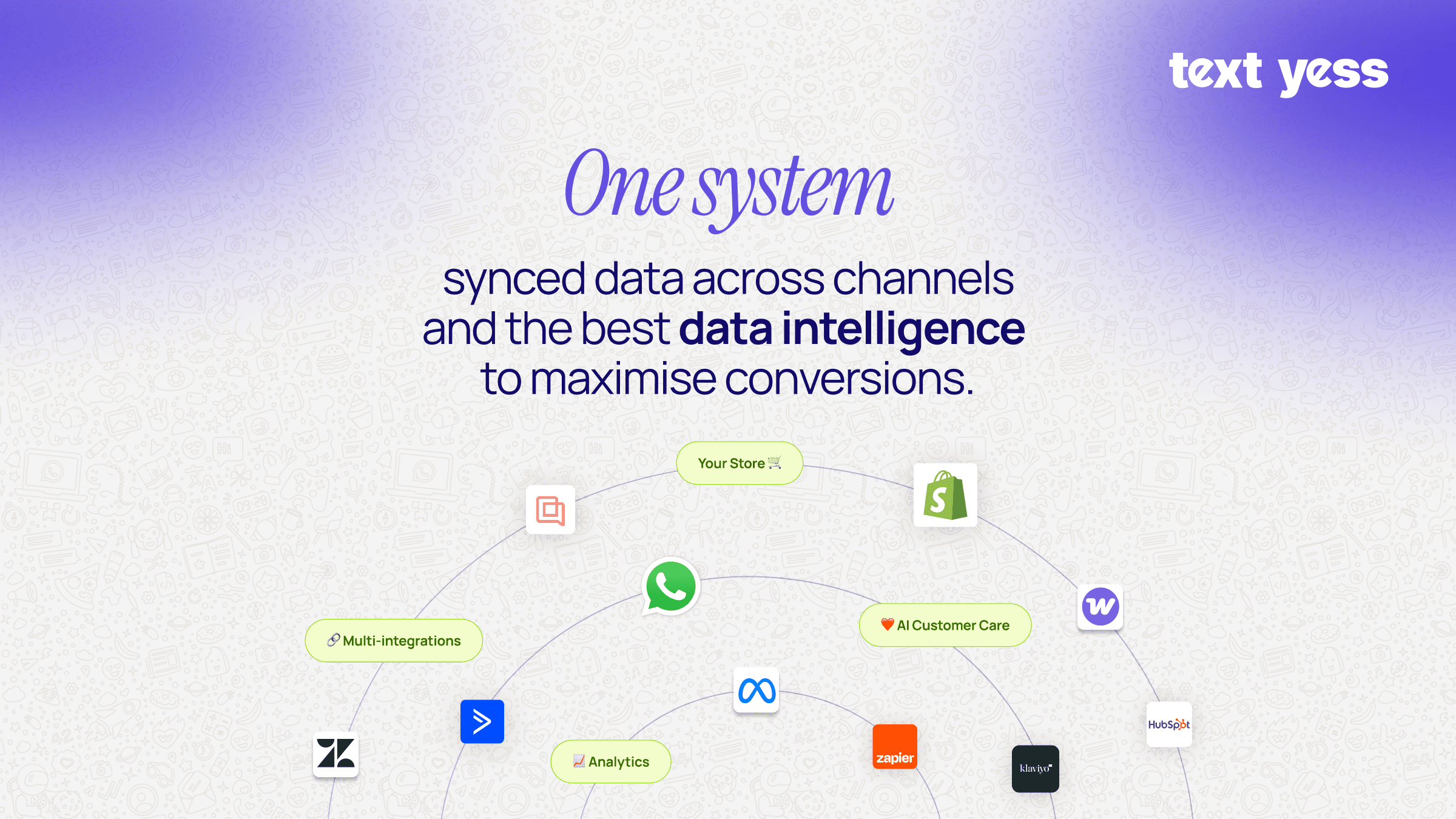
Tidio works well for small ecommerce teams. The visual flow builder and live chat integration make it possible to go live quickly. The Lyro AI feature handles basic customer support and product recommendations. Best for stores wanting something functional today without extensive configuration.
Gorgias is a helpdesk-first platform with deep Shopify integration. It excels at ticket management and support workflows. The AI handles tasks like refunds and order tracking. Support-heavy teams prioritizing ticket resolution over proactive sales often land here.
Zendesk offers an enterprise-grade support suite with AI add-ons. The platform provides robust ticketing and reporting. Larger organizations with complex support operations and existing Zendesk infrastructure tend to stay within the ecosystem.
Zowie focuses on automation rates and pre-built ecommerce workflows. The platform emphasizes ticket deflection and efficiency metrics. Brands prioritizing support cost reduction find value in the automation-first approach.
Ada provides enterprise conversational AI with strong NLP capabilities. It supports multiple languages and complex workflows. Large brands with high conversation volumes across markets often evaluate Ada alongside Zendesk.
The right AI chatbot handles both sales and support. Here's where the revenue impact becomes tangible.
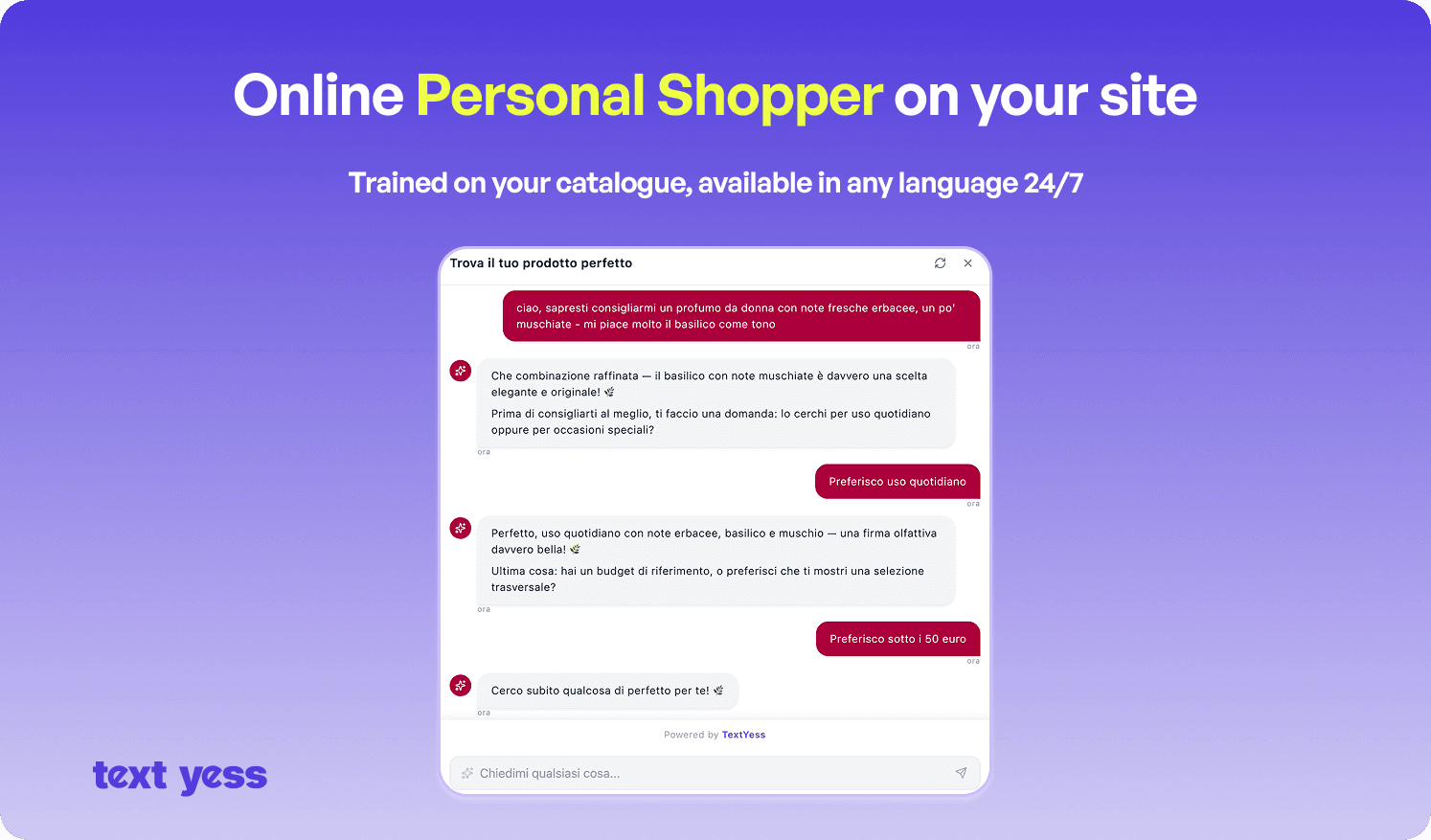
The AI surfaces relevant products based on browsing, purchase history, or direct questions — personalization that according to McKinsey drives 10 to 15 percent revenue lift. When a customer asks "I'm looking for a gift under €50," the agent matches them with appropriate options. This acts as a personal shopping assistant, not a search bar.
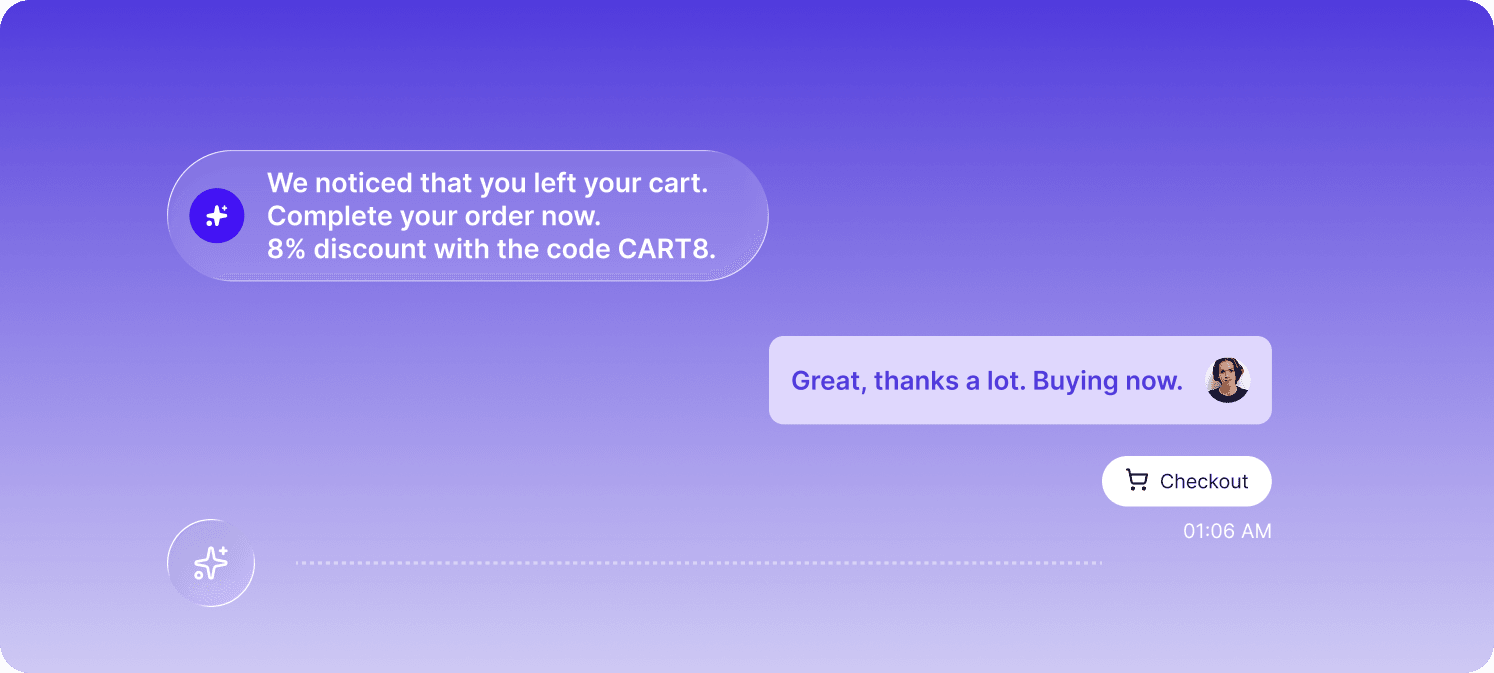
Trigger-based messages fire when a shopper leaves items in cart. Sent via on-site chat or WhatsApp, recovery messages include product details and direct checkout links. Well-timed follow-ups can recover a meaningful percentage of otherwise lost sales.
Instant answers to common questions (shipping, returns, sizing) without ticket queues. The AI draws from a centralized knowledge base and customer profile. Removing friction at the moment of hesitation keeps shoppers moving toward purchase.
Real-time order tracking, shipping updates, and proactive delivery notifications reduce "where is my order" inquiries. Building confidence after purchase also increases the likelihood of repeat orders.
AI engages hesitant visitors showing exit intent or prolonged browsing. It surfaces reviews, size guides, or discount codes. Passive support becomes active selling when the timing is right.
Merchant-initiated campaigns (product drops, flash sales, birthday messages) turn WhatsApp into a revenue channel. Customers can purchase directly within the conversation, reducing steps between interest and transaction.
The advantages compound over time:
24/7 availability: shoppers get instant help outside business hours
Reduced support costs: high autonomy means fewer tickets for human agents — Gartner projects $80 billion in saved labor costs by 2026
Higher conversion rates: proactive engagement moves hesitant shoppers to purchase
Consistent brand voice: every response aligns with tone and knowledge base
Scalable personalization: relevant interactions without adding headcount
This isn't an either/or decision. The strongest approach combines both.
Factor | AI Chatbot | Human Live Chat |
|---|---|---|
Response time | Seconds | Queue dependent |
Availability | 24/7 | Shift limited |
Personalization | Data-driven at scale | Empathy and nuance |
Cost | Fixed per volume | Scales linearly |
Complex issues | Escalates | Excels |
AI handles routine queries autonomously. Humans manage complex or sensitive cases. The platforms that balance both see the strongest results.
A step-by-step approach helps clarify priorities.
Identify where customers currently reach out: site, WhatsApp, email, phone. Estimate monthly conversation volume. Channel coverage requirements follow from there.
List current tools: Shopify, WooCommerce, Klaviyo, payment gateways. Native integrations without manual data syncing save time and reduce errors.
Clarify priorities. Is the goal cart recovery, support deflection, proactive selling, or all three? Different platforms excel in different areas.
Request demos or trials. Evaluate how well the AI handles real product questions. Do responses feel personalized or generic?
Confirm the platform tracks revenue from conversations, not just ticket counts. Clear attribution proves ROI to stakeholders.
AI chatbots for ecommerce have moved beyond support tools. They're now a revenue channel.
The brands seeing the strongest results treat conversations on site, WhatsApp, and voice as sales opportunities powered by unified customer data. They track revenue attribution, optimize campaigns based on performance, and let AI handle volume while humans focus on high-value interactions.
For brands ready to turn conversations into measurable revenue, Discover TextYess and see AI agents in action.
Which is the best AI chatbot for ecommerce?
How long does it take to deploy an ecommerce AI chatbot?
Can an AI chatbot fully replace a human support team?
Do AI chatbots work for small Shopify stores?
What is the difference between an AI chatbot and an AI agent?