How AI Voice Agents Improve Customer Support and Drive Satisfaction
AI voice agents for customer support handle calls, resolve orders, and answer FAQs without human involvement. See how they improve CSAT and drive revenue.
AI voice agents for customer support handle calls, resolve orders, and answer FAQs without human involvement. See how they improve CSAT and drive revenue.
Most customers still pick up the phone when something goes wrong with an order.
The difference now is that AI voice agents can answer those calls, understand what the customer actually needs, and resolve the issue without a human ever getting involved.
This guide covers how AI voice agents work, why they improve satisfaction scores and what to look for when choosing a solution for your eCommerce support team.
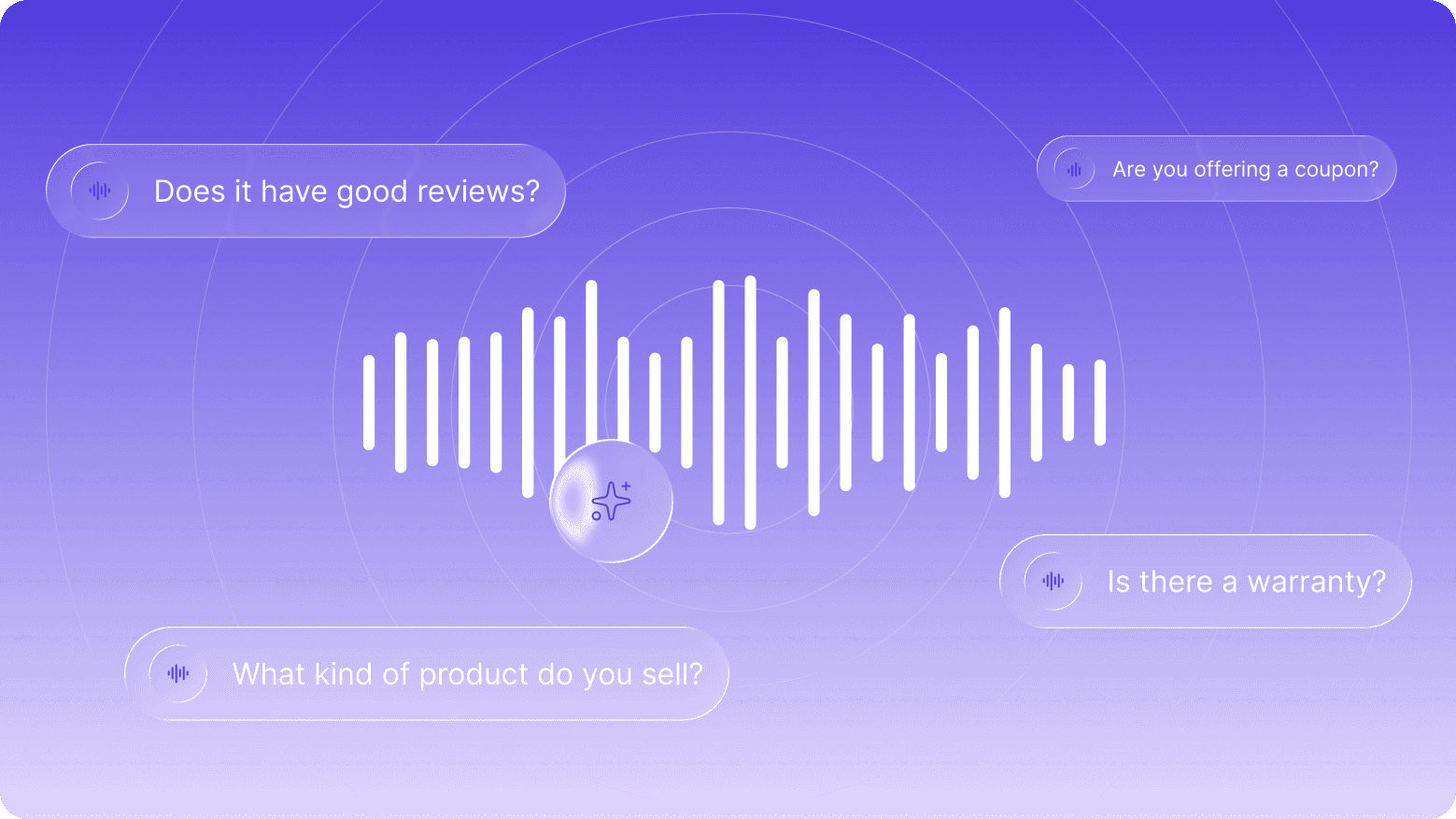
AI voice agents are software systems that handle spoken customer conversations on their own, using natural language processing to understand what callers actually mean.
You might be thinking of those old phone menus where you press 1 for billing, press 2 for support. AI voice agents work differently. Instead of forcing customers through button sequences, they have actual back-and-forth conversations.
The difference comes down to understanding versus matching. Let's get technical for a second: traditional IVR (interactive voice response) systems listen for specific keywords. AI voice agents interpret full sentences, including slang, accents, and half-finished thoughts. When a customer says "I ordered something last week and it still hasn't shown up", the agent understands the intent and pulls up the order, rather than asking the caller to repeat an order number three times.
Here's what sets AI voice agents apart from older systems:
Natural language understanding: Interprets conversational speech, not just keywords
Conversational responses: Speaks back in natural sentences rather than robotic prompts
Task execution: Can check orders, update accounts, or initiate returns without human help
Context retention: Remembers what was said earlier, so customers don't repeat themselves
The first reason is personalization.
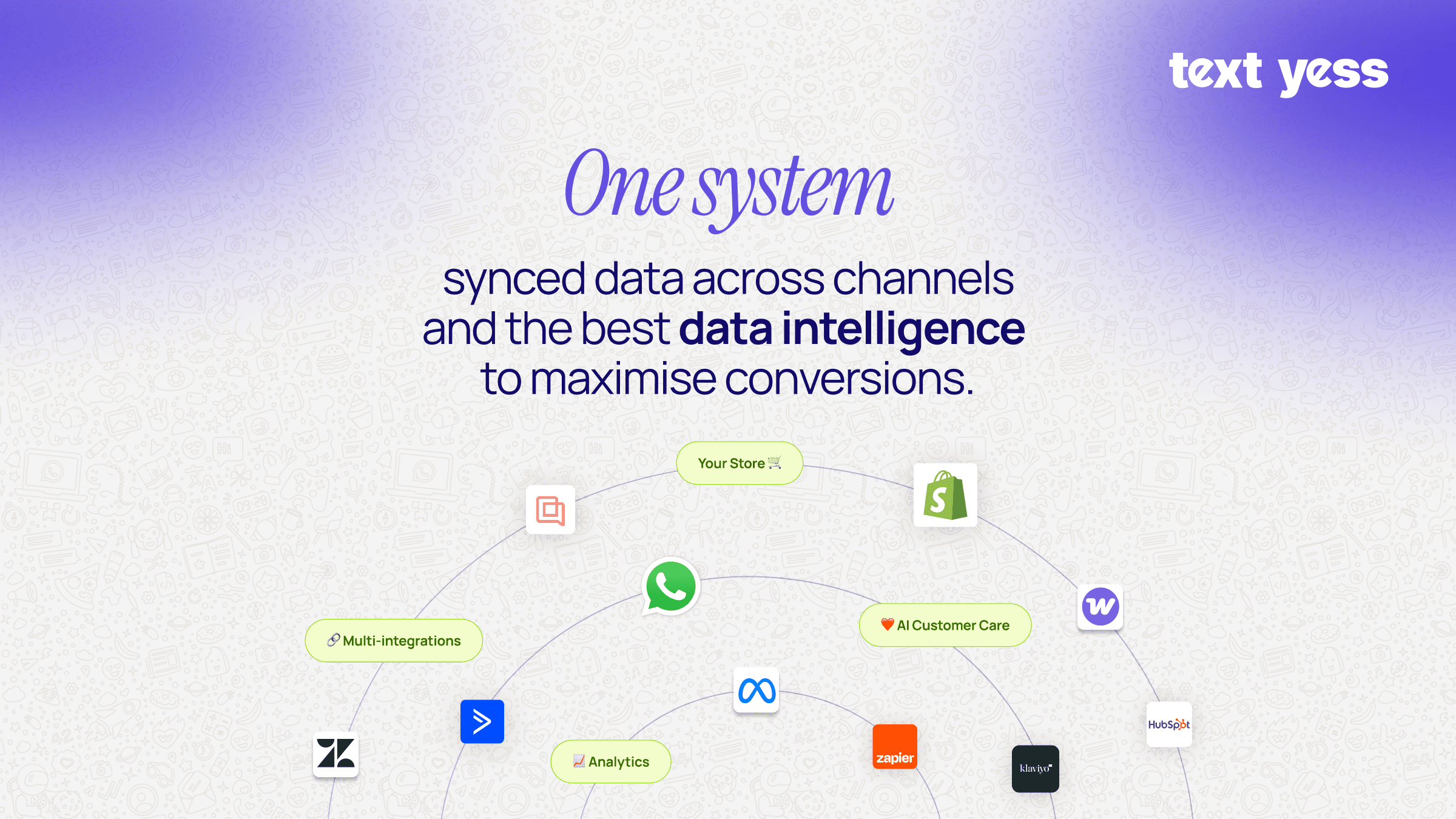
AI voice agents pull from CRM data, order history, and customer profiles to tailor every interaction. When a returning customer calls, the agent can greet them by name and reference their recent purchase. Platforms with unified customer data across channels deliver this personalization consistently, which makes customers feel recognized rather than like ticket numbers. TextYess, for example, connects voice interactions to a shared customer profile that spans WhatsApp and on-site chat — so the context a customer established in one channel carries over when they call.
Another advantage is 24/7 availability without wait times. According to Zendesk's 2026 CX Trends report, 74% of consumers now expect 24/7 service, and customers calling at 11 PM or during a holiday weekend get immediate answers. No hold music, no "your call is important to us" loops.
AI voice agents also deliver faster resolution. Common questions like "Where's my order?" or "What's your return policy?" get resolved in seconds. The agent pulls live data, provides the answer, and the call ends. For eCommerce businesses, this speed directly correlates with higher satisfaction scores.
Consistency matters too. Unlike human agents who vary in knowledge or mood, AI delivers the same accurate information every time. When your knowledge base is centralized, every customer gets the correct answer, whether they call at 9 AM or 3 AM.
For companies selling across borders, multilingual support makes a real difference. AI voice agents can converse in multiple languages natively, making support feel local for international shoppers. This is particularly valuable for EU market expansion, where customers expect service in their own language.
Finally, there's the cost equation. AI voice agents handle more calls without adding headcount, driving what Gartner projects as $80 billion in contact center savings, which frees human agents for complex or emotionally sensitive issues where empathy matters most.
High call volumes during peak periods typically overwhelm support teams. Black Friday, product launches, seasonal sales. AI voice agents scale instantly without quality degradation. Whether you receive 100 calls or 10,000, response time stays consistent.
Accuracy concerns are valid, though.
Generic AI often struggles with industry-specific terminology or context. The solution is training on domain-specific data: your products, policies, order systems, and common customer questions. eCommerce-focused platforms understand shopping context better than general-purpose solutions, which means fewer misunderstandings.
What about emotional or complex issues? AI has limitations here, and that's okay.
Modern voice agents include sentiment detection. They recognize frustration, confusion, or urgency in a caller's tone. When the situation calls for human empathy, the agent escalates appropriately.
Seamless handoff is critical. The best implementations pass full conversation context to human agents, so customers don't repeat their entire story. The human picks up exactly where AI left off.
Modern platforms integrate directly with eCommerce stores to pull product catalogs, order data, and customer profiles automatically. This integration is what enables personalization. Without it, your voice agent is just a fancy FAQ reader.
Configure what the agent accomplishes: support only, sales assistance, or both. Set your brand voice and upload FAQs, policy documents, and product information. Most platforms require no coding for this step.
Set conditions for when AI handles fully versus routes to humans. For example: "Escalate refund requests over €100" or "Transfer to sales when customer asks about bulk pricing."
Go live and use analytics dashboards to track resolution rates, customer sentiment, and conversation outcomes. The data tells you what's working and where the agent needs additional training.
A unified inbox across voice, chat, and messaging channels improves team efficiency and customer experience continuity. When a customer who chatted yesterday calls today, the agent knows the full history.
No-code setup and fast deployment matter for practical reasons. Modern solutions launch in minutes, not months. If a vendor requires extensive developer resources or weeks of implementation, that's worth noting.
Deep integration with CRM and eCommerce tools separates useful agents from glorified answering machines. The agent connects to your store, payment systems, and logistics providers to actually resolve issues, not just answer questions and then transfer.
Transparent pricing without hidden fees is essential. Look for clear per-conversation or per-minute rates, and ensure the solution scales with your call volume.
Traditional call answering services approach AI voice agents differently than AI-first platforms built specifically for eCommerce. Purpose-built eCommerce platforms prioritize autonomous AI with deep store integrations and human escalation as the exception.
Feature | Traditional Providers | AI-First eCommerce Platforms |
|---|---|---|
Primary model | Human agents + AI assist | AI agents + human escalation |
eCommerce integration depth | Basic | Deep (orders, products, customers) |
Setup time | Days to weeks | Minutes |
Revenue attribution | Limited | Full conversion tracking |
The right choice depends on your priorities. If you value human touch above all else and handle relatively low volumes, traditional providers work well. If you want autonomous support at scale with direct revenue attribution, AI-first platforms deliver better ROI.
Customer Satisfaction Score (CSAT) is typically measured through post-interaction surveys asking "How satisfied were you with this call?" Resolution rate tracks the percentage of issues fully resolved. Both metrics typically improve within weeks of deploying AI voice agents, as response times drop and first-call resolution increases.
First-call resolution (FCR) measures issues resolved without callbacks. Containment rate tracks calls handled without human transfer. These are key autonomous support metrics that directly impact operational costs.
Response time and conversation duration matter too. Measure how quickly AI answers and total handle time. For simple inquiries, shorter is better.
For eCommerce specifically, revenue attribution and ROAS from voice interactions reveal whether conversations lead to placed orders. Proactive voice campaigns, like abandoned cart recovery calls, can be measured just like marketing campaigns.
Abandoned cart recovery and proactive outreach represent a significant opportunity.
AI voice agents can call customers who abandoned checkout to offer assistance or incentives. This turns support from a cost center into a revenue channel.
Order and shipping updates in real time address the most common support question: "Where's my order?" AI pulls live tracking data and provides instant answers, deflecting calls that would otherwise consume human agent time.
Product recommendations from catalog data transform support calls into sales opportunities. During a support interaction, AI can suggest complementary products based on purchase history.
The shift happening now is fundamental: support is becoming a revenue channel, not just a cost center. When AI voice agents handle routine inquiries autonomously, human agents focus on high-value conversations — a shift Gartner found nearly 80% of organizations are actively planning. When voice, WhatsApp, and on-site chat share unified customer data, every interaction builds on the last.
Platforms like TextYess unify voice, WhatsApp, and on-site chat into a single AI-powered engine that turns every customer conversation into a revenue opportunity.
TextYess is built specifically for eCommerce teams that want AI voice agents to do more than answer calls: they want every conversation to connect back to revenue. The platform integrates directly with your store to pull live order data, product catalogs, and customer history, so the voice agent can resolve issues, recommend products, and recover abandoned carts without any manual intervention or developer setup.
What makes the approach practical is the unified layer underneath it all. Voice, WhatsApp, and on-site chat run through the same AI engine and share the same customer data.
For teams evaluating AI voice agent solutions, TextYess also removes the usual implementation friction. Configuration is no-code, the analytics dashboard surfaces CSAT and resolution data from day one, and pricing is transparent — no per-seat fees that balloon as call volume grows. It's designed to be running in minutes, not after a weeks-long onboarding process.
While the AI Voice Agent is still in beta, you can explore how innovative brands and ecommerce are already turning conversations into revenue.
What is the difference between AI voice agents and traditional IVR systems?
Can AI voice agents process returns and refunds for eCommerce orders?
How long does it typically take to see CSAT improvements after deploying AI voice agents?
Do AI voice agents work alongside WhatsApp and on-site chat channels?
Can AI voice agents make outbound calls for proactive customer support?